
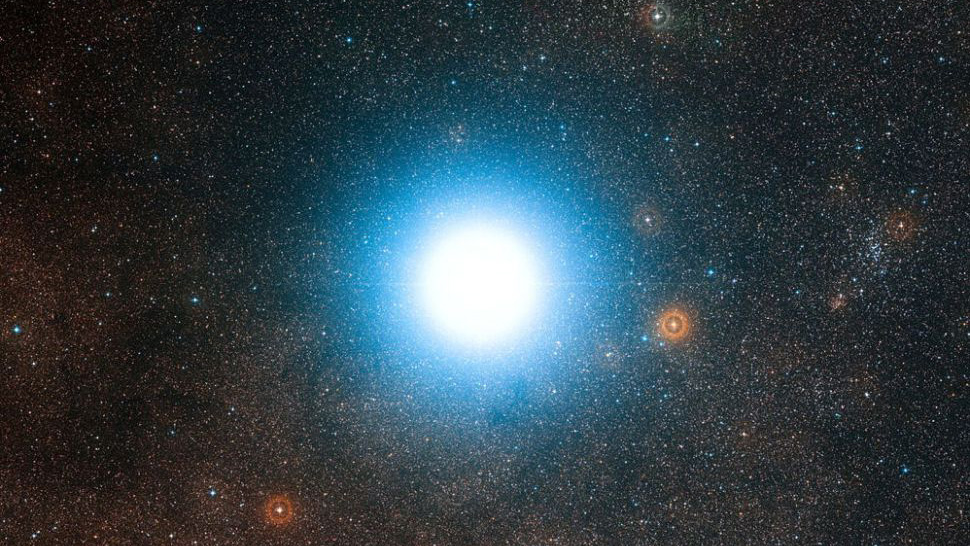
The Luminosity of Stars: A Celestial Mystery
Have you ever stopped to think about why some stars seem brighter than others in the night sky? It’s not just a matter of personal preference or aesthetics; there are actually scientific reasons behind this phenomenon. In this article, we’ll delve into the world of stellar luminosity and explore what makes some stars shine brightly than others.
Understanding Stellar Luminosity
Stellar luminosity refers to the amount of light emitted by a star. It’s not just a simple matter of shining brightly; there are many factors at play that affect a star’s luminosity. One of the most important factors is distance from Earth. The farther away a star is, the less light it emits, making it appear fainter.
Magnitude and Luminosity
There are two types of magnitudes: apparent magnitude and absolute magnitude. Apparent magnitude refers to how bright a star appears from our vantage point on Earth, while absolute magnitude takes into account the star’s distance from us. In other words, absolute magnitude is a measure of a star’s intrinsic brightness.
To calculate a star’s absolute magnitude, astronomers use the following formula:
Absolute Magnitude = Apparent Magnitude + 5 log10(Distance)
where Distance is the star’s distance from Earth in parsecs.
The Role of Spectroscopy
Spectroscopy plays a crucial role in measuring a star’s luminosity. By analyzing the light spectrum emitted by a star, astronomers can determine its surface temperature and chemical composition. This information helps them calculate the star’s absolute magnitude, which is essential for determining its distance from Earth.
The Problem of Variable Stars
Some stars are known to vary in brightness over time, making it challenging to determine their luminosity. These variable stars are particularly useful for astronomers because their brightness can be used to measure distances. The most well-known type of variable star is the Cepheid variable, which has a predictable pattern of brightness changes.
The Power of Cepheid Variables
Cepheid variables are incredibly important tools for measuring distances in the universe. By analyzing their period and luminosity, astronomers can determine how far away they are from us. This information can be used to calculate the distance to entire galaxies and galaxy clusters.
How Cepheid Variables Work
Cepheid variables work by pulsating at a specific frequency, which is related to their intrinsic brightness. When a Cepheid variable is bright, it emits more light than when it’s faint, causing its apparent magnitude to decrease. By measuring the period of these changes, astronomers can calculate the star’s luminosity and distance.
The Importance of Distance
Distance is a crucial factor in determining a star’s luminosity. The farther away a star is, the less light it emits, making it appear fainter. This is because the energy emitted by a star decreases with distance due to the inverse square law. As we move further away from a star, the amount of light it emits becomes weaker.
How Distance Affects Apparent Magnitude
The apparent magnitude of a star also depends on its distance from us. The farther away a star is, the fainter it appears. This is because the energy emitted by a star decreases with distance due to the inverse square law. As we move further away from a star, the amount of light it emits becomes weaker.
How Astronomers Measure Distance
Astronomers use a combination of methods to measure the distance to stars and galaxies. One method is parallax measurement, which involves measuring the angle between the position of a nearby star in the sky and its apparent position when viewed from opposite sides of Earth’s orbit. Another method is spectroscopy, which allows astronomers to determine the surface temperature and chemical composition of a star, providing clues about its distance.
The Importance of Absolute Magnitude
Absolute magnitude is essential for determining a star’s intrinsic brightness. By calculating a star’s absolute magnitude, astronomers can estimate its luminosity and distance from us. This information helps them understand the properties and behavior of stars in our galaxy and beyond.
Frequently Asked Questions
- What is the difference between apparent magnitude and absolute magnitude?
Apparent magnitude refers to how bright a star appears from Earth, while absolute magnitude takes into account the star’s distance from us. - How do astronomers measure the luminosity of stars?
Astronomers use spectroscopy to determine a star’s surface temperature and chemical composition, which helps them calculate its absolute magnitude. - What is the role of Cepheid variables in measuring distances?
Cepheid variables are used as “candles” to measure distances because their brightness changes can be predicted with high accuracy. - How do astronomers determine a star’s distance from Earth?
Astronomers use a combination of methods, including spectroscopy and trigonometry, to determine a star’s distance from us. -
What is the importance of understanding stellar luminosity?
Understanding stellar luminosity helps us gain insights into the properties and behavior of stars, which is essential for understanding our universe. -
Can all stars be measured using Cepheid variables?
No, not all stars can be measured using Cepheid variables. These variables are particularly useful for measuring distances in galaxies and galaxy clusters. - How do astronomers measure the luminosity of variable stars?
Astronomers use a combination of methods, including spectroscopy and photometry, to determine the luminosity of variable stars. -
What is the relationship between Cepheid variables and the distance to galaxies?
Cepheid variables are used as “candles” to measure distances because their brightness changes can be predicted with high accuracy, allowing us to calculate the distance to entire galaxies. -
Can absolute magnitude be negative?
Yes, absolute magnitude can be negative, indicating that a star is intrinsically faint. -
How does luminosity affect the visibility of stars in the night sky?
Luminosity affects the visibility of stars in the night sky because brighter stars are more visible from Earth. -
What is the role of spectroscopy in measuring stellar luminosity?
Spectroscopy plays a crucial role in measuring stellar luminosity by allowing astronomers to determine a star’s surface temperature and chemical composition. -
Can distance from Earth affect the apparent brightness of a star?
Yes, distance from Earth can affect the apparent brightness of a star because it reduces the amount of light emitted. -
What is the difference between magnitude bolometric and magnitude assoluta visuale?
Magnitude bolometric refers to the total energy emitted by a star in all wavelengths, while magnitude assoluta visuale refers specifically to visible light. - Can luminosity be used to determine the distance to other planets?
Yes, luminosity can be used to determine the distance to other planets using methods such as parallax measurement. - What is the importance of understanding stellar luminosity for exoplanet research?
Understanding stellar luminosity is essential for exoplanet research because it helps astronomers detect and study the properties of planets around other stars.
Conclusion
The study of stellar luminosity is a complex and fascinating field that has shed light on the nature of our universe. By understanding the factors that affect a star’s brightness, we can gain insights into its properties and behavior. Whether you’re an astronomy enthusiast or just curious about the wonders of the cosmos, there’s no denying the awe-inspiring beauty of stars shining brightly in the night sky.
Follow Us
Stay up-to-date with our latest articles on astronomy, space exploration, and more! Follow us on Twitter, Facebook, Google+, Instagram.


