
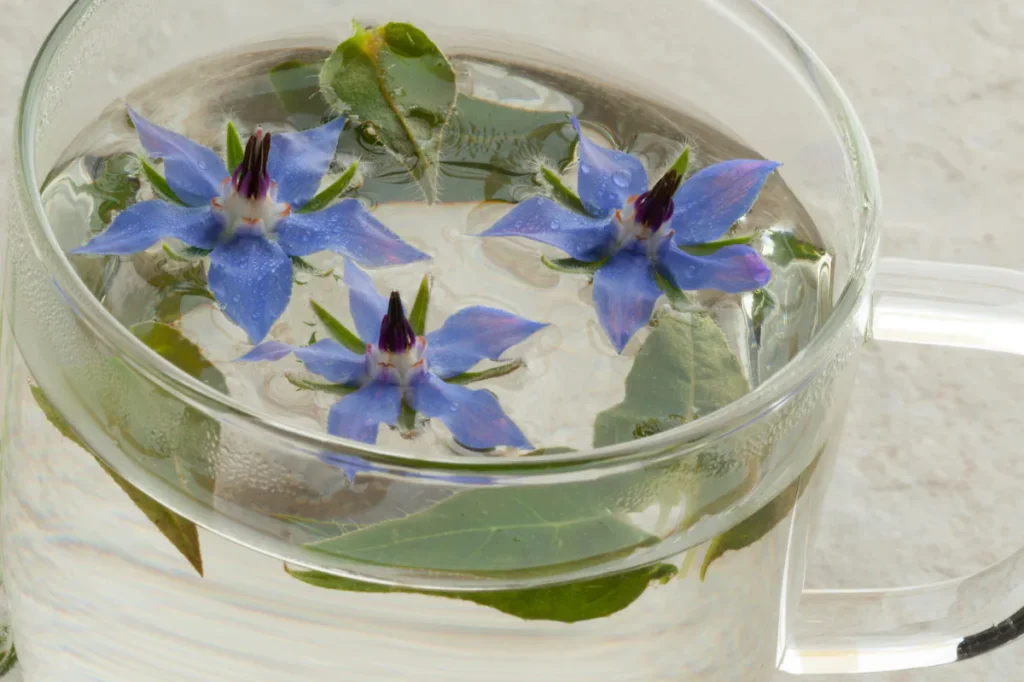
What is Borage?
Borage, also known as Borago officinalis, is a wild plant that can be easily cultivated in a garden or found growing in uncultivated fields. Its versatility and nutritional benefits make it an excellent addition to any kitchen. The name “borage” comes from the French word “borragne,” which refers to the flowers’ resemblance to blue beads.
From Field to Plate: The Joy of Cooking with Borage
Imagine taking a walk in nature and picking some fresh borage right from the wild. As you cook with its flowers and leaves, you’ll discover forgotten flavors that will transport your taste buds to a world of culinary delight. The process of cooking with borage is not only delicious but also rewarding, as it allows you to connect with nature and enjoy the simple pleasures of food.
Using Borage Flowers and Leaves in Cooking
Borage flowers are perfect for garnishing salads or enriching soups. Use them sparingly to add a pop of color and flavor. Boiled borage leaves, on the other hand, can be used to stuff pizzas, add flavor to doughs, or make the filling for ravioli and tortellini. The thick pelage on the leaves can be unpleasant on the palate, so it’s essential to boil them thoroughly before using them in recipes.
Borage in Pizzas, Dishes, and Soups
Boiled borage leaves can also be fried in batter or chopped to enrich vegetable fritters. Borage adds a slightly bitter taste reminiscent of celery to minestrone, soups, and stews. It’s also a key ingredient in complex recipes like paccheri stuffed with borage and sausage, risotto Grana Padano, and lasagna vegetarian.
Nutritional Benefits of Borage
Borage is rich in vitamin C and potassium, making it an excellent addition to your diet. Consuming 100 grams of this vegetable provides only 21 kcal. Other micronutrients like calcium, magnesium, vitamin A, and iron are also present in borage. The high levels of vitamins and minerals make borage a great ingredient for salads, smoothies, and other dishes where you want to add some extra nutrition.
Alternative Recipes with Borage Flowers
Instead of using raw borage flowers, try freezing them in ice cube form to add a color note to your summer drinks. You can also use the flowers to flavor and color vinegar. To make flavored vinegar, combine 30 borage flowers with garlic, wild fennel, prezzemolo flower, and white wine vinegar. The resulting vinegar can be used as a condiment or dressing for salads.
Borage Contraindications: Cooking Safely
While cooking with borage is delicious, it’s essential to be aware of its contraindications. Consuming raw borage can lead to epatotoxicity due to pyrrolizidine compounds. These compounds are inactive when boiled, but they can still cause problems if ingested in large quantities. The thick pelage on the leaves can also be unpleasant on the palate, so it’s essential to boil them thoroughly before using them in recipes.
Preparation and Storage of Borage
To prepare borage for cooking, start by washing the flowers and leaves thoroughly with cold water. Remove any stems or debris, and dry the leaves with a clean towel. You can also freeze the flowers in ice cube form to add a color note to your summer drinks or save them in a jar with vinegar for flavored dressing.
Tips for Cooking with Borage
- Always boil borage leaves thoroughly before using them in recipes.
- Use raw borage flowers sparingly, as they have a delicate flavor.
- Freeze borage flowers in ice cube form to add a color note to your summer drinks or save them in a jar with vinegar for flavored dressing.
- Combine borage flowers with garlic, wild fennel, prezzemolo flower, and white wine vinegar to make flavored vinegar.
Borage in Modern Cuisine
In modern cuisine, borage is often used as a garnish or added to salads for its unique flavor and color. It’s also used as an ingredient in various dishes, such as pasta sauces, soups, and stews. The versatility of borage makes it a great addition to any kitchen.
Borage in Traditional Cuisine
In traditional cuisine, borage is often used in Mediterranean dishes, such as pasta sauces, soups, and stews. It’s also used as an ingredient in various salads, including caprese salad and Italian-style green salads. The use of borage in traditional cuisine highlights its versatility and nutritional benefits.
Growing Your Own Borage
Borage is easy to grow, and you can cultivate it in a garden or pot on your balcony. Make sure to choose a location with full sun and well-draining soil. Water the plant regularly, but avoid overwatering, which can lead to root rot.
Harvesting Borage
The best time to harvest borage is when the flowers are in bloom, as this ensures maximum flavor and color. Use scissors or pinch off individual flowers to prevent the plant from flowering too much. You can also use the leaves for cooking, but make sure to boil them thoroughly before using them.
Conclusion
Borage is a superfood that deserves attention in your kitchen. With its versatility and nutritional benefits, it’s an excellent addition to any meal. Experiment with different recipes, and don’t be afraid to try new things. Your taste buds will thank you!
Frequently Asked Questions
- What is the best way to cook with borage?
Borage can be cooked in various ways, including boiling, frying, and freezing. It’s essential to follow proper cooking methods to ensure food safety. - Can I use raw borage flowers in cooking?
No, consuming raw borage flowers can lead to epatotoxicity due to pyrrolizidine compounds. Always boil or cook the leaves before using them in recipes. - What are some popular recipes that use borage?
Paccheri stuffed with borage and sausage, risotto Grana Padano, lasagna vegetarian, and tordei (a pasta-filled dish typical of Liguria) are just a few examples of delicious dishes that feature borage as an ingredient. - How do I store borage flowers for later use?
Freeze borage flowers in ice cube form to add a color note to your summer drinks or save them in a jar with vinegar for flavored dressing. - Can I grow my own borage plant?
Yes, you can easily cultivate borage in a garden. Make sure to choose a location with full sun and well-draining soil. - What are the nutritional benefits of borage?
Borage is rich in vitamin C, potassium, calcium, magnesium, vitamin A, and iron, making it an excellent addition to your diet. - Can I use borage oil for health benefits?
Yes, borage seed oil is a good source of essential fatty acids and has anti-inflammatory properties. - How do I safely consume borage leaves?
Boil the leaves thoroughly before using them in recipes to remove any potential toxins.
Borage in Different Cuisines
Borage is used in various cuisines around the world, including Mediterranean, Italian, and Middle Eastern cuisine. Its versatility and nutritional benefits make it a popular ingredient in many dishes.
Borage in Indian Cuisine
In Indian cuisine, borage is often used as a garnish or added to salads for its unique flavor and color. It’s also used as an ingredient in various curries and stews. The use of borage in Indian cuisine highlights its versatility and nutritional benefits.
Borage in Chinese Cuisine
In Chinese cuisine, borage is often used as a garnish or added to soups and stews for its unique flavor and color. It’s also used as an ingredient in various salads and stir-fries. The use of borage in Chinese cuisine highlights its versatility and nutritional benefits.
Borage in Mediterranean Cuisine
In Mediterranean cuisine, borage is often used as a garnish or added to salads and soups for its unique flavor and color. It’s also used as an ingredient in various dishes, such as pasta sauces and stews. The use of borage in Mediterranean cuisine highlights its versatility and nutritional benefits.
Borage in Middle Eastern Cuisine
In Middle Eastern cuisine, borage is often used as a garnish or added to salads and soups for its unique flavor and color. It’s also used as an ingredient in various dishes, such as kebabs and stews. The use of borage in Middle Eastern cuisine highlights its versatility and nutritional benefits.
Conclusion
Borage is a superfood that deserves attention in your kitchen. With its versatility and nutritional benefits, it’s an excellent addition to any meal. Experiment with different recipes, and don’t be afraid to try new things. Your taste buds will thank you!


