
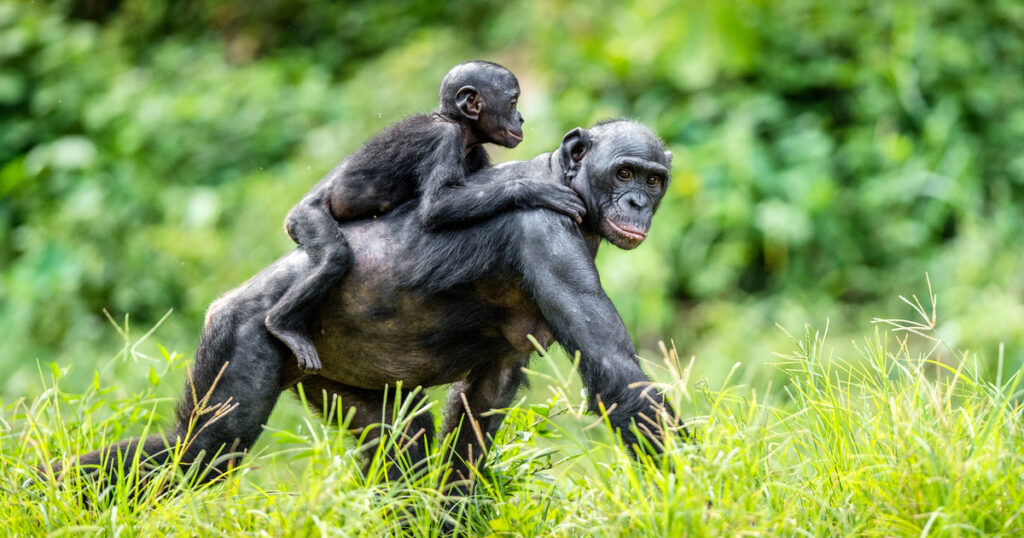
As one of the closest relatives to humans, bonobos are a fascinating species that has captivated scientists and animal lovers alike. In this article, we will delve into the behavior, habitat, and characteristics of bonobos, exploring what makes them unique and distinct from their chimpanzee cousins.
What is a Bonobo?
The bonobo (Pan Paniscus) is a primate species that belongs to the family Hominidae. Known as the “pygmy chimpanzee” or simply “bonobo,” it is a small, slender creature with a distinctive facial structure and a reputation for being more social and empathetic than its chimpanzee counterparts.
Physical Characteristics
The bonobo’s physical characteristics are distinct from those of chimpanzees. Unlike their larger cousins, bonobos have a smaller body mass, shorter arms, and a more compact torso. Their faces are also uniquely shaped, with a flat forehead, a prominent nose, and a distinctive “bonobo” nose.
Behavioral Differences
One of the most notable differences between bonobos and chimpanzees is their behavior. Bonobos are known for their high levels of sociality and their tendency to resolve conflicts through sex rather than violence. In fact, bonobos are often referred to as the “hippies” of the primate world, due to their peaceful and empathetic nature.
Bonobos are also known for their advanced communication skills, which include a range of vocalizations, body language, and even facial expressions. They have been observed using complex vocalizations to convey information and emotions, such as warning calls to alert other bonobos to potential threats.
In addition to their social behavior, bonobos are also renowned for their intelligence and problem-solving abilities. They have been observed using tools to obtain food and solve problems, and their brains show a high level of similarity to those of humans.
Habitat
Bonobos are found in the forests of central Africa, where they inhabit areas with high levels of rainfall and humidity. Their habitat is characterized by a mix of primary and secondary forests, with occasional clearings and savannas.
The forest floor of bonobo habitats is home to a diverse range of plant species, including fruit-bearing trees, vines, and shrubs. Bonobos are primarily herbivores, and they feed on the fruits, leaves, and stems of these plants.
Diet
Unlike chimpanzees, which have a more omnivorous diet that includes meat and insects, bonobos are primarily fruit-eaters. They also consume plant material, such as leaves and stems, and occasionally hunt small animals for protein.
Bonobos have been observed hunting a variety of prey, including monkeys, birds, and even small reptiles. However, these hunts are relatively rare, and the majority of their diet consists of fruits and other plant-based foods.
Social Structure
Bonobos live in complex societies with a strict hierarchical structure. Their communities are typically led by older females, who have earned their position through dominance and experience.
Within these communities, bonobos engage in various social behaviors, including grooming, playing, and even kissing. Grooming is an essential part of bonobo social behavior, as it helps to strengthen bonds between individuals and maintain social harmony.
Intelligence and Problem-Solving Abilities
Bonobos are highly intelligent animals that possess advanced problem-solving abilities. They have been observed using tools to obtain food and solve problems, and their brains show a high level of similarity to those of humans.
One notable example of bonobo intelligence is their use of water as a tool for obtaining food. In some parts of their habitat, bonobos will dig shallow holes in the ground and then pour water over them, which allows them to wash away seeds and other nutrients.
Conservation Status
Unfortunately, bonobos are listed as a species at risk by the IUCN Red List due to habitat loss, poaching, and other human activities that threaten their survival. Conservation efforts are underway to protect bonobo habitats and reduce the impact of human activities on these remarkable animals.
One key conservation strategy is the establishment of protected areas, such as national parks and wildlife reserves, where bonobos can live safely without human disturbance. These protected areas provide a safe haven for bonobos, allowing them to thrive in their natural habitat.
Frequently Asked Questions
- What is the main difference between bonobos and chimpanzees?
Bonobos are smaller, more slender creatures with a distinctive facial structure and a reputation for being more social and empathetic than chimpanzees. - Where do bonobos live?
Bonobos inhabit areas with high levels of rainfall and humidity in the forests of central Africa. - What do bonobos eat?
Bonobos are primarily fruit-eaters, but they also consume plant material and occasionally hunt small animals for protein. - How do bonobos interact with each other?
Bonobos engage in various social behaviors, including grooming, playing, and even kissing, which helps to maintain their complex societies. - Are bonobos intelligent animals?
Yes, bonobos are highly intelligent animals that possess advanced problem-solving abilities and have been observed using tools to obtain food and solve problems. - Why is the conservation status of bonobos a concern?
Bonobos are listed as a species at risk due to habitat loss, poaching, and other human activities that threaten their survival.
Interesting Facts about Bonobos
- Bonobos are one of the closest relatives to humans, sharing more than 98% of our DNA.
- They have a highly developed sense of empathy, which allows them to understand and respond to the emotions of others.
- Bonobos are known for their advanced communication skills, including vocalizations, body language, and facial expressions.
- They are one of the most social primates, with complex societies that involve cooperation, altruism, and mutual support.
Conclusion
In conclusion, bonobos are fascinating creatures that offer a unique perspective on the behavior, habitat, and characteristics of our closest living relatives. By understanding more about these remarkable animals, we can better appreciate their importance in the natural world and work towards their conservation.
Bonobos are a reminder that even in the most challenging environments, there is always hope for survival and prosperity. With continued support and protection, these incredible animals will continue to thrive and inspire us with their intelligence, social complexity, and compassionate nature.


