
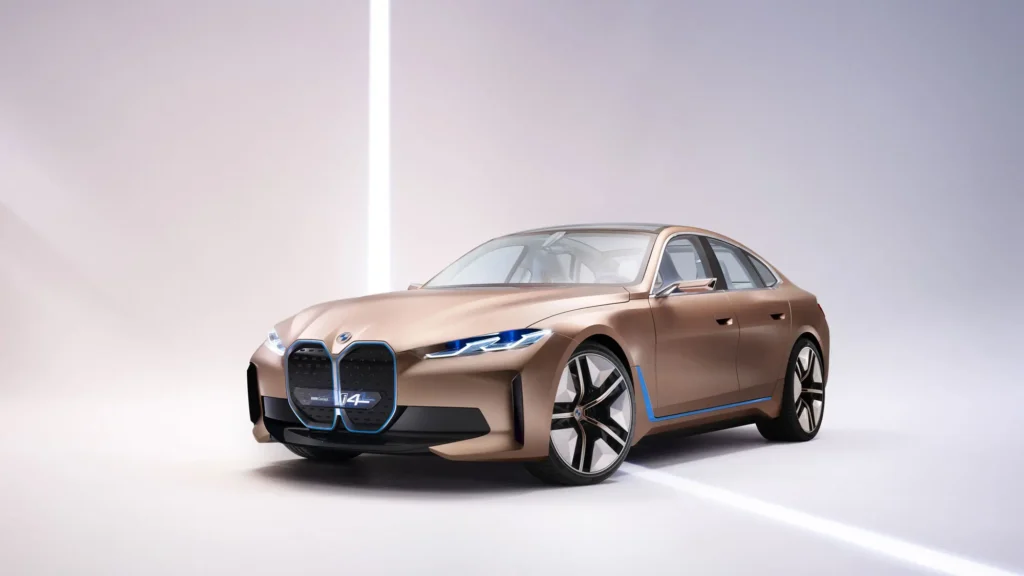
As one of the oldest automobile manufacturers in the world, Germany-based BMW has been a pioneer in electric vehicles for over 40 years. In this article, we’ll take a closer look at the company’s history with electric cars, their latest models, and what they have to offer.
A Brief History of Electric Vehicles from BMW
In 1972, BMW introduced its first electric vehicle, the 1602 Electric, which was equipped with a Varta battery weighing 350 kilograms. Since then, the company has been steadily developing its e-mobility offerings. In 2013, the highly anticipated BMW i3 and i8 were set to debut on the market.
The development of electric vehicles at BMW began in the early 2000s, when the company established a dedicated research team focused on alternative propulsion systems. The team worked closely with suppliers to develop more efficient battery technologies and improved electric motors. This collaborative effort enabled BMW to accelerate the development of its e-mobility products.
BMW ActiveE: The First Mass-Produced Electric Vehicle from BMW
The BMW ActiveE is an electric vehicle based on the BMW Series 1 family. Production began in July 2011 at BMW’s Leipzig plant. The car made its public debut in 2012, with initial availability in the United States. The rental price for the BMW ActiveE was set at $499 per month for a total of 24 months, with an upfront deposit of $2,250. The vehicle features a 170-horsepower motor and 250 Nm of torque, allowing it to reach a top speed of 145 km/h and accelerate from 0-100 km/h in just 9 seconds.
The BMW ActiveE was designed as a proof-of-concept for BMW’s electric vehicles. Its design and engineering paved the way for future e-mobility products, such as the i3 and i8. The car’s impressive specs made it an attractive option for environmentally conscious drivers looking for a unique driving experience.
Electric Range and Fuel Efficiency
The BMW ActiveE has an electric range of 160 kilometers, with the latest data suggesting an efficiency rating of 240 km in the FTP72 American consumption cycle. Despite its impressive specs, the car’s battery is not rechargeable at home; instead, users must rely on designated public charging stations.
However, this limitation can be mitigated by using a wallbox charger at a dedicated home charging station. BMW offers this option through their BMW Intelligent Charging program, which provides customers with access to exclusive wallbox chargers and simplified charging procedures.
Mini E: The Electric Version of the Iconic Mini Cooper
The Mini E is a fully electric version of the beloved Mini Cooper, available for lease in several countries, including the United States, Germany, the United Kingdom, France, Japan, and China. Launched in June 2009 through leasing programs in Los Angeles, New York, and New Jersey, the Mini E is powered by an electric motor equivalent to 204 horsepower (150 kW). It boasts an impressive range of up to 251 kilometers under ideal conditions but reduces to 175 kilometers on urban routes.
The Mini E was designed as a compact and stylish electric vehicle, incorporating advanced technology to enhance its efficiency and driving experience. Its smaller size made it easier for drivers to navigate through urban areas, while its powerful electric motor provided impressive acceleration and smoothness.
Leasing Options for Electric Vehicles
Both the BMW ActiveE and Mini E offer leasing options. For the BMW ActiveE, users can lease the car for $499 per month over a 24-month period, with an upfront deposit of $2,250. The Mini E is also available through leasing programs at a monthly cost of $850, which includes insurance coverage and one-year maintenance costs.
Leasing provides an attractive option for consumers who want to try out an electric vehicle without committing to a long-term purchase agreement. It allows users to test the car’s performance, efficiency, and overall driving experience before deciding whether to buy or lease another vehicle in the future.
BMW i3: A Revolutionary Design
The BMW i3 is an all-electric compact car that revolutionized the automotive industry with its unique design and innovative materials. The car features a lightweight body made from carbon fiber reinforced polymer (CFRP), which reduces its overall weight while increasing its strength-to-weight ratio.
The i3’s advanced aerodynamics were designed to reduce air resistance, resulting in improved fuel efficiency and reduced emissions. Its impressive specs include an electric range of up to 300 kilometers under ideal conditions and a top speed of 160 km/h.
BMW i8: A High-Performance Electric Vehicle
The BMW i8 is a plug-in hybrid electric vehicle (PHEV) that combines the power of electric motors with the efficiency of an internal combustion engine. The car features a powerful 1.5-liter turbocharged engine, which works in conjunction with an electric motor to produce a total output of 374 horsepower.
The BMW i8’s advanced aerodynamics were designed to reduce air resistance and improve its overall driving experience. Its impressive specs include an electric range of up to 50 kilometers under ideal conditions, a top speed of 250 km/h, and acceleration from 0-100 km/h in just 4.7 seconds.
Conclusion
As the world transitions towards cleaner transportation options, BMW has been at the forefront of e-mobility innovation for decades. With its extensive range of electric models and leasing options, the company is well-positioned to meet the increasing demand for environmentally friendly vehicles.
In recent years, BMW has made significant investments in its e-mobility infrastructure, including the development of high-performance charging stations and home charging solutions. This commitment to innovation and sustainability positions BMW as a leader in the electric vehicle market, setting it up for continued success in the coming years.
FAQs
-
What makes BMW’s electric vehicles unique?
BMW’s e-vehicles offer a combination of performance, innovative design, and eco-friendliness. They provide drivers with an exciting driving experience while reducing their carbon footprint and environmental impact. -
How do I lease an electric vehicle from BMW?
Leasing options are available through designated dealerships or online platforms; interested buyers should contact local dealerships for more information on pricing and terms. -
What is the estimated range of the BMW ActiveE?
The BMW ActiveE has a range of 160 kilometers under ideal conditions, but can reach up to 240 km in the FTP72 American consumption cycle. -
Can I charge my electric vehicle at home?
No; due to its high-performance nature and safety concerns, the BMW ActiveE’s battery is not rechargeable at home. -
What is the price of the Mini E?
The leasing cost for the Mini E starts at $850 per month for a one-year term. -
When will the BMW i3 and i8 be available on the market?
Both vehicles are set to debut in the near future, with exact dates pending official announcements from the manufacturer. -
What makes the BMW i8 unique?
The BMW i8 is designed for high-performance driving, boasting a powerful electric motor and sleek aerodynamics. -
Will there be leasing options available for the BMW i3?
Yes; BMW typically offers leasing options for its latest models, including the upcoming i3. -
Can I purchase an electric vehicle from BMW directly or do I need to lease it?
Both purchasing and leasing options are available; buyers can contact local dealerships for more information on pricing and terms. -
What is the future of e-mobility at BMW?
The company plans to continue expanding its range of electric models while investing in infrastructure development and charging solutions to support growing demand.


