
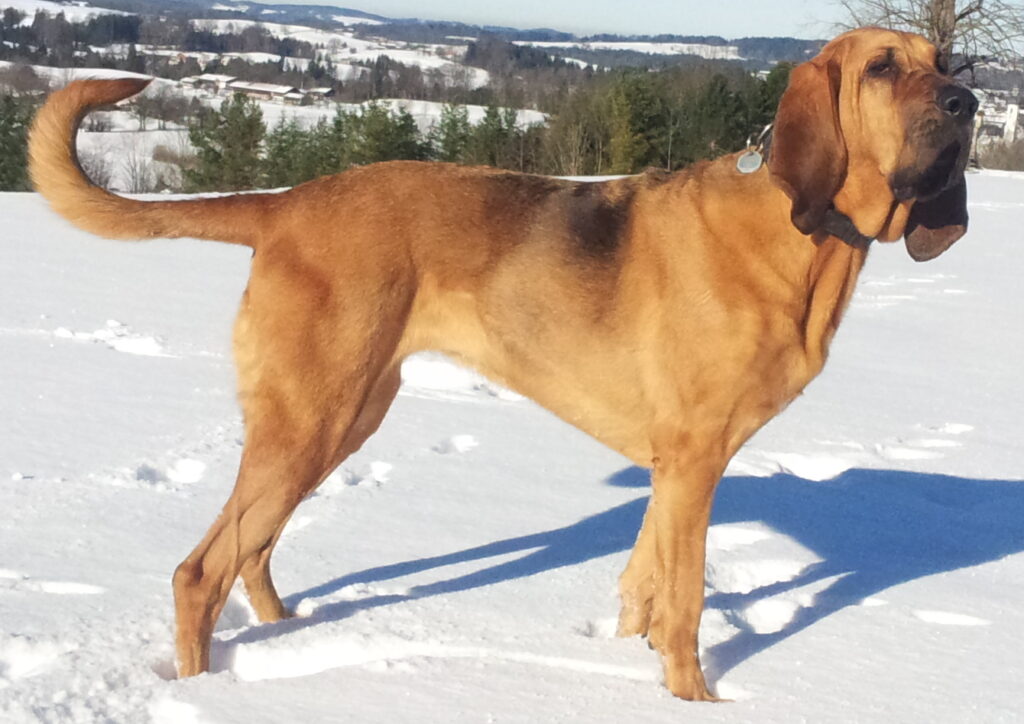
The Bloodhound Chien de Saint-Ubert is a breed that seems to have stepped out of a comic book, but it’s a highly prized and extraordinary canine. This Belgian origin dog is classified officially in the group of tracking dogs and bloodhounds, denoted by number 6.
Bloodhound Chien de Saint-Ubert: Bloodline or Tracking Dog
The name itself hints at its noble lineage, as this breed has ancient origins. Undoubtedly, it was already living in the Middle Ages, residing in the Ardennes region, but over time, its appearance has been altered due to the contributions of English breeds. To uncover its true origin, one might have to venture into Asia, according to some experts, while others claim it originated from France.
It’s always been a highly regarded breed, and today it is too. It was already bred in the 16th century and frequently attended royal courts, eventually becoming the national symbol of Belgium, its official birthplace. Ironically, if you were to visit Belgium to find examples of this breed, you’d be fortunate to find very few, whereas visiting the Netherlands or Germany would yield more results.
Intelligent and Athletic, but Not for Everyone
The Bloodhound is a large and good-looking dog, yet it’s incredibly intelligent. Having reached the United States in 1885, it had significant success there. In Italy, it’s also widely popular, although raising and caring for it can be challenging due to its unique needs.
Despite its name signifying “bloodhound,” today this breed is known as a peaceful dog, which we’ll explore further. If you’d like, you could call it the “Segugio di St. Hubert” after Uberto, Bishop of Liege, who founded an abbey where these dogs were bred and carefully selected for many decades.
Bloodhound Chien de Saint-Ubert: Physical Characteristics
This breed belongs to the Brachycephalic group and has a medium-large size. It moves with an athletic but slow pace and carries itself with dignity. Its robust body is neither too massive nor too lean, and its skeleton is powerful.
Let’s examine what it takes for an example to meet official standards.
Key Physical Characteristics
- The head must be large and harmonious with the rest of the body.
- The cranial shape is tall and pointed, with less prominent supraciliary arches and a serious yet majestic expression.
- Wrinkles on the cheeks add a playful touch to this breed.
- Its lower jaw hangs 5 cm below its mouth.
- In general, the muzzle is long, features a black nose, and has regular teeth. Long ears hang down towards the mandible, with slightly sunken eyes that are reddened at the lower eyelid.
- Typically brown-nocciola-colored, but may be white.
- The neck is muscularly developed, with an expansive chest.
The back and hips are broad, while its limbs are robustly built. Each of these features contributes to the Bloodhound’s slow yet elegant gait. Its tail is elegantly curved, though occasionally it becomes shorter toward the end.
Physical Characteristics
- Color: nero-focato (black-focaled), colore fuoco unicolore (unicolored red), bruno-focato (brown-focaled)
- Coat: short, hard on the body but soft in ears
- Tail: curved, occasionally shorter toward the end
The Bloodhound’s physical characteristics are only part of what makes this breed unique.
Bloodhound Chien de Saint-Ubert: Personality
A bloodhound is a tracking dog or a bloodhound, characterized by its highly developed sense of smell. It can track injured game, thanks to its ability to follow scents.
This intelligent and also resilient breed is now suitable for hunting but adores spending time with people it trusts and stays willingly in families. Even if it’s large at home, it’s well-suited to being outdoors often without experiencing any climate problems.
Bloodhound: Weight
Male Bloodhounds can weigh up to 54 kg, while females reach their maximum weight of 48 kg. This breed is indeed quite large.
It’s crucial that there is overall harmony in the body of this dog, beyond numbers. Some recurring flaws and potential squalification factors include:
- Mismeasure
- Deviated mandible
- Premolar deficiencies
- Rosa tartar
- Mantello giallo chiaro (yellow clear cloak)
- Iride gialla chiaro (clear yellow iris)
- Gazzuolo-eyed
- Retrotreno defective
- Incorrect movement
- Monorchidism
- Criptorchidism
- Characteristic timidity or fear
The Bloodhound Chien de Saint-Ubert: A Conclusion
Given the complexities of this breed, it is clear that the Bloodhound Chien de Saint-Ubert is more than just a dog – it’s an experience. If you’re willing to invest time and effort into its care, it can be a loyal companion.
Do you have any questions about the Bloodhound Chien de Saint-Ubert? Here are some answers:
Frequently Asked Questions
- What is the origin of the Bloodhound Chien de Saint-Ubert?
- The exact origin is disputed, but it’s believed to have originated in Asia or France.
- Is the Bloodhound Chien de Saint-Ubert suitable for families with children?
- Yes, as long as they are well-trained and socialized, this breed can be a great addition to any family.
-
How much exercise does the Bloodhound Chien de Saint-Ubert need?
- Regular walks and outdoor time are essential to keep them happy and healthy.
-
What is the typical lifespan of a Bloodhound Chien de Saint-Ubert?
- The average lifespan is between 10-12 years.
-
Why does the Bloodhound Chien de Saint-Ubert have such an excellent sense of smell?
- Its unique nose structure and highly developed olfactory system make it one of the best tracking dogs in the world.
-
How often should I groom my Bloodhound Chien de Saint-Ubert?
- Regular brushing is necessary to prevent matting, but this breed requires less grooming than many other breeds.
-
Is the Bloodhound Chien de Saint-Ubert prone to any health issues?
- Yes, they can be susceptible to hip dysplasia, eye problems, and skin allergies.
-
Can I train my Bloodhound Chien de Saint-Ubert?
- This breed is highly intelligent but stubborn at times. Consistent training and positive reinforcement are essential.
-
Why does the Bloodhound Chien de Saint-Ubert have a unique appearance?
- Its distinctive features, such as its large head and long ears, make it a recognizable and beloved breed.
-
Is the Bloodhound Chien de Saint-Ubert suitable for apartment living?
- While they can thrive in apartments if provided with regular exercise and attention, this breed requires space to roam and stretch.
-
How much does a Bloodhound Chien de Saint-Ubert cost?
- Prices vary depending on factors such as location, breeder reputation, and bloodline quality.
-
What is the best way to socialize my Bloodhound Chien de Saint-Ubert?
- Early exposure to various environments, people, and other animals is crucial for developing good behavior and reducing anxiety.
-
How do I care for a Bloodhound Chien de Saint-Ubert’s coat?
- Regular brushing with a soft-bristled brush can help prevent matting and keep their short coat clean.
-
What are some common health issues in Bloodhounds?
- Hip dysplasia, eye problems, and skin allergies are prevalent among this breed.
-
Why is it essential to choose a reputable breeder?
- Reputable breeders prioritize the health, temperament, and well-being of their dogs, ensuring you receive a healthy puppy with a good temperament.
-
How often should I feed my Bloodhound Chien de Saint-Ubert?
- A balanced diet rich in nutrients is necessary for maintaining optimal health and weight.
- Can I bathe my Bloodhound Chien de Saint-Ubert regularly?
- Occasional bathing may be necessary, but over-bathing can strip their coat of its natural oils.
-
How often should I take my Bloodhound Chien de Saint-Ubert for veterinary check-ups?
- Regular check-ups with a veterinarian experienced in caring for this breed are essential to monitor health and catch any potential issues early.
-
What is the best way to handle a Bloodhound Chien de Saint-Ubert’s strong prey drive?
- Providing plenty of exercise, mental stimulation, and positive reinforcement training can help channel their instincts.
- Can I leave my Bloodhound Chien de Saint-Ubert alone for extended periods?
- While this breed is not prone to separation anxiety, it still requires regular attention and interaction to prevent boredom and destructive behavior.
By understanding the unique characteristics of the Bloodhound Chien de Saint-Ubert and its needs, you can build a strong bond with your dog and enjoy a lifelong companionship.


