
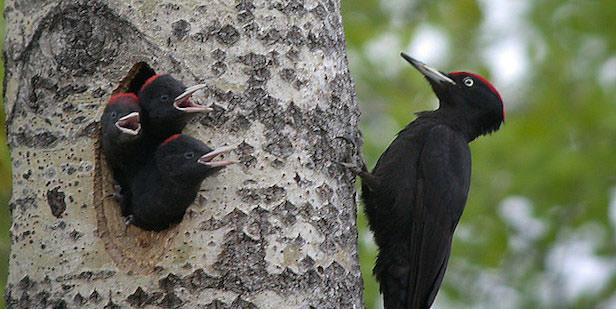
As a nature enthusiast, it’s fascinating to explore the unique characteristics and habits of bird species. In this article, we’ll delve into the world of the black woodpecker (Dryocopus martius), one of Europe’s largest woodpecker species.
Table of Contents
- Characteristics of the Black Woodpecker
- Habitat
- Habits of the Black Woodpecker
- Diet and Feeding Behavior
- Reproduction and Breeding Habits
- Importance of the Black Woodpecker for Biodiversity
- Conservation Status
Characteristics of the Black Woodpecker
The black woodpecker is a striking bird species with distinctive features. It has a length of approximately 50 cm (20 in) and an open-wing span of up to 68 cm (27 in). Adults weigh between 300-350 grams. The most notable feature is its entirely black plumage, except for a bright red crown on the head.
The black woodpecker’s eyes are strikingly clear, particularly in females. Its ability to survive for up to 14 years makes it one of the longest-living woodpeckers. Like all woodpeckers, this species uses its strong beak to hammer into trees to extract food, such as insects and sap.
The black woodpecker’s territorial behavior is another distinctive feature. It aggressively defends its territory from other birds by drumming on trees with its beak. This unique behavior allows the black woodpecker to maintain dominance over a specific area and protect its resources from competition.
Habitat
Black woodpeckers are found in both Europe and Asia. They prefer deciduous forests, especially those with old-growth trees. In particular, they thrive in the Alps and other mountain ranges where the climate is harsh and the terrain is rugged.
Despite being sedentary, black woodpeckers occasionally migrate to lower elevations during winter to find food. This migration pattern helps them adapt to changing environmental conditions and ensure their survival during periods of scarcity.
Habits of the Black Woodpecker
Black woodpeckers are generally solitary birds, making them less conspicuous than some other species. They tend to be quiet for most of the year, only vocalizing during breeding season. This unique behavior allows them to conserve energy and avoid detection by predators.
During this time, they form pairs and excavate nesting cavities in old trees with extensive decay or malnutrition. The black woodpecker is fiercely protective of its territory, drumming on trees to warn potential rivals away. This territorial behavior helps maintain social order within the flock and ensures that each individual has access to resources.
Diet and Feeding Behavior
The black woodpecker’s diet consists mainly of insects, particularly larvae of beetles that live in dead or dying trees. They also consume sap and other plant material. In addition to foraging alone, the black woodpecker occasionally collaborates with other species to extract food from tree bark or decaying wood.
This unique feeding behavior is essential for the survival of the black woodpecker. By working together with other species, they can access resources that would be difficult or impossible for them to obtain on their own. This cooperative behavior also helps maintain ecological balance and promotes forest health.
Reproduction and Breeding Habits
Black woodpeckers lay three to four eggs per breeding season, which typically begins in April and May. The female incubates the eggs for about 12-13 days, while males also contribute by taking on incubation duties.
After hatching, the young black woodpeckers remain in their parents’ nest for approximately 24-28 days before flying away to disperse. This extended period of dependence allows the young birds to develop essential skills and adapt to their environment before becoming independent.
Importance of the Black Woodpecker for Biodiversity
The cavities excavated by black woodpeckers provide essential shelter and nesting sites for numerous other species. Some examples include the endangered European nightjar, the tawny owl, and the brown owl.
Black woodpeckers also contribute to controlling insect populations, particularly those that damage trees or crops. This helps maintain ecosystem balance and promotes forest health. By preying on insects, black woodpeckers reduce the number of pests that can harm trees and other plants.
Conservation Status
The black woodpecker is currently not considered an endangered species. Its population has increased over recent decades due to better habitat preservation and reduced deforestation.
However, threats from human activities, such as excessive logging and agriculture, could potentially impact the species’ long-term survival. To mitigate these risks, conservation efforts focus on preserving old-growth forests, protecting woodpecker habitats, and promoting sustainable forest management practices.
By understanding the unique characteristics and habits of the black woodpecker, we can better appreciate this fascinating species and work towards its conservation.
Frequently Asked Questions (FAQs)
- What is the primary source of food for the black woodpecker?
The primary source of food for the black woodpecker is insects, particularly larvae of beetles that live in dead or dying trees. - How long do black woodpeckers typically survive?
Black woodpeckers can live up to 14 years, making them one of the longest-living woodpecker species. - Do black woodpeckers migrate?
Black woodpeckers occasionally migrate to lower elevations during winter to find food. - Are black woodpeckers endangered?
The black woodpecker is currently not considered an endangered species, but its population has increased over recent decades due to better habitat preservation and reduced deforestation. - What threats could impact the black woodpecker’s long-term survival?
Threats from human activities, such as excessive logging and agriculture, could potentially impact the species’ long-term survival. - How can I help conserve the black woodpecker?
You can help by promoting sustainable forest management practices, preserving old-growth forests, and protecting woodpecker habitats. - Can I attract a black woodpecker to my yard?
Attracting a black woodpecker to your yard requires creating a suitable environment with dead or dying trees, as well as providing food sources such as insects and sap.
By understanding the unique characteristics and habits of the black woodpecker, we can better appreciate this fascinating species and work towards its conservation.


