
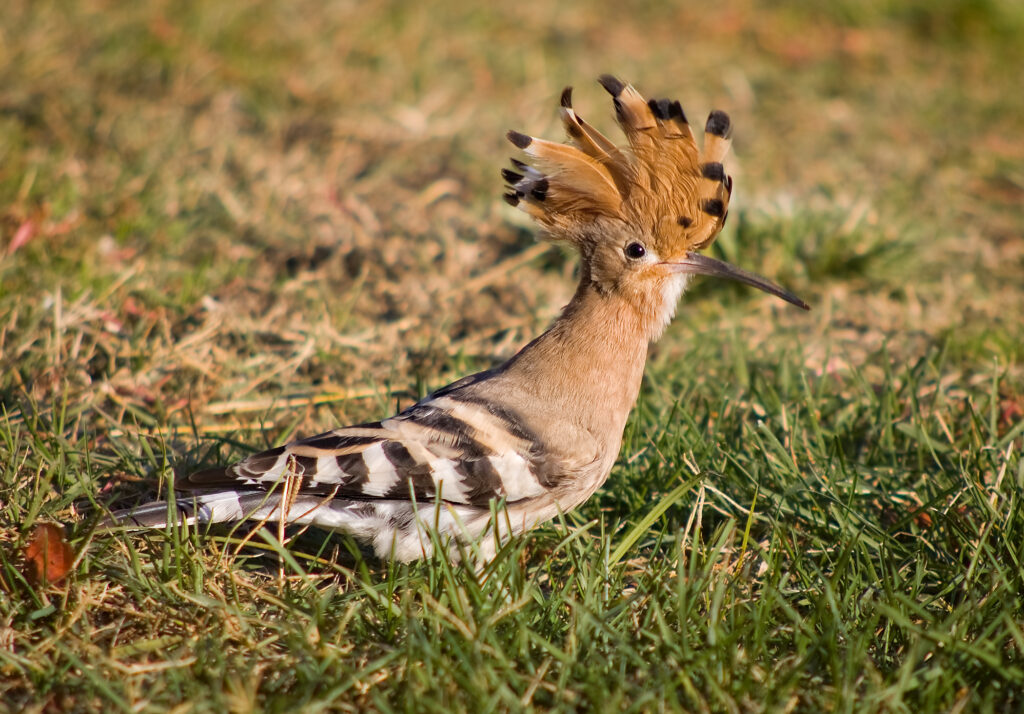
Are you searching for birds with crests online? You might be surprised to find that there’s only one bird species widely known for its distinctive crest, the Upupa. However, there are other birds that share this remarkable feature, each with their unique characteristics and habits.
Understanding Uppas: The Crested Birds
The Upupa is a medium-sized bird, approximately 30 centimeters in length, with an impressive crest on its head. Its plumage is a mix of brown and white colors, making it easily recognizable. The bird’s body is slender, with a long beak and rounded wings. Male and female Uppas are similar in appearance, but the male’s crest is more prominent.
Uppas inhabit dry areas, including forests, roadsides, and even urban zones, where they feed on insects, worms, and other small invertebrates. Their nests are often hidden among rocks or tree cavities and have a distinctive, pungent odor that deters predators. The female lays 4-7 eggs, which hatch after 16 days of incubation, with the male helping to care for the young.
The Upupa is native to Europe, North Africa, and parts of Asia, including China and Japan. Its range extends from the Mediterranean region to the steppes of Central Asia, where it can be found in a variety of habitats, including forests, grasslands, and even urban areas.
One of the most interesting aspects of Uppa behavior is its unique courtship ritual. During mating season, males perform a complex dance involving strutting, preening, and displaying their crests. This display helps to attract females and establish dominance among males.
The Crested Bird Migratory Patterns
Uppas are migratory birds, traveling to warmer regions during the winter months. In Europe, they can be found in the central and eastern parts of the continent, while in Italy, they are commonly spotted along the Adriatic coast, particularly in Puglia and Calabria.
During their migrations, Uppas often travel in large flocks, with some species forming massive gatherings of up to several thousand birds. These flocks can be seen flying over agricultural fields, forests, and even urban areas, as they make their way to their wintering grounds.
Some Uppa populations are also known to migrate short distances, returning to their breeding grounds in the summer months. This unique behavior is thought to be an adaptation to the changing climate and availability of food resources.
The Purpose of Uppa Crests
So, what is the purpose of an Upupa’s crest? It’s primarily used by males during mating season to attract females. They perform a courtship ritual, displaying their crests and strutting around. The crest also plays a role in territorial displays and warning off predators.
In addition to its role in mating and territorial behavior, the Upupa’s crest has also been observed playing a role in communication among birds. Researchers have found that Uppas use their crests to signal aggression or courtship intentions to other birds.
Other Crested Bird Species: Regolo and Cardinal Red
While the Upupa is the most well-known crested bird, there are other species worth mentioning. The Regolo, for instance, is an extremely small bird, measuring only 10 centimeters in length, with a distinctive crest on its head. Its plumage is greenish-gray, with a yellowish-brown underside.
The Cardinal Red, also known as the Northern Cardinal’s cousin, is slightly larger than the Upupa and features a striking crest on its head. The male’s crest is reddish-orange, while the female has a more subdued grayish-brown coloration.
Uccelli con la Cresta Bianca: Pappagalli
If you’re looking for a white crested bird, the Cacatua alba (White Cockatoo) comes to mind. Despite not being albino, this magnificent bird features a predominantly white plumage with yellow undertones on its tail and lower back. Its beak and legs are dark gray.
The White Cockatoo is native to Australia and Southeast Asia, where it inhabits forests, woodlands, and even urban areas. Its diet consists mainly of seeds, fruits, and insects, which it forages from trees and shrubs using its long beak.
Despite their striking appearance, White Cockatoos are also known to be highly social birds, living in large flocks and engaging in complex communication behaviors. Researchers have observed them using a variety of vocalizations, including calls and songs, to communicate with each other.
Crested Birds: A Diversity of Species
While the Upupa is often considered the quintessential crested bird, there are many other species that share this remarkable feature. Some examples include:
- The Blue-winged Parrot (Ara glaucogularis): This small parrot is native to Central and South America, where it inhabits forests and woodlands.
- The Senegal Parrot (Poicephalus senegalis): This African parrot is known for its bright colors and distinctive crest, which it uses to communicate with other birds.
- The Blue-throated Macaw (Ara glaucogularis): This critically endangered parrot is native to Central and South America, where it inhabits forests and woodlands.
Each of these species has unique characteristics and habits, making them fascinating subjects for study and observation. By exploring the world of crested birds, we can gain a deeper appreciation for these remarkable creatures and their place in the natural world.
Conservation Efforts: Protecting Crested Bird Species
Crested bird species face a range of threats, including habitat loss, fragmentation, and degradation. In addition to these physical threats, many crested birds are also vulnerable to climate change, which can alter the availability of food resources and affect their migration patterns.
To address these challenges, conservation efforts are underway to protect and preserve crested bird habitats. These initiatives include:
- Habitat restoration: Efforts to restore degraded habitats and reconnect fragmented populations.
- Species reintroduction: Programs aimed at re-introducing endangered species into areas where they have become extinct.
- Climate change mitigation: Initiatives to reduce greenhouse gas emissions and slow the rate of climate change.
Conclusion
The world of birds is full of fascinating creatures, each with their unique characteristics and habits. The crested birds, from the iconic Upupa to other species like Regolo and Cardinal Red, offer a glimpse into the diversity of bird life on our planet. By exploring these remarkable creatures, we can gain a deeper appreciation for the natural world and its many wonders.
Whether you’re a seasoned ornithologist or simply an avid birdwatcher, there’s always something new to discover in the world of crested birds. So why not take up binoculars and head out into the wild to see these incredible creatures for yourself? With their unique characteristics and fascinating behaviors, crested birds are sure to captivate and inspire.
Frequently Asked Questions
- Q: What is the main purpose of an Upupa’s crest?
A: The crest is primarily used by males during mating season to attract females. - Q: How do Regolo birds care for their young?
A: Regolo parents care for their chicks for approximately 13-18 days after hatching before they become independent. - Q: What is unique about the Cardinal Red’s crest coloration?
A: The male’s crest has a reddish-orange hue, while the female’s crest is more subdued and grayish-brown in color. - Q: How do Cacatua birds interact with humans?
A: While Cacatua birds can be friendly and social, they are also known to have strong personalities and may require patience and understanding when interacting with them. - Q: Are Crested Bird Species endangered?
A: Some crested bird species, like the Upupa, are listed as least concern on the IUCN Red List, while others, such as Regolo, are not considered threatened at this time. - Q: Can Crested Birds be kept as pets?
A: While some crested birds can make interesting and rewarding pets, they require specialized care and attention to their specific needs and personalities. - Q: How do Crested Birds communicate with each other?
A: Crested birds use a variety of vocalizations, including songs and calls, to communicate with each other. - Q: Are Crested Bird Species monogamous?
A: While some crested bird species are known to form long-term pair bonds, others may engage in extra-pair copulations or have more complex social dynamics.
By exploring the world of crested birds, we can gain a deeper appreciation for these fascinating creatures and their unique characteristics. Whether you’re an avid birdwatcher or simply someone interested in learning more about our natural world, there’s always something new to discover in the world of crested birds.


