
Introduction
The Frazione Organica dei Rifiuti Solidi Urbani, commonly referred to as Forsu, is a significant source of organic waste in urban areas across Italy. With its increasing volume and complex composition, finding innovative solutions to manage this waste efficiently has become a pressing concern for cities, economies, and the environment. However, Forsu can be harnessed through industrial digestion processes that yield biogas for electricity and heat generation, as well as compost and fertilizers, transforming it into a valuable resource.
The concept of treating Forsu is not new, but its implementation has faced numerous challenges. As mentioned during a conference on ‘waste as a resource’ organized by the CNR in Milan, one major obstacle to overcome is pre-treatment to remove impurities. This labor-intensive process means better sorting at home would improve the entire process and reduce costs.
In this article, we will delve into the world of biogas production from Forsu, exploring its benefits, existing treatment plants for organic waste, the quality of biogas and compost outputs, and the future of biogas and compost in Italy. We will also discuss sustainable waste management practices, education, and research initiatives aimed at unlocking the potential of Forsu.
Understanding Biogas Production
Biogas production is an anaerobic digestion process that can utilize various substrates, including agricultural waste, animal manure, food waste, and Forsu. Anaerobic digestion involves microorganisms breaking down complex organic matter in the absence of oxygen, producing biogas as a byproduct. This process has been used for centuries to generate energy from biomass.
Biogas production can be achieved through different methods, including:
- Digestion in Industrial Plants: Large-scale industrial plants can treat Forsu on a massive scale, producing large quantities of biogas.
- Domestic Biodigesters: Small-scale biodigesters, such as the ARTI system used in countries with energy distribution challenges, can be used to produce biogas at home.
- Anaerobic Digestion in Landfill: Forsu can also be treated through anaerobic digestion in landfills, where microorganisms break down organic matter, producing biogas.
The Benefits of Treating Forsu
Treating Forsu is a significant resource for communities, offering numerous benefits:
- Energy Generation: Biogas produced from Forsu can be used to generate electricity and heat, reducing the city’s reliance on fossil fuels.
- Compost Production: Compost made from Forsu can be used as a natural fertilizer, improving soil quality and reducing waste disposal costs.
- Waste Reduction: Treating Forsu reduces the volume of waste sent to landfills, minimizing greenhouse gas emissions and mitigating climate change.
- Economic Benefits: Biogas and compost production can create new economic opportunities for cities, generating revenue from energy sales and fertilizer exports.
Existing Treatment Plants for Organic Waste
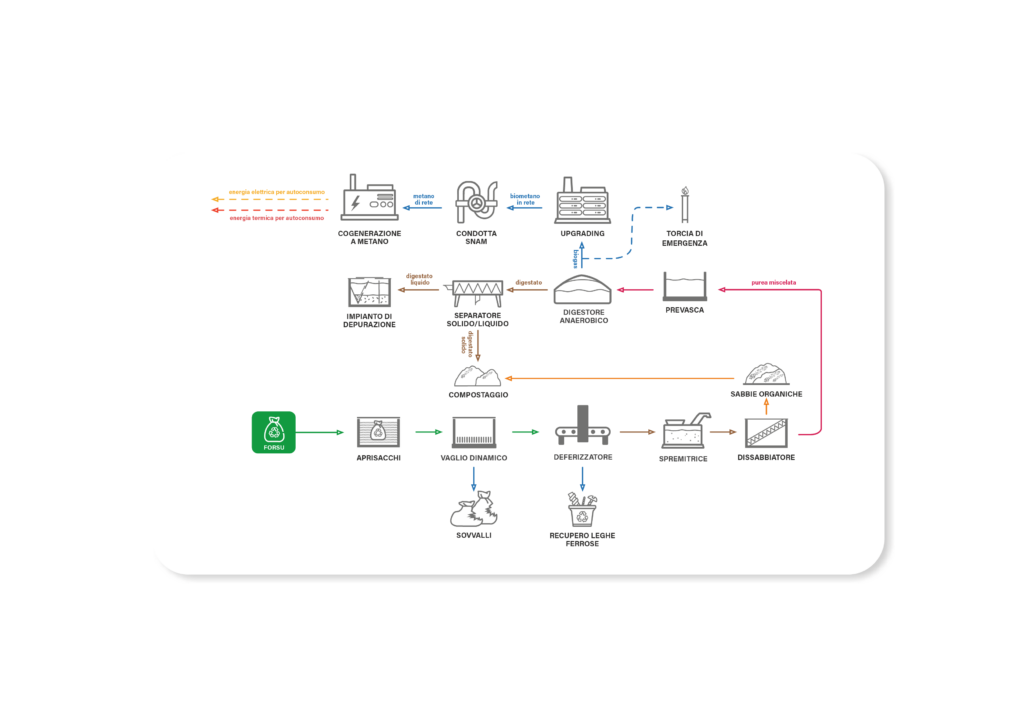
In existing treatment plants for organic waste, Forsu undergoes pre-treatment to eliminate contaminants like plastic, sand, inert materials, and glass before being directed towards anaerobic digestion. Depending on the industrial process used, this can be done either with or without added water. In both cases, the result of digesting Forsu is biogas rich in carbon dioxide and methane, which can produce electricity and heat suitable for local consumption as well as distribution to public networks.
Some of the existing treatment plants for organic waste include:
- Anaerobic Digestion Plants: Large-scale industrial plants that use anaerobic digestion to treat Forsu.
- Composting Facilities: Facilities that use composting processes to break down Forsu into a nutrient-rich fertilizer.
- Biogas Upgrade Plants: Plants that upgrade biogas produced from Forsu for energy generation.
The Quality of Biogas and Compost Outputs
Another delicate aspect is the quality of biogas and compost produced. In many cases, compost fails to meet the standards of high-quality terricci or those used by professional farmers, causing skepticism. There are strong debates about using digestate as a natural fertilizer directly applied to fields.
To address these concerns, researchers have been working on improving the quality of biogas and compost:
- Biogas Upgrade: Techniques such as gas upgrading and biogas upgrading can improve the quality of biogas.
- Composting: Improving composting processes through additives and optimized temperatures can enhance the quality of compost.
- Regulatory Frameworks: Establishing regulatory frameworks for biogas and compost production can help ensure consistency in product quality.
The Future of Biogas and Compost in Italy
The use of biogas from Forsu is also at the center of controversies in Italy, particularly regarding agricultural cultivation practices. Furthermore, there have been legal disputes related to the creation of central biogas plants using dedicated crops.
To address these challenges, Italy has implemented various initiatives:
- National Guidelines: The Italian government has established national guidelines for biogas production, ensuring consistency and quality control.
- Research and Development: Research institutions in Italy are working on improving biogas production and composting processes through innovation and technology development.
- Policy Support: The Italian government is providing policy support to encourage the development of biogas and compost industries.
Sustainable Waste Management: Education and Research
The Italian National Council of Research organizes a master program in “Energy and Bioproducts from Biomass for Sustainable Management of Production Chains.” This reflects the growing importance of education and research on sustainable waste management.
Other initiatives include:
- Training Programs: Training programs are being implemented to educate stakeholders about sustainable waste management practices.
- Workshops and Conferences: Workshops and conferences are organized to discuss innovative solutions for Forsu treatment and promote collaborative research.
- Networking Platforms: Networking platforms are created to facilitate collaboration among researchers, policymakers, and industry experts.
Conclusion
The potential of biogas and compost from urban organic waste is vast, offering numerous benefits for cities, economies, and the environment. However, implementing sustainable waste management practices requires addressing various challenges, including pre-treatment, quality control, and regulatory frameworks.
Through education and research initiatives, we can unlock the full potential of Forsu, ensuring a sustainable future for our cities. By promoting collaborative efforts among researchers, policymakers, and industry experts, we can create a framework for successful biogas and compost production, reducing waste disposal costs, generating revenue, and mitigating climate change.
Recommendations
To achieve sustainable waste management through biogas and compost production:
- Invest in Research and Development: Governments and private institutions should invest in research and development to improve biogas production and composting processes.
- Establish Regulatory Frameworks: National and local governments must establish clear regulatory frameworks for biogas and compost production, ensuring consistency and quality control.
- Implement Public Awareness Campaigns: Public awareness campaigns can educate citizens about the benefits of sustainable waste management practices and encourage participation in Forsu treatment programs.
- Foster Collaboration among Stakeholders: Collaboration among researchers, policymakers, and industry experts is essential for successful implementation of biogas and compost production systems.
By working together and addressing the challenges associated with treating Forsu, we can create a more sustainable future for our cities, reducing waste disposal costs, generating revenue, and mitigating climate change.


