
Introduction
In an effort to revive local economies and reduce dependence on fossil fuels, Polish farmers have decided to install a 1.99 MW biogas plant in the city of Rowa Mazowiecka, 80 km southeast of Warsaw. This project is part of the larger Bioenergy Project, which aims to revitalize local economies by harnessing agricultural waste as a renewable energy source.
The Importance of Biogas
Biogas, produced from agricultural waste through innovative dry fermentation processes, offers a cleaner and more sustainable alternative to fossil fuels. Like Italy, Poland has set ambitious environmental goals, outlined in its “Energy Policy 2030” strategy, which aims to diversify energy sources by increasing the use of biogas.
The benefits of biogas are numerous, including:
- Reduced greenhouse gas emissions: Biogas production produces fewer emissions than traditional fossil fuel-based power plants.
- Energy security: By harnessing agricultural waste, biogas production can reduce dependence on imported fuels and improve energy self-sufficiency.
- Job creation: The Bioenergy Project has created new job opportunities for farmers, engineers, and maintenance personnel.
The Bioenergy Project: A Novel Approach
Located in the village of Konopnica, the biogas plant employs a cutting-edge dry fermentation process that converts organic waste into a renewable fuel. This technology is designed to minimize environmental impact while maximizing energy production.
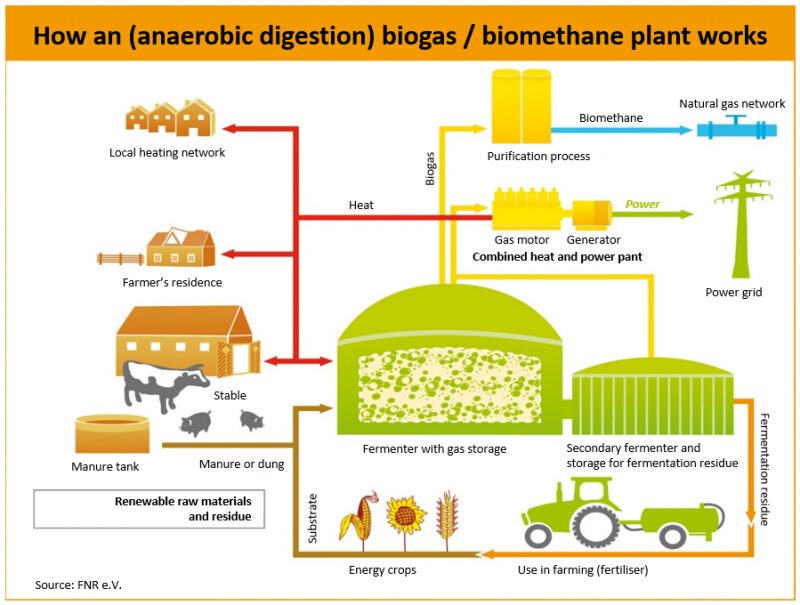
The dry fermentation process involves:
- Agricultural waste collection: Biomass from local farms and agricultural waste are collected for processing.
- In-vessel digestion: The biomass is fed into a fermentation tank where it is broken down by microorganisms into biogas and digestate.
- Gas separation: Biogas is separated from the digestate through a membrane or gas-liquid separator.
- Cleaning and upgrading: The biogas is cleaned and upgraded to meet local fuel standards.
Key Benefits of Dry Fermentation
- Efficient Energy Production: The dry fermentation process generates electricity and heat with an efficiency rate of 40.8% for electricity and 86.6% overall.
- Low Maintenance: Without the need for pumping or mixing, this technology reduces energy expenditure during the fermentation process.
- Flexibility: Biogas production can continue even when biomass contains impurities like plastics or large wood components.
Connecting to Local Teleriscaldamento
The next step in the project will be linking the biogas plant to Rowa Mazowiecka’s local heating network, providing residents with access to a cleaner and more sustainable energy source.
This connection will enable the distribution of heat from the biogas plant to homes, businesses, and industries, reducing reliance on fossil fuels and lowering greenhouse gas emissions.
Revitalizing Local Economies
The Bioenergy Project offers farmers an opportunity to convert agricultural waste into a valuable resource. By harnessing this potential, Polish communities can revitalize their economies while reducing dependence on fossil fuels.
Farmers will benefit from:
- Increased income: Selling biogas as a renewable energy source provides new revenue streams for farmers.
- Improved land use efficiency: Converting agricultural waste into biogas reduces the need for land dedicated to crop production, allowing for more efficient land use.
Conclusion
As the world transitions towards more sustainable energy sources, projects like the Bioenergy Project in Poland serve as models for innovative solutions. By leveraging dry fermentation and biogas production, farmers and local governments can work together to create cleaner, greener futures.
The Bioenergy Project demonstrates the potential of agricultural waste as a renewable energy source, highlighting the importance of adopting environmentally friendly farming practices that minimize waste and optimize resource use.
Frequently Asked Questions (FAQs)
Q: What is the purpose of the Bioenergy Project?
A: The project aims to revitalize local economies by harnessing agricultural waste as a renewable energy source through biogas production.
Q: How does dry fermentation work in the context of biogas production?
A: Dry fermentation involves converting organic waste into biogas without extracting or adding materials from the fermentation cell, resulting in a more efficient and environmentally friendly process.
Q: What are the benefits of using biogas as an energy source?
A: Biogas offers several advantages over fossil fuels, including lower emissions, reduced dependence on finite resources, and enhanced environmental sustainability.
Q: How does the Bioenergy Project contribute to Poland’s “Energy Policy 2030” strategy?
A: By increasing the use of biogas, the project aligns with Poland’s goal of diversifying energy sources and reducing its reliance on fossil fuels.
Q: What is the potential impact of this project on local economies?
A: The Bioenergy Project has the potential to revitalize local economies by creating new revenue streams for farmers and providing access to cleaner energy for residents.
Q: How can other countries learn from Poland’s example in implementing biogas production as a sustainable energy source?
A: By studying Poland’s experience with dry fermentation and biogas production, other countries can develop innovative solutions tailored to their unique needs and circumstances.
Q: What role does the Bioenergy Project play in promoting sustainable agriculture practices?
A: The project showcases the potential of agricultural waste as a renewable energy source, highlighting the importance of adopting environmentally friendly farming practices that minimize waste and optimize resource use.
Q: How can communities collaborate with farmers to implement biogas production projects like the Bioenergy Project?
A: Communities and farmers can work together to identify suitable sites for biogas plants, develop local policies supporting sustainable agriculture practices, and promote education on biogas production as a renewable energy source.
Q: What are some common challenges associated with implementing large-scale biogas production projects?
A: Some of the common challenges include securing funding, addressing environmental concerns, managing waste disposal, and coordinating with regulatory bodies to ensure compliance with local policies.
Q: How can the Bioenergy Project serve as a model for future sustainable energy initiatives in Poland?
A: By showcasing the success of dry fermentation and biogas production in revitalizing local economies and reducing dependence on fossil fuels, the project can inspire further innovation and collaboration between farmers, communities, and policymakers to create a more sustainable energy landscape.



