
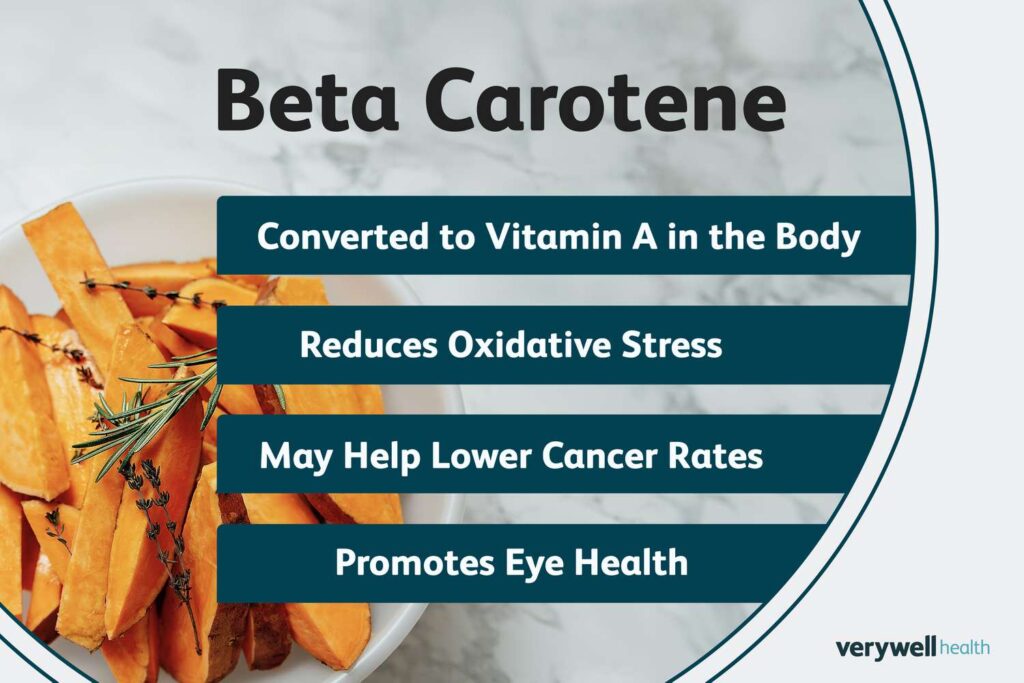
Introduction to Betacarotene
Betacarotene is a carotenoid, a category of pigment molecules found in plants that serves as a precursor to vitamin A. It’s widely recognized for its impressive nutritional profile and numerous health benefits. But what exactly is betacarotene, and how does it contribute to our overall well-being?
A Brief History of Betacarotene
The discovery of betacarotene dates back to the early 20th century when German scientist Wackenroder isolated it from carrots. However, it wasn’t until 1907 that its structure was fully understood, and later in 1911, researchers successfully extracted it from carrots. The synthesis of betacarotene chemically took place much later, in 1950.
Why Betacarotene Matters
So, why is betacarotene so special? Its unique properties extend beyond its role as a precursor to vitamin A. It boasts impressive antioxidant capabilities, which help combat free radicals and slow down the aging process.
Betacarotene also plays a crucial role in maintaining healthy vision by converting into retinol, an essential nutrient for eye health. Moreover, it’s essential for cell growth and differentiation, making it vital for our overall well-being.
Benefits of Betacarotene
Let’s dive into the numerous benefits of betacarotene:
- Antioxidant Properties: Betacarotene’s antioxidant capabilities help combat free radicals, reducing inflammation and oxidative stress.
- Vision Health: It converts into retinol, a crucial nutrient for maintaining healthy vision and preventing age-related macular degeneration.
- Cell Growth and Differentiation: Betacarotene plays a key role in cell growth and differentiation, making it essential for our overall health.
- Cancer Prevention: Research suggests that betacarotene may help prevent certain types of cancer, including breast cancer.
- Skin Health: Its antioxidant properties also make it beneficial for skin health, reducing the appearance of fine lines and wrinkles.
Where to Find Betacarotene
Betacarotene is abundant in various plant-based foods, including:
- Carrots
- Sweet potatoes
- Dark leafy greens (spinach, kale, etc.)
- Yellow and orange fruits (mangoes, pumpkins, etc.)
- Vegetable oils
Additionally, betacarotene can be found in supplement form or extracted from algae and fungi.
Safe Consumption of Betacarotene
While betacarotene offers numerous health benefits, it’s essential to consume it in moderation. Excessive intake may lead to:
- Vitamin A Toxicity: High doses of betacarotene can cause vitamin A toxicity, leading to symptoms like headaches, dizziness, and blurred vision.
- Interference with Vitamin D Absorption: Betacarotene may interfere with the absorption of vitamin D, which is essential for bone health.
To enjoy the benefits of betacarotene while minimizing potential risks, follow these guidelines:
- Consume 2mg of betacarotene per day
- Consult your doctor before taking supplements or increasing your diet
Types of Betacarotene
There are several types of betacarotene, each with its unique properties and benefits. These include:
- Beta-carotene: The most well-known type of betacarotene, found in carrots, sweet potatoes, and other plant-based foods.
- Lutein and zeaxanthin: Carotenoids that are found in yellow and orange fruits and vegetables, known for their role in protecting the eyes from damage.
- Canthaxanthin: A carotenoid that is found in certain types of algae and has been shown to have antioxidant properties.
Betacarotene and Eye Health
Betacarotene plays a crucial role in maintaining healthy vision by converting into retinol, an essential nutrient for eye health. This process helps to protect the eyes from damage caused by free radicals and oxidative stress.
In addition to its role in protecting the eyes, betacarotene has also been shown to have a number of other benefits for eye health, including:
- Reducing the risk of age-related macular degeneration: Betacarotene may help to reduce the risk of this condition by protecting the macula from damage caused by free radicals.
- Improving visual acuity: Betacarotene may also have a number of benefits for visual acuity, including improving sharpness and clarity.
Betacarotene and Cancer Prevention
Research has shown that betacarotene may have a number of benefits for cancer prevention. These include:
- Reducing the risk of breast cancer: Betacarotene may help to reduce the risk of this type of cancer by protecting cells from damage caused by free radicals.
- Reducing the risk of prostate cancer: Betacarotene may also have a number of benefits for prostate health, including reducing the risk of this type of cancer.
Betacarotene and Skin Health
The antioxidant properties of betacarotene make it beneficial for skin health. These include:
- Reducing the appearance of fine lines and wrinkles: Betacarotene may help to reduce the appearance of these signs of aging by protecting the skin from damage caused by free radicals.
- Improving skin elasticity: Betacarotene may also have a number of benefits for skin elasticity, including improving firmness and tone.
Conclusion
Betacarotene is a powerful nutrient that offers numerous health benefits. By understanding its unique properties and how to safely consume it, you can unlock the full potential of this incredible molecule.
Frequently Asked Questions (FAQs)
Q: What are the benefits of betacarotene?
A: Betacarotene boasts impressive antioxidant capabilities, contributes to healthy vision, supports cell growth and differentiation, may help prevent certain types of cancer, and promotes skin health.
Q: Where can I find betacarotene in food?
A: Betacarotene is abundant in plant-based foods like carrots, sweet potatoes, dark leafy greens, yellow and orange fruits, vegetable oils, and some supplements.
Q: How much betacarotene should I consume daily?
A: Consume 2mg of betacarotene per day to enjoy its health benefits while minimizing potential risks.
Q: Can I take betacarotene supplements if I’m pregnant or breastfeeding?
A: Consult your doctor before taking betacarotene supplements during pregnancy or breastfeeding, as excessive intake may pose potential risks.


