
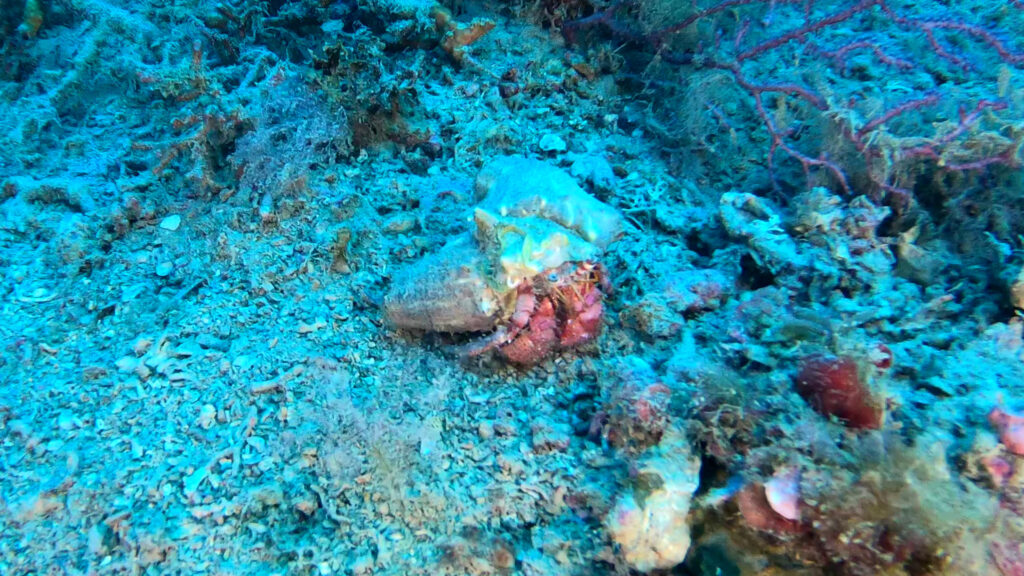
The Fascinating Life of Paguro Bernardo: A Story of Symbiosis and Adaptation
As we dive into the world of marine life, we often come across fascinating creatures that challenge our perceptions. One such creature is the Paguro Bernardo, a decapod crustacean belonging to the family Paguridae. But what makes this little crustacean so unique? Let’s explore its characteristics, symbiotic relationships, and remarkable adaptations.
Characteristics of Paguro Bernardo
The Paguro Bernardo is a small creature, barely exceeding 40 mm in length, with a soft body that requires protection from the outside world. As it grows, it sheds its shell to accommodate a new one, much like humans growing out of their childhood clothes. This process allows it to adapt to changing environments and find suitable homes.
The Paguro Bernardo’s body is covered in white-yellowish hairs, giving it an unusual appearance. Its peduncles are adorned with striking orange-red stripes, adding to its unique charm. But what truly sets this crustacean apart is its ability to decorate its shell with colorful organisms like the attinia Calliactis parasitica and the spugna Suberites domuncula.
Symbiotic Relationships
One of the most intriguing aspects of the Paguro Bernardo’s life is its symbiotic relationship with the attinia. These two species form a mutually beneficial partnership, where both parties benefit from each other’s company. The attinia produces urticating cells that protect the paguro from predators, while the paguro provides food for the attinia by capturing stray crumbs and debris.
This unlikely friendship is a testament to the complexity of marine ecosystems, where even the smallest creatures can play a significant role in maintaining the balance of nature. As we explore this symbiosis further, we’ll discover how these two species work together to create a harmonious relationship that benefits both parties.
The Attinia: A Partner in Crime
So, who is the attinia? This tiny organism is a crucial component of the Paguro Bernardo’s life, and its characteristics are just as fascinating as those of its crustacean companion. When threatened or disturbed, the attinia emits white urticating filaments that deter predators and provide protection to the paguro.
But what’s truly remarkable about this relationship is how the attinia benefits from the paguro’s presence. By hitching a ride on the paguro’s back, the attinia can explore new territories and feed on stray food particles. This mutually beneficial arrangement highlights the intricate web of relationships within marine ecosystems.
The Story of Paguro Bernardo: A Tale of Adaptation
Imagine a world where creatures could change their homes as they grew older. Sounds like a fantasy? Not quite! The story of Paguro Bernardo is one such tale, told in a charming children’s book called “Una casa per il paguro Bernardo” (A House for the Paguro Bernardo) by Eric Carle.
This delightful story follows the adventures of a young Paguro Bernardo as it searches for a new home. Along the way, it meets an array of colorful characters, including an anemone, a coral, a starfish, a sea cucumber, and even a fish lantern.
As we explore this story further, we’ll discover how the author uses whimsical illustrations to bring this marine world to life. But beneath its fantastical surface lies a valuable lesson about adaptability and the importance of finding one’s place in the world.
Imagining Paguro Bernardo
So, where can we find this elusive creature? Paguro Bernardo inhabits the Mediterranean Sea and the Atlantic Ocean, dwelling on rocky or sandy substrates between 2 to 80 meters below sea level. It’s a curious creature that navigates its surroundings with caution, retreating into its shell when threatened.
As we venture further, we’ll learn about the perils facing this crustacean, from plastic pollution to habitat destruction. But we’ll also discover how humans can help protect these incredible creatures and their habitats.
Paguro Bernardo’s Adaptations
One of the most fascinating aspects of Paguro Bernardo is its ability to adapt to changing environments. As it grows, it sheds its shell to accommodate a new one, allowing it to explore different territories. This process is crucial for the survival of this species, as it allows them to find suitable homes and avoid predators.
But that’s not all – Paguro Bernardo also has a unique way of defending itself against predators. When threatened, it can release its tail as a decoy, distracting the predator while it escapes. This clever tactic is a testament to the ingenuity of this crustacean.
Paguro Bernardo and Attinia: A Perfect Partnership
As we explore the symbiotic relationship between Paguro Bernardo and attinia, we’ll discover how these two species work together to create a harmonious relationship that benefits both parties. The attinia produces urticating cells that protect the paguro from predators, while the paguro provides food for the attinia by capturing stray crumbs and debris.
This mutually beneficial arrangement highlights the intricate web of relationships within marine ecosystems. By working together, these two species can thrive in an environment where competition is high, and resources are scarce.
The Importance of Conservation
As we learn more about Paguro Bernardo and its symbiotic relationship with attinia, it becomes clear that conservation efforts are crucial for the survival of this species. Habitat destruction, plastic pollution, and climate change all pose significant risks to the survival of Paguro Bernardo populations.
But there’s hope! By reducing our carbon footprint, supporting conservation efforts, and promoting sustainable practices, we can all contribute to preserving these incredible creatures and their ecosystems. It’s a small step that can make a big difference in the long run.
Paguro Bernardo: A Symbol of Adaptation
As we continue to explore the fascinating world of Paguro Bernardo, we’ll discover how this crustacean has become a symbol of adaptation and resilience. Its ability to shed its shell as it grows, navigate its surroundings with caution, and defend itself against predators is a testament to the ingenuity of this species.
But what’s truly remarkable about Paguro Bernardo is its ability to adapt to changing environments. As it grows, it sheds its shell to accommodate a new one, allowing it to explore different territories. This process is crucial for the survival of this species, as it allows them to find suitable homes and avoid predators.
Conclusion
The Paguro Bernardo is a tiny but fascinating creature that has captured our hearts with its unique characteristics and symbiotic relationships. As we delve deeper into the world of marine life, we’re reminded of the importance of adaptability, cooperation, and conservation.
Whether you’re a seasoned scientist or a curious learner, the story of Paguro Bernardo offers valuable insights into the intricate web of life that surrounds us. So let’s continue to explore this fascinating creature and its world, inspiring us to become better stewards of our planet’s precious resources.
FAQs
- What is the difference between Paguro Bernardo and other crustaceans?
While all crustaceans have hard exoskeletons, Paguro Bernardo sheds its shell as it grows, allowing it to adapt to changing environments. - How do Paguro Berhardo and attinia benefit from each other’s company?
The paguro provides food for the attinia, while the attinia produces urticating cells that protect the paguro from predators. - What is the significance of the attinia’s urticating filaments?
These filaments deter predators and provide protection to the paguro, while also allowing the attinia to feed on stray food particles. - Can Paguro Bernardo be kept as a pet?
Yes, but it requires specialized care and housing that mimics its natural habitat. It’s recommended to seek expert advice before attempting to keep this crustacean in captivity. - What are some common threats facing Paguro Bernardo populations?
Plastic pollution, habitat destruction, and climate change all pose significant risks to the survival of this species. - How can humans help protect Paguro Bernardo and its habitats?
By reducing plastic waste, supporting conservation efforts, and promoting sustainable practices, we can all contribute to preserving these incredible creatures and their ecosystems. - What is the role of attinia in the ecosystem?
Attinia plays a crucial role in maintaining the balance of nature by producing urticating cells that protect Paguro Bernardo from predators.
As we continue to explore the fascinating world of Paguro Bernardo, we’ll discover more about this incredible creature and its place in our planet’s ecosystems. Join us on this journey as we delve deeper into the world of marine life, and inspire others to become better stewards of our planet’s precious resources.


