
What is Benzoic Acid?
Benzoic acid, also known as benzoate, is a type of organic compound that belongs to the carboxylic acid family. Its chemical formula is C6H5COOH, and it is characterized by the presence of an aromatic ring and a carboxyl group.
Properties of Benzoic Acid
Benzoic acid is a crystalline solid with a colorless appearance. It has a distinctive odor, which is often described as slightly sweet or pleasant. At room temperature, its density is 1.075 grams per cubic centimeter (g/cm³).
Chemical Properties of Benzoic Acid
Benzoic acid is soluble in water, but its solubility increases with temperature. In contrast to other carboxylic acids, benzoic acid has a relatively high solubility in organic solvents like benzene and acetone.
The dissociation constant (pKa) of benzoic acid is 4.2, indicating that it can donate or accept protons in its molecule. Its reactions can occur at either the carboxyl group or the aromatic ring.
Industrial Uses of Benzoic Acid
Benzoic acid’s primary industrial application is in the production of aromatic compounds like phenol through a process known as decarboxylation oxidation. This process typically takes place between 300 and 400 degrees Celsius (°C).
Besides its use in aromatics, benzoic acid is widely employed in the food industry as an additive for preserving foods.
Solubility of Benzoic Acid in Water
Contrary to some other substances, benzoic acid is not highly soluble in water. However, its solubility increases with rising temperatures.
At 0 °C, benzoic acid dissolves at a rate of approximately 1.7 grams per liter (g/L), while at 100 °C, it reaches a solubility of around 56.3 g/L.
Preparation Methods for Benzoic Acid
In industrial settings, benzoic acid can be produced through the partial oxidation of toluene using oxygen and catalysts such as manganese or cobalt. This process is commonly employed in the chemical industry.
Other methods involve the hydration of benzamide or benzonic acid, as well as the oxidation of benzyl chloride or alcohol derivatives.
Cosmetic Applications of Benzoic Acid
Benzoic acid is used extensively in cosmetics due to its preservative properties. It acts by inhibiting bacterial growth and fungal development, thus preventing spoilage.
In various cosmetic products like shampoos, lotions, and creams, benzoic acid helps maintain a stable pH level while providing antimicrobial protection.
Food Additives: Is Benzoic Acid Safe for Consumption?
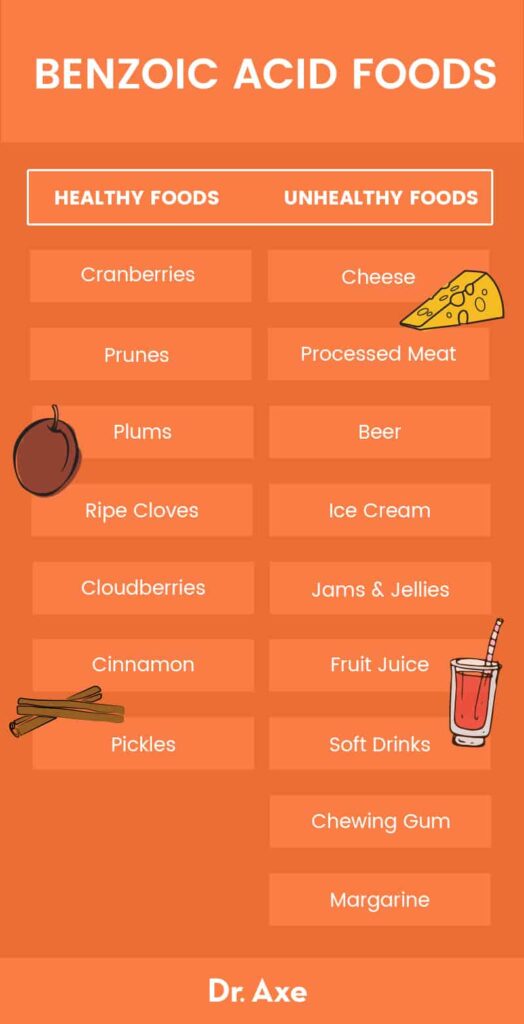
It’s crucial to note that benzoic acid is not recommended as an ingredient in food supplements due to potential toxicity issues at high doses. However, in moderation, it can be safely consumed through natural sources like certain fruits and vegetables.
Additionally, some derivatives of benzoic acid are approved for use in food products as preservatives.
Benzoic Acid Derivatives: What Are They?
The benzoic acid molecule is converted into various compounds such as phenol and caprolactam in commercial applications. These derivatives play significant roles in the plastic industry, among other sectors.
Potential Risks Associated with Benzoic Acid Exposure
While generally considered safe in moderation, excessive exposure to benzoic acid has been linked to potential health risks, including:
- Cancer
- Neurological damage
- Skin irritation
However, these risks are generally associated with high doses or prolonged exposure.
Regulatory Guidelines for Benzoic Acid
Benzoic acid is regulated by various government agencies worldwide. In the United States, the Food and Drug Administration (FDA) has set acceptable daily intake levels for benzoic acid.
Similarly, the European Union has established guidelines for the use of benzoic acid in food products.
Conclusion: Understanding Benzoic Acid
In conclusion, benzoic acid is a versatile organic compound with various industrial applications. Its properties and uses make it an essential component in various sectors, including cosmetics and food preservation.
However, excessive exposure to benzoic acid can pose potential health risks. As such, it’s crucial to follow recommended guidelines and regulations for safe consumption and use of this compound.
Q&A: Frequently Asked Questions about Benzoic Acid
Q: Is Benzoic Acid Harmful to Humans?
A: When consumed in moderation, benzoic acid poses no threat to human health. However, excessive intake could potentially be hazardous due to its potential toxicity at high doses.
Q: How is Benzoic Acid Produced?
A: Industrial production of benzoic acid involves partial oxidation of toluene with oxygen and catalysts like manganese or cobalt.
Q: Can I Use Benzoic Acid as a Food Preservative?
A: While some derivatives of benzoic acid are approved for use in food products, it’s essential to follow recommended dosages and guidelines to avoid potential adverse effects.
Q: Are Parabens Safe for Human Consumption?
A: Some paraben derivatives (E214-E219) have raised health concerns due to their chemical structure. As such, they may be considered harmful if ingested in large quantities or over extended periods of time.
Q: Can I Use Benzoic Acid in Cosmetic Products?
A: Yes, benzoic acid is widely used as a preservative in various cosmetic products like shampoos and lotions due to its antimicrobial properties and compatibility with human skin.


