
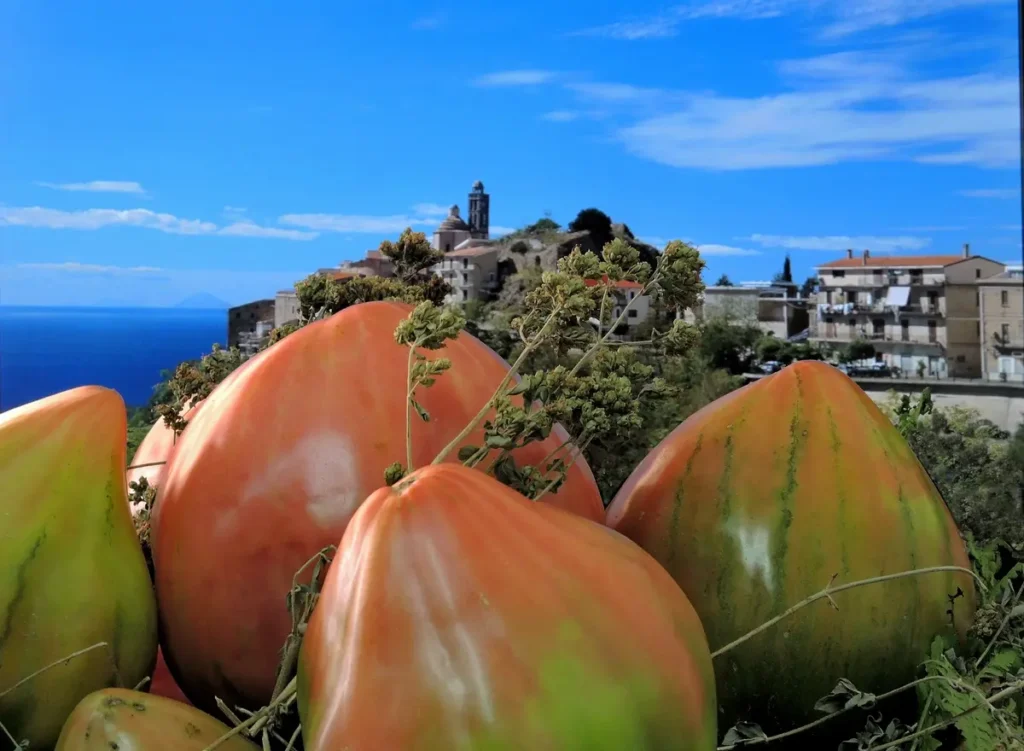
What is the Pomodoro Belmonte?
The Pomodoro Belmonte is a unique and delicious variety of tomato originating from the town of Belmonte in Cosenza, Italy. This giant tomato can weigh up to 3 kg (6.6 lbs) and is prized for its tender flesh and sweet flavor.
A Brief History of the Pomodoro Belmonte
The history of the Pomodoro Belmonte dates back to the early 20th century when an Italian emigrant named Guglielmo Mercurio brought back seeds from his travels in America. The tomato quickly gained popularity among local farmers, who selectively bred it to create a variety that is now recognized as a Denominazione Comunale d’Origine (DCO) product.
Types of Pomodoro Belmonte
There are two main types of Pomodoro Belmonte: the Gigante and the Cuore di Bue. The Gigante variety can weigh up to 3 kg, while the Cuore di Bue weighs between 500-600 grams (17.6-21.2 oz). Both varieties are known for their exceptional flavor and texture.
Characteristics of the Pomodoro Belmonte
The Pomodoro Belmonte is renowned for its:
- Tender flesh: The tomato’s flesh is extremely tender, making it perfect for fresh consumption or cooking.
- Sweet flavor: The Pomodoro Belmonte has a sweet and slightly acidic taste that complements a wide range of dishes.
- Low acidity: Unlike other tomatoes, the Pomodoro Belmonte lacks strong acidity, which makes it ideal for salads and sauces.
How to Grow the Pomodoro Belmonte
Growing the Pomodoro Belmonte requires specific conditions:
- Full sun: The tomato needs full sun to produce well.
- Deep soil: The soil should be deep and have good drainage to accommodate the plant’s extensive root system.
- Manual seed selection: To preserve the variety’s genetic characteristics, local farmers manually select and breed seeds.
When to Plant the Pomodoro Belmonte
The best time to plant the Pomodoro Belmonte is:
- Late April in coastal areas: The tomato can be planted as soon as the soil has warmed up.
- Early June in mountainous regions: In cooler climates, it’s better to wait until late May or early June.
Pruning and Training the Plant
To control the plant’s growth:
- Spacing: Plant the tomatoes 50-60 cm apart and 120 cm between rows.
- Support: The plants can grow up to 2 meters (6.6 feet) tall, so they need staking or trellises for support.
Varieties of Pomodoro Belmonte
In addition to the Gigante and Cuore di Bue, there are other varieties of Pomodoro Belmonte that have been developed over time:
- Pomodoro della Valle: This variety is smaller than the Gigante but still produces large, delicious tomatoes.
- Pomodoro della Montagna: This variety is bred specifically for mountainous regions and can tolerate cooler temperatures.
Harvesting the Pomodoro Belmonte
The best time to harvest the Pomodoro Belmonte depends on its size:
- Gigante: Harvest when the tomato reaches a weight of 2 kg (4.4 lbs) or more.
- Cuore di Bue: Harvest when the tomato reaches a weight of 500-600 grams (17.6-21.2 oz).
Storing the Pomodoro Belmonte
To preserve the flavor and texture of the Pomodoro Belmonte, follow these storage tips:
- Cool, dry place: Store the tomatoes in a cool, dry place to slow down spoilage.
- Avoid direct sunlight: Direct sunlight can cause the tomatoes to ripen too quickly, leading to spoilage.
Using the Pomodoro Belmonte
The Pomodoro Belmonte is versatile and can be used in various dishes:
- Fresh consumption: Slice the tomato and enjoy it fresh.
- Salads: Add diced tomatoes to salads for a burst of flavor and color.
- Sauces: Use the tomatoes to make delicious sauces, such as pasta sauce or salsa.
Conclusion
The Pomodoro Belmonte is an extraordinary tomato variety that deserves recognition for its exceptional flavor and characteristics. With proper care and attention, this unique tomato variety will thrive in your garden.
Frequently Asked Questions (FAQs)
-
What makes the Pomodoro Belmonte so special?
The Pomodoro Belmonte is unique due to its massive size, tender flesh, and sweet flavor.
2. How do I grow a healthy Pomodoro Belmonte plant?Plant in full sun, deep soil with good drainage, and manually select seeds for genetic preservation.
3. What are the different types of Pomodoro Belmonte?There are two main varieties: Gigante and Cuore di Bue, each with distinct characteristics.
4. Can I grow the Pomodoro Belmonte indoors?No, this tomato variety requires full sun to produce well, so it’s best grown outdoors.
5. How do I store the harvested tomatoes?Allow the tomatoes to ripen at room temperature before storing them in a cool, dry place.
6. Can I use the Pomodoro Belmonte seeds for other tomato varieties?No, the unique characteristics of the Pomodoro Belmonte are preserved by manually selecting and breeding seeds from this variety only.
7. Is it difficult to find the seeds for the Pomodoro Belmonte?Yes, due to its exclusive nature, finding seeds for the Pomodoro Belmonte can be challenging, but local farmers may sell them or provide guidance on obtaining seeds.
8. Can I use the Pomodoro Belmonte in salads?Yes, this variety is perfect for fresh consumption and adds a delicious twist to any salad.
Conclusion
The Pomodoro Belmonte is an extraordinary tomato variety that deserves recognition for its exceptional flavor and characteristics.


