
Pressure ulcers, also known as “ulcere da pressione,” are painful sores that can develop when skin and soft tissues come into contact with a harder surface for an extended period. This pressure can reduce blood flow to the affected area, leading to tissue damage or even death.
In this article, we will discuss the causes of pressure ulcers, their symptoms, and most importantly, how to prevent them. We’ll also explore the importance of regular body checks, proper wound care, and lifestyle modifications to keep you safe from these painful sores.
Who is at Risk?
Certain individuals are more prone to developing pressure ulcers due to various factors:
• Those who spend most of their day in bed or on a wheelchair with minimal body movement
• People who are overweight or underweight
• Individuals with bowel or bladder control issues
• Those with reduced sensitivity in certain areas of the body
• People who remain in one position for extended periods
The Importance of Regular Body Checks
To prevent pressure ulcers, it’s crucial to regularly inspect your body, paying attention to areas prone to pressure sores:
• Heels and toes
• Knees
• Hips
• Spine
• Elbows
• Shoulders and scapulae
• Back of the head
• Ears
If you notice any early signs of pressure ulcers, such as redness, soft or hard skin, or sores, seek medical attention immediately.
Treating Pressure Ulcers
If you’ve already developed a pressure ulcer, it’s essential to treat it gently and effectively. When washing the affected area:
• Use a soft cloth or sponge
• Avoid scrubbing too aggressively
• Apply a moisturizing cream or ointment daily
• Clean and dry the area with extra attention around the groin and under the breasts
• Avoid using talcum powder or harsh soaps
• Limit bathing to minimize drying of the skin
To prevent pressure ulcers, make sure your clothes don’t put unnecessary pressure on sensitive areas:
• Avoid tight clothing with thick seams or buttons
• Wear loose-fitting clothes
• Prevent clothes from bunching up and putting pressure on certain areas
Using a Wheelchair Safely
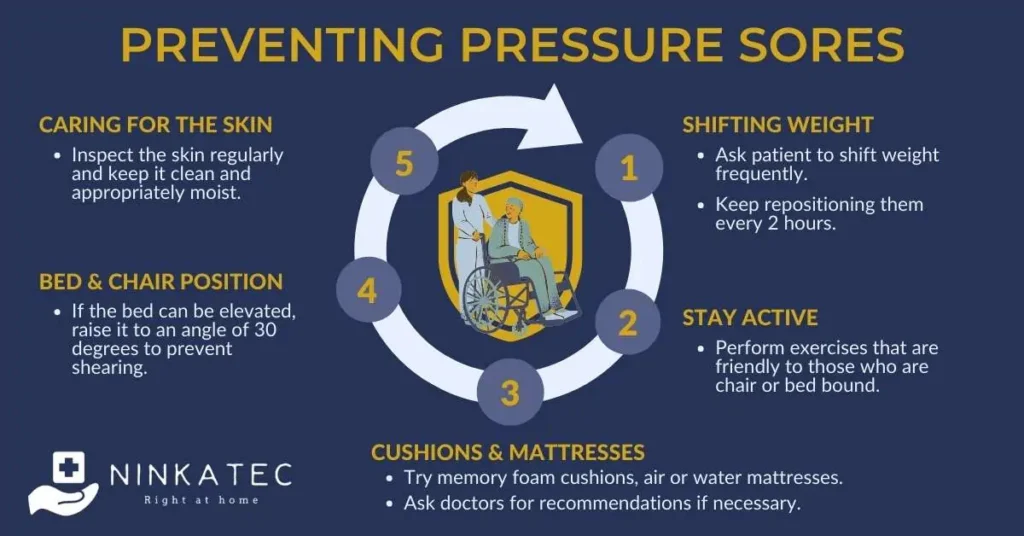
If you use a wheelchair, ensure it’s the correct size for you. Have your doctor or physical therapist check the fit at least twice a year.
When using a wheelchair:
• Rotate every 15-20 minutes to distribute weight evenly
• Incline forward or sideways to redistribute pressure
• Adjust the seat height and armrests to maintain comfort
Sleeping Safely
If you spend most of your day in bed, invest in a supportive mattress, such as one with foam or gel inserts. Add extra cushioning under your joints and use pillows to support the back of your head.
To avoid pressure ulcers while sleeping:
• Place cushions under your hips and knees
• Use pillows to elevate your feet and legs
• Switch positions regularly
Preventing Pressure Ulcers in the Elderly
Elderly individuals are at a higher risk of developing pressure ulcers due to age-related factors such as decreased mobility, muscle mass loss, and nerve damage. To prevent pressure ulcers in the elderly:
• Use a supportive mattress and pillows
• Rotate their body regularly while sleeping or sitting
• Dress them in loose-fitting clothes that don’t put pressure on sensitive areas
• Encourage them to stay active with exercises and physical therapy
Preventing Pressure Ulcers in Hospitalized Patients
Hospitalized patients are at risk of developing pressure ulcers due to prolonged bed rest and lack of mobility. To prevent pressure ulcers in hospitalized patients:
• Use a mattress pad or specialized mattress designed for pressure ulcer prevention
• Rotate their body regularly while sleeping or sitting
• Dress them in loose-fitting clothes that don’t put pressure on sensitive areas
• Encourage them to stay active with exercises and physical therapy
Preventing Pressure Ulcers in People with Diabetes
People with diabetes are at a higher risk of developing pressure ulcers due to nerve damage, poor circulation, and high blood sugar levels. To prevent pressure ulcers in people with diabetes:
• Use a supportive mattress and pillows
• Monitor their blood sugar levels regularly
• Check for signs of pressure ulcers early
• Encourage them to stay active with exercises and physical therapy
Conclusion
Pressure ulcers are a preventable condition that can significantly impact quality of life. By understanding the causes, recognizing early symptoms, and implementing simple lifestyle modifications, you can reduce your risk of developing these painful sores.
By following the tips and guidelines outlined in this article, you can take proactive steps to prevent pressure ulcers and maintain good health and well-being.
Frequently Asked Questions (FAQs)
- Q: What is the best way to prevent pressure ulcers?
A: Regular body checks, proper wound care, and lifestyle modifications are essential for preventing pressure ulcers. - Q: Who is most at risk of developing pressure ulcers?
A: Individuals who spend extended periods in bed or on a wheelchair with minimal movement, those with bowel or bladder control issues, and people with reduced sensitivity in certain areas. - Q: What are the early symptoms of pressure ulcers?
A: Redness, soft or hard skin, and sores can be indicative of pressure ulcers. - Q: How do I treat existing pressure ulcers?
A: Gently wash the affected area with a soft cloth or sponge, apply moisturizing cream or ointment daily, and clean and dry the area with extra attention. - Q: Can pressure ulcers be prevented by wearing loose-fitting clothes?
A: Yes, avoiding tight clothing can reduce pressure on sensitive areas. - Q: How often should I check my body for pressure ulcers?
A: Regularly inspect your body, paying attention to prone areas. - Q: What is the importance of using a supportive mattress while sleeping?
A: A supportive mattress can help distribute weight evenly and reduce pressure on sensitive areas. - Q: Can I prevent pressure ulcers by rotating my wheelchair every 15-20 minutes?
A: Yes, regular rotation can help redistribute weight and prevent pressure ulcers.
Additional Tips for Preventing Pressure Ulcers
- Use a heated mattress pad to keep your skin warm
- Avoid crossing your legs or ankles, which can put pressure on sensitive areas
- Stay hydrated by drinking plenty of water
- Get regular exercise to improve circulation and muscle strength
- Eat a balanced diet rich in fruits, vegetables, and whole grains
Remember, prevention is key to avoiding these painful sores. By understanding the causes of pressure ulcers and taking simple steps to reduce your risk, you can maintain good health and well-being.


