
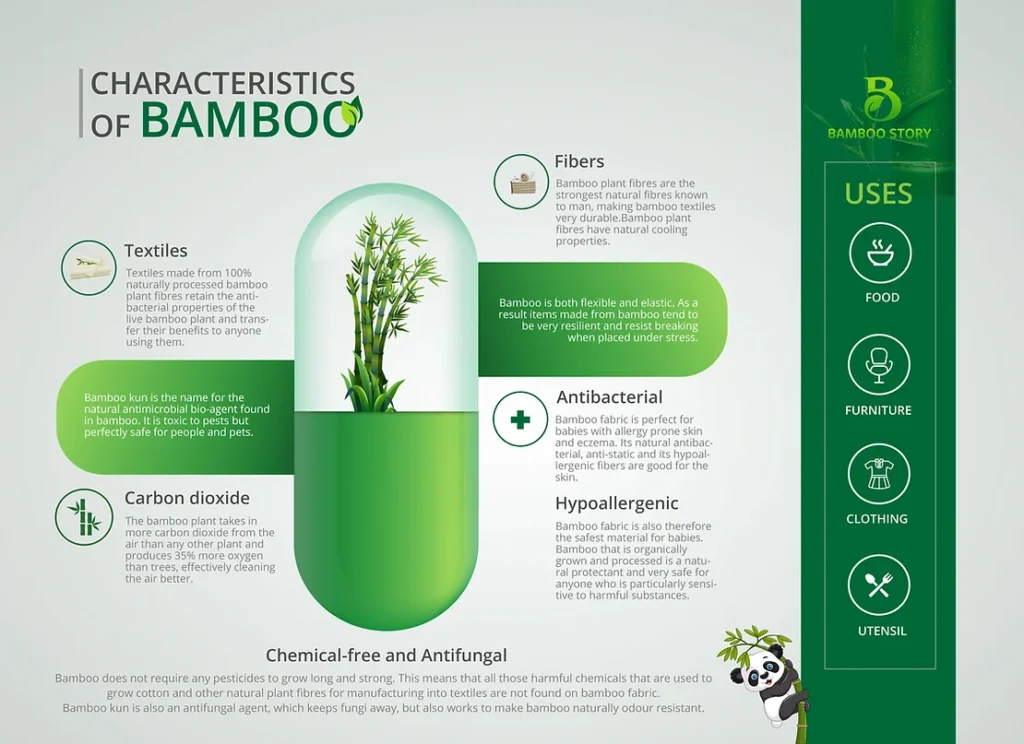
As you may not know, bamboo has characteristics of hardness similar to that of steel, and can withstand double the weight compression that concrete can. Perhaps this extraordinary material isn’t well-known in the West, and is rarely used in construction, where it’s perfectly suited for structural applications with carrying functions (as you know since ancient times in Eastern countries).
In stress tests, bamboo has demonstrated high resistance to both tensile and compressive forces, and its extreme flexibility makes it highly suitable for constructions with antisismic features. Besides serving as structural elements, worked bamboo can also be used to create natural wooden flooring similar to that of wood, while finer interlacing can be used to make insulation external shells.
From a botanical standpoint, bamboo belongs to the Graminaceae family (those responsible for a lot of allergies) and there are several types of it that in some cases reach notable lengths and diameters. The stem, which constitutes the most important part of the plant, is cylindrical, articulated, nodular, and flexible. Its exceptional robustness is as mentioned extraordinary.
Is bamboo eco-friendly and suitable for sustainable construction? Let’s start by saying that bamboo is affordable and available in large quantities because the bamboo species are very fast-growing (even up to several meters in a single year) and widespread. In Italy, it can be easily grown and cultivated.
Using bamboo for building purposes doesn’t present any environmental contradictions whatsoever (natural origin, low energy consumption during collection and processing, biodegradable at the end of its life cycle). The only warning concerns the construction technologies, which are not well-known in Western countries as they are in Eastern countries.
What Makes Bamboo So Special?
Bamboo is an extraordinary plant that offers a wide range of characteristics that make it suitable for various applications. Its exceptional hardness and strength allow it to withstand heavy loads, while its flexibility makes it perfect for constructions with antisismic features. Let’s delve deeper into the properties of bamboo and explore its potential uses.
The History of Bamboo
Bamboo has been used in construction for thousands of years, particularly in Eastern countries where it’s a highly valued material. In Italy, however, it’s still relatively unknown, but this shouldn’t stop us from exploring its potential benefits. Bamboo’s history is closely tied to the development of sustainable building practices, and understanding its origins can help us appreciate its value.
Bamboo has been used in various forms throughout history, from simple shelters to elaborate temples and buildings. In China, bamboo was considered a sacred material, and it played an essential role in the construction of the Great Wall of China. The use of bamboo in construction also dates back to ancient Japan, where it was used for building houses, bridges, and other structures.
In India, bamboo has been used for centuries in the construction of temples, mosques, and other religious buildings. Its versatility, strength, and durability made it an ideal material for various applications. In Africa, bamboo is also used for building purposes, particularly in regions where traditional materials are scarce or unavailable.
Types of Bamboo
There are several types of bamboo, each with its unique characteristics and uses. From fast-growing species that can reach impressive lengths in a short period to slower-growing ones that provide more durable materials, there’s a wide range of options available. Understanding the different types of bamboo is essential for selecting the right material for your project.
Some of the most common types of bamboo include:
- Moso bamboo (Phyllostachys edulis): This is one of the fastest-growing species of bamboo, with some stems reaching lengths of up to 30 meters in just a few years.
- Black bamboo (Phyllostachys nigra): This type of bamboo is known for its dark color and is often used for decorative purposes.
- Yellow bamboo (Phyllostachys aurea): As its name suggests, this type of bamboo has yellow or golden-colored culms.
- Dendrocalamus bamboo (Dendrocalamus spp.): This genus includes many species of bamboo, some of which are known for their exceptional strength and durability.
Bamboo as a Sustainable Building Material
Bamboo is an eco-friendly alternative to traditional building materials like steel and concrete. Its natural origin, low energy consumption during collection and processing, and biodegradable end-of-life cycle make it an attractive option for environmentally conscious builders. Let’s explore the benefits of using bamboo in sustainable construction.
Some of the key benefits of using bamboo in construction include:
- Reduced carbon emissions: Bamboo requires minimal processing and manufacturing, resulting in lower carbon emissions compared to traditional building materials.
- Low material costs: Bamboo is a highly renewable resource, making it an affordable option for builders.
- Improved building performance: Bamboo has excellent thermal insulation properties, making it ideal for use in building construction.
Construction Techniques with Bamboo
While bamboo has been used in construction for thousands of years, modern techniques are still being developed to fully harness its potential. In Italy, however, many traditional building practices remain unchanged, leaving room for innovation and experimentation. Understanding the different construction techniques that can be used with bamboo is crucial for unlocking its full potential.
Some common construction techniques used with bamboo include:
- Bamboo framing: This involves using bamboo as a primary structural material for buildings.
- Bamboo decking: This involves using bamboo as a flooring material, often in combination with other materials like wood or composite materials.
- Bamboo roofing: This involves using bamboo as a roofing material, often in combination with other materials like thatch or shingles.
Challenges and Limitations
While bamboo offers numerous benefits as a sustainable building material, it’s not without its challenges and limitations. The lack of knowledge about local regulations, limited availability in some regions, and the need for specialized equipment can hinder its adoption. Let’s discuss these challenges and explore ways to overcome them.
Some of the key challenges associated with using bamboo in construction include:
- Limited availability: Bamboo is often scarce in certain regions, making it difficult to source high-quality material.
- Lack of standardization: There is currently a lack of standardization in the production and processing of bamboo, which can make it difficult for builders to work with.
- Specialized equipment: Some construction techniques require specialized equipment, such as bamboo-specific saws or machines, which can be expensive and hard to find.
Conclusion
Bamboo is an extraordinary plant that offers a wide range of characteristics making it suitable for various applications. Its exceptional hardness and strength allow it to withstand heavy loads, while its flexibility makes it perfect for constructions with antisismic features. By understanding the properties of bamboo, exploring its history, types, and potential uses, we can unlock its full potential as a sustainable building material.
FAQs
Q: Is bamboo suitable for all types of construction projects?
A: Yes, bamboo is an excellent option for structures that require high strength-to-weight ratios, such as bridges, buildings, and furniture.
Q: How do I choose the right type of bamboo for my project?
A: Consider factors like growth rate, durability, and local availability when selecting the best type of bamboo for your project.
Q: What are some common applications for bamboo in construction?
A: Bamboo is commonly used for structural elements, flooring, roofing, wall panels, and insulation.
Q: Is bamboo eco-friendly?
A: Yes, bamboo has a low environmental impact due to its fast growth rate, natural origin, and biodegradable end-of-life cycle.
Q: Can I use bamboo in areas with high winds or seismic activity?
A: Yes, bamboo can be used in areas with high winds or seismic activity due to its exceptional flexibility and strength.
Q: How do I process and prepare bamboo for construction projects?
A: Bamboo must be properly processed and prepared before use, including debarking, cutting, and drying.
Q: What are some of the benefits of using bamboo in sustainable construction?
A: Bamboo offers numerous benefits, including reduced carbon emissions, lower material costs, and improved building performance.


