
Introduction
The Australian dingo is an enigmatic creature that has been roaming the land for thousands of years. With a rich history dating back to 3500 BCE, this wild dog has managed to adapt and thrive in various environments across Asia and Australia. Despite being known as the “wild dog” or “Australian native dog,” its origins are rooted in Asia. In this article, we will delve into the fascinating world of the Australian dingo, exploring its physical characteristics, behavior, diet, conservation status, and more.
Physical Characteristics
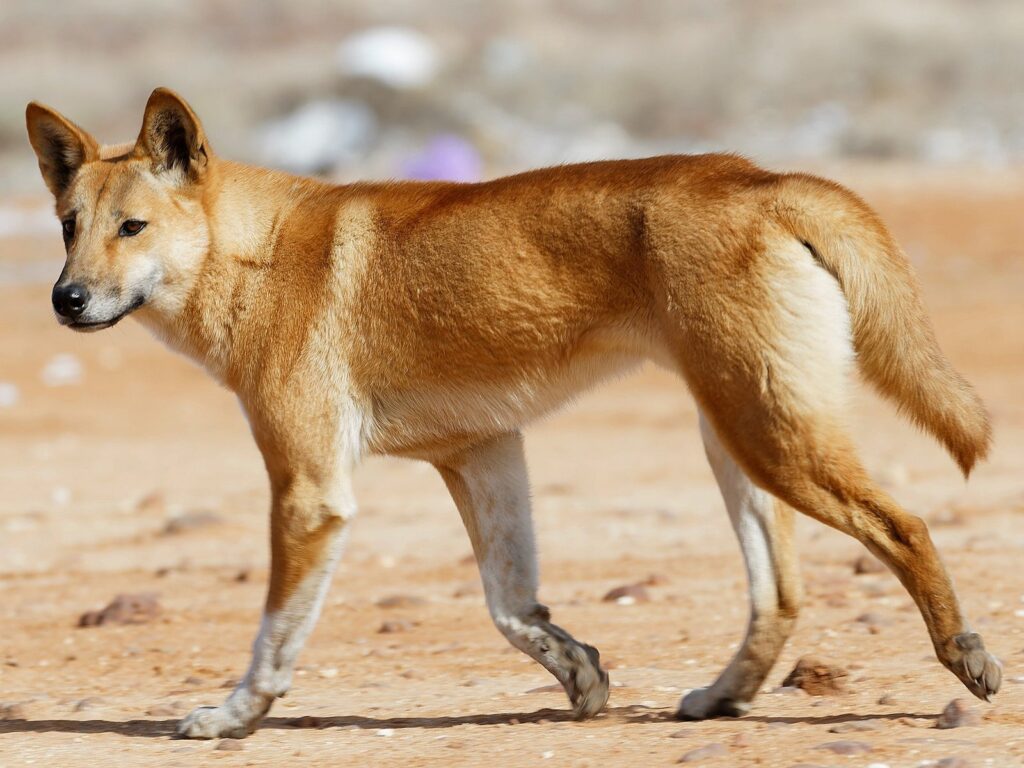
The Australian dingo, scientifically known as Canis lupus dingo, has distinct physical features that set it apart from other canines. Adults typically measure 50-60 cm in length and weigh around 32 kg, although some specimens have been recorded at a significantly larger size. The dog’s coat is usually yellow, reddish-brown, or sandy-colored, with white markings on the chest, legs, and tail. Notably, its musk is more pronounced than that of domesticated dogs.
Behavior and Social Structure
Like wolves, dingos are solitary animals but often gather in small groups for socialization and mating purposes. They mark their territory using scent and may attack rival packs or humans who encroach on their domain. A typical dingo pack consists of 3-12 members, with a hierarchical structure. The dominant pair is responsible for reproduction, while subordinates care for the young.
Diet
The Australian dingo’s diet varies greatly depending on its location. In the northern regions, they primarily feed on insects, small mammals, and water buffalo. In central Australia, their diet consists of rabbits, rodents, kangaroos, opossums, and smaller marsupials. In areas close to human settlements, dingos have adapted to scavenging for food, including rice, fruit, and garbage.
Conservation Status
The Australian dingo’s population is declining due to hybridization with domesticated dogs and hunting by humans in many regions. While some protected areas, such as national parks and UNESCO World Heritage Sites, provide a safe haven for the species, more needs to be done to ensure its long-term survival. Efforts are underway to protect and conserve this unique species.
Breeding and Reproduction
Dingos breed only once a year, with litters typically occurring between May and July. The pups are born after a gestation period of approximately 58-60 days. Unlike domesticated dogs, dingos do not produce multiple litters in a single breeding season.
Comparative Behavior
While dingos share some characteristics with wolves, they also exhibit distinct differences in behavior. Unlike wolves, who often form complex social hierarchies, dingos tend to be more solitary. Moreover, dingos are known for their distinctive ululation, which serves as a means of communication and warning calls.
Interesting Facts
- Dingos have been observed exhibiting unique behaviors, such as playfulness and affection towards humans.
- In the wild, dingos can reach speeds of up to 30 miles per hour (48 km/h) when chasing prey or escaping danger.
- The Australian dingo’s adaptability has allowed it to thrive in a wide range of environments, from tropical forests to arid deserts.
Frequently Asked Questions
- What is the average lifespan of an Australian dingo?
- How do dingos communicate with each other?
- Can dingos be domesticated?
- Are there any conservation efforts in place to protect the Australian dingo?
In conclusion, the Australian dingo is a fascinating and unique species that continues to captivate scientists and wildlife enthusiasts alike. By understanding its behavior, habitat, and conservation status, we can work towards ensuring the long-term survival of this incredible animal.
FAQs
- What is the average lifespan of an Australian dingo?
- The average lifespan of an Australian dingo in the wild is approximately 8-10 years.
- How do dingos communicate with each other?
- Dingos primarily use vocalizations, including ululation, to communicate with each other. They also utilize scent marking and body language to convey information.
- Can dingos be domesticated?
- While it is theoretically possible to domesticate a dingo, it is not recommended due to their wild nature and potential for hybridization with domestic dogs.
- Are there any conservation efforts in place to protect the Australian dingo?
- Yes, several organizations and governments are working together to protect and conserve the Australian dingo, including the establishment of protected areas and education programs.
By learning more about this incredible species, we can work towards preserving its place in our planet’s diverse ecosystems.


