
As a young athlete, you’ve spent countless hours training on the track, pushing your body to its limits and testing your endurance. But have you ever stopped to think about what makes up the very surface you’re running on? In this article, we’ll delve into the world of track and field, exploring the dimensions, materials, and disciplines that make up this thrilling sport.
Track Dimensions: The Ultimate Racing Surface
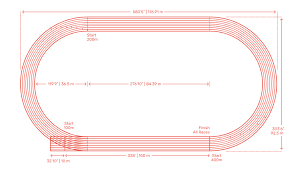
The standard length of a track is 400 meters, with an elliptical shape designed to provide optimal racing conditions. However, the number of lanes can vary from as few as six to as many as ten, depending on the level of competition. For international events, at least eight lanes are required.
But what about the dimensions of each lane? The width of a track lane is precisely 1.22 meters, and the direction of travel is always counterclockwise. And, as an added safety feature, the inner edge of the first lane must be raised by at least five centimeters – a design choice that’s essential for preventing collisions.
The reason why the outer edges are slightly higher than the inner edges is to ensure proper racing conditions and minimize the risk of runners colliding with each other. This unique design element has been carefully considered to provide athletes with an optimal environment to compete and perform at their best.
The Magic of Tartan: A Synthetic Material like No Other
So what makes up the magical surface you’re running on? It’s none other than tartan, a synthetic material composed of polyurethane. This unique fabric is specifically designed for track and field events because it can withstand even the most challenging weather conditions.
Tartan’s elasticity allows athletes to rebound with ease, making it an ideal surface for sprinters and hurdlers alike. However, it’s crucial to strike the perfect balance – if it’s too hard or too soft, performance suffers dramatically.
To ensure optimal results, many track surfaces are specifically designed to meet strict regulations. One such rule prohibits the use of spike shoes with chiodi (nails) exceeding nine millimeters in length. This measure helps prevent serious injuries and maintains the integrity of the competition.
Outdoor vs Indoor: The Two Sides of Track and Field
So, how does one choose between an outdoor track and indoor facility? While both have their advantages and disadvantages, there’s no denying that outdoor tracks offer a more authentic experience for athletes. With fewer restrictions on lane width and greater freedom to move around, outdoor tracks provide a more dynamic environment.
However, in many cases, outdoor facilities are scarce, leaving runners with limited options. That’s why indoor tracks, although less common, have become increasingly popular over the years. The benefits of indoor tracks include reduced wind resistance, lower humidity levels, and better temperature control – all essential factors for optimal performance.
Disciplines of Track and Field: A World of Endurance and Speed
Now that we’ve explored the technical aspects of track and field, let’s take a look at the various disciplines that make up this exciting sport. Whether you’re a seasoned athlete or just starting out, there’s something for everyone in the world of track and field.
Sprinting: The Fastest Man (and Woman) on Earth
For those who prefer shorter distances, sprinting is an excellent option. Events like the 100m, 200m, and 400m provide a thrilling test of speed and endurance, pushing athletes to their limits in a matter of seconds.
To excel in these events, athletes must possess incredible acceleration, top-end speed, and the ability to maintain their pace over short distances. Sprinters need to be incredibly explosive, with a strong emphasis on quick bursts of energy – an attribute that’s developed through rigorous training and practice.
Hurdling: The Ultimate Challenge
But for those who enjoy a bit more complexity, hurdling is the way to go. This discipline requires athletes to clear obstacles at high speeds while maintaining top-notch technique – an absolute thrill for any track enthusiast.
To succeed in hurdling, athletes must possess exceptional power, speed, and agility. They need to be able to generate massive force to propel themselves over the hurdles, as well as maintain precise timing and positioning to ensure a clean takeoff and landing.
Middle-Distance: A Test of Endurance and Strategy
For runners looking for a challenge that’s neither too short nor too long, middle-distance events are the perfect choice. Events like the 800m, 1500m, and 3000m require athletes to balance speed with endurance, making them an absolute favorite among track enthusiasts.
Middle-distance running is all about finding that delicate balance between speed and endurance. Athletes need to be able to maintain a consistent pace over longer distances, while still possessing the explosive power required to propel themselves forward in the early stages of the event.
Multiple-Event Track: Where Strength and Speed Reign Supreme
Last but certainly not least, there’s multiple-event track, which tests athletes in multiple disciplines over a single competition. Events like the decathlon and pentathlon push athletes to their limits, requiring them to excel in multiple areas – an absolute thrill for any track enthusiast.
Multiple-event competitions require athletes to possess a broad range of skills, including speed, endurance, jumping ability, and strength. They need to be able to adapt quickly to different events and conditions, making them some of the most versatile and talented athletes on the planet.
Pista Atletica Indoor: The Hidden Gem of Track and Field
While outdoor tracks are often the spotlight of attention, indoor facilities offer a unique set of benefits. For those who struggle with inclement weather or prefer a more controlled environment, indoor tracks provide a welcoming alternative.
However, it’s essential to note that indoor tracks come with their own set of challenges – from limited lane width to reduced air pressure. Still, for athletes looking for a high-intensity workout in a contained space, indoor tracks offer an unbeatable solution.
Technology and Innovation: The Future of Track and Field
As we continue to push the boundaries of what’s possible in track and field, technology and innovation are playing increasingly important roles in shaping the sport. From advanced materials and manufacturing techniques to cutting-edge analytics and data analysis tools, there’s never been a more exciting time to be involved in track and field.
One key area of focus is the development of new track surfaces that can withstand even the most extreme weather conditions. Researchers are currently working on creating tracks made from sustainable materials that can maintain their integrity over long periods of time – a major breakthrough for athletes and the environment alike.
Another area of innovation involves the use of data analytics and technology to optimize training and performance. Advanced software tools allow coaches and athletes to track progress, identify areas for improvement, and fine-tune their techniques for maximum effectiveness.
Conclusion: The World of Track and Field Awaits
As we conclude our journey through the world of track and field, it’s clear that this sport offers something for everyone. From sprinters to hurdlers, middle-distance runners to multiple-event athletes, there’s a discipline out there waiting for you.
So why not lace up your running shoes, hit the track, and experience the rush of adrenaline for yourself? The world of track and field is calling – are you ready to answer?
Frequently Asked Questions
Q: What is the standard length of a track?
A: A standard track is 400 meters long.
Q: How many lanes does a typical indoor track have?
A: Most indoor tracks feature six lanes, although some may have fewer or more.
Q: What material makes up the surface of most tracks?
A: The majority of tracks are made from tartan, a synthetic fabric composed of polyurethane.
Q: Can I use spike shoes on an outdoor track?
A: No – most outdoor tracks prohibit the use of spike shoes with chiodi exceeding nine millimeters in length.
Q: What is the difference between an indoor and outdoor track?
A: Indoor tracks are typically shorter, narrower, and have reduced wind resistance compared to outdoor tracks.
Q: Are multiple-event tracks a thing?
A: Yes – events like the decathlon and pentathlon push athletes to excel in multiple areas.


