
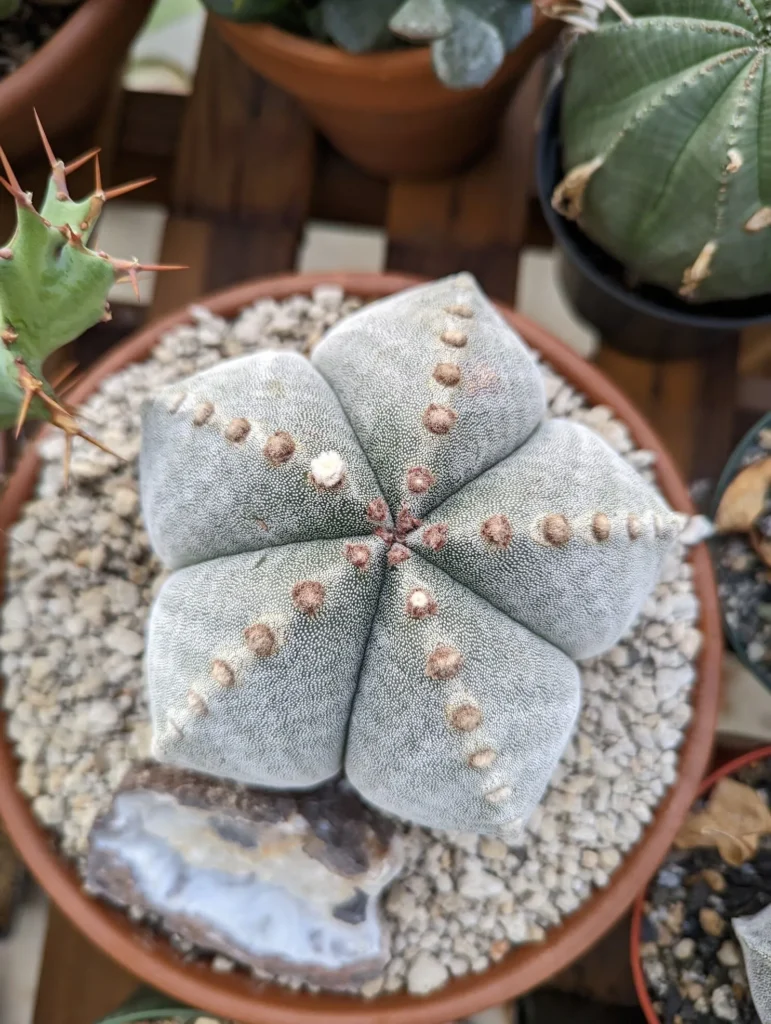
Characteristics and Cultivation of this Rare Succulent Plant
Astrophytum myriostigma is a unique and captivating succulent species that has gained popularity among plant enthusiasts. Native to the highlands of central and northern Mexico, this perennial plant boasts an attractive appearance and requires specific conditions for growth. In this article, we’ll delve into its characteristics, explore its cultivation requirements, and discuss common parasites and diseases.
What Makes Astrophytum myriostigma Special?
Astrophytum myriostigma is characterized by its globular shape with irregular white spots on the trunk. The plant’s slow growth rate and solitary habit make it a rare find in nature. Its summer flowers are showy, forming marguerite-like shapes with pale yellow petals and reddish throats.
Cultivation Requirements
To successfully cultivate Astrophytum myriostigma, you’ll need to provide the right conditions for growth.
Optimal Exposure
Astrophytum myriostigma requires full sun exposure throughout all seasons. However, young plants may require protection from direct sunlight during hot hours. Ensure that the optimal temperature is between 20°C and never below 6°C.
Watering the Astrophytum myriostigma
Water the plant from March to October with careful watering of dry soil. In winter, irrigation should only be done for indoor plants, watering the soil once a month. Remember that humidity is the plant’s greatest enemy.
Best Soil for Growing
Use a well-draining substrate rich in minerals, such as cactus potting mix supplemented with perlite or peat moss. Combine one part of perlite with two parts of peat moss to achieve an optimal mix. Liquid fertilizer should be applied every four weeks during growth, and diluted once-yearly.
Tips for Transplanting
Choose pots with a wider surface area than height to facilitate water evaporation and prevent waterlogging. Spring is the best time for transplanting, but it’s also possible to do so during the entire vegetative period or summer and autumn.
Common Parasites and Diseases
Astrophytum myriostigma is easily susceptible to root rot and attacks by pests like the mealybug. The mealybug often mimics white spots on the plant, forming small cottony masses that can hide infestation until it’s too late. To eliminate this pest, gently rub a cotton ball soaked in alcohol solution onto the affected area.
How to Eliminate Pests from Plants
Another pest affecting Astrophytum myriostigma is the red spider mite, which creates web-like structures covering infested areas. The stinging hairs of this acari cause yellow spots on the plant’s surface, which may persist even after removing the pests.
Diseases in Astrophytum myriostigma
Astrophytum myriostigma is also susceptible to fungal diseases like root rot and leaf spot. To prevent these diseases, ensure proper watering practices, air circulation, and pruning of damaged leaves.
Propagation Methods for Astrophytum myriostigma
While Astrophytum myriostigma cannot be propagated through division due to its rarity, you can still propagate it through seeds or offsets (the small plants that grow around the base of mature Astrophytum myriostigma). Seeds require longer germination periods than offsets.
Care and Maintenance for a Thriving Astrophytum myriostigma
With proper care and attention to detail, you can cultivate an Astrophytum myriostigma in your home. By understanding its unique characteristics, cultivating requirements, and common parasites and diseases, you’ll be well on your way to growing this rare succulent plant.
Tips for Growing Astrophytum myriostigma
- Regularly inspect the plants for signs of pests or diseases.
- Repot every 2-3 years to ensure optimal growth.
- Monitor soil moisture levels to prevent overwatering.
- Provide sufficient air circulation around the plants.
Astrophytum myriostigma in Nature
In its natural habitat, Astrophytum myriostigma thrives in high-altitude environments with low humidity. This adaptation allows it to survive and grow well in regions where many other succulent species would struggle.
Astrophytum myriostigma Cultivation Variations
While the basic cultivation requirements for Astrophytum myriostigma remain the same, there are some variations when growing this plant indoors or outdoors. These include factors such as potting mix composition and frequency of fertilization.
Conclusion: Care and Maintenance for a Thriving Astrophytum myriostigma
With proper care and attention to detail, you can cultivate an Astrophytum myriostigma in your home. By understanding its unique characteristics, cultivating requirements, and common parasites and diseases, you’ll be well on your way to growing this rare succulent plant.
FAQs: Frequently Asked Questions about Astrophytum myriostigma
Q1: What is the ideal temperature for Astrophytum myriostigma?
A: The optimal temperature should be between 20°C and never below 6°C.
Q2: How often should I water Astrophytum myriostigma?
A: Water from March to October, with careful watering of dry soil. In winter, irrigation should only be done for indoor plants, watering the soil once a month.
Q3: What is the best way to fertilize Astrophytum myriostigma?
A: Liquid fertilizer should be applied every four weeks during growth, and diluted once-yearly.
Q4: Can I grow Astrophytum myriostigma in shade?
A: No, Astrophytum myriostigma requires full sun exposure throughout all seasons.
Q5: How can I eliminate pests from my Astrophytum myriostigma?
A: Use a cotton ball soaked in alcohol solution to gently rub onto the affected area. For red spider mite infestations, apply an acaricide-specific remedy.
Q6: Can Astrophytum myriostigma be propagated through division?
A: No, Astrophytum myriostigma is a rare species and should not be propagated through division.
Q7: How often should I repot Astrophytum myriostigma?
A: Spring is the best time for transplanting. However, it’s also possible to do so during the entire vegetative period or summer and autumn.
Q8: Can Astrophytum myriostigma tolerate frost?
A: No, Astrophytum myriostigma should be kept indoors to protect it from frost.
Common Mistakes in Cultivating Astrophytum myriostigma
To avoid common mistakes when growing Astrophytum myriostigma, consider the following:
- Overwatering can cause root rot and other issues.
- Inadequate sunlight can lead to weak growth and reduced flower production.
- Incorrect potting mix composition can hinder water absorption and nutrient uptake.
Additional Resources
For those interested in learning more about Astrophytum myriostigma, there are several additional resources available:
- Consult with local nurseries or plant enthusiasts who specialize in succulents.
- Look for online forums and communities dedicated to succulent cultivation.
- Explore scientific studies on Astrophytum myriostigma’s growth patterns, adaptations, and responses to environmental factors.
Conclusion
Growing an Astrophytum myriostigma requires dedication and attention to detail. With proper care and understanding of its unique characteristics, you can cultivate this rare succulent plant in your home or garden. By following the guidelines outlined in this article, you’ll be well on your way to enjoying the beauty and longevity of this fascinating species.


