
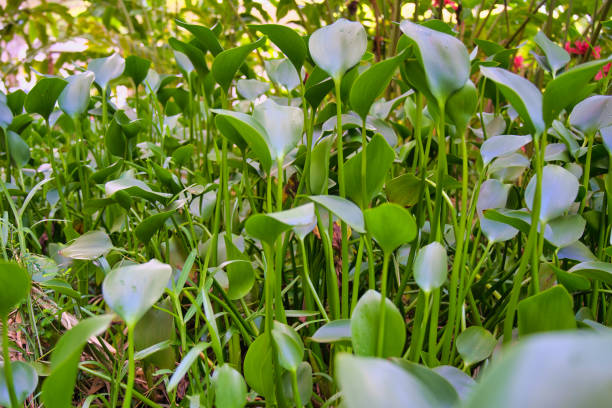
As you step into the woods, you might stumble upon a peculiar-looking plant with bright colors that seem to attract children like bees to honey. Meet the calla wild, also known as the Italian arum or snake pan. This plant is infamous for its toxic properties and striking appearance, making it both fascinating and hazardous.
What is the Calla Wild?
The calla wild’s scientific name is Arum italicum, a species of flowering plant that belongs to the Araceae family. Unlike its common cousin, the calla lily, this plant is not an ornamental but rather a wild species that thrives in shaded areas.
Distribution and Habitat
The calla wild can be found in various Mediterranean countries, including Italy, Greece, Turkey, and Ukraine. It has also been spotted in the UK, Switzerland, and parts of Eastern Europe. In some US states, it’s considered an invasive species due to its aggressive growth habit.
It’s worth noting that the calla wild is not a true calla lily, despite sharing some similarities with its ornamental counterpart. The plant’s natural habitat typically consists of deciduous forests, scrublands, and wood edges, where it can grow rapidly in shaded conditions.
Characteristics and Appearance
This plant has a short stem that grows between 4-20 cm tall. Its unique inflorescence, resembling a snake’s head, features a large, spathe-like structure that protects the tiny flowers within. The leaves are voluminous and have three lobes: the apex is lance-shaped, while the basal ones are divergent.
The plant’s leaves can grow up to 30 cm long and have a characteristic glossy sheen. In addition, the calla wild produces small white berries in late summer, which contain the toxic compounds responsible for its poisonous properties.
Toxicity and Danger
The calla wild contains toxic compounds that can cause serious poisoning in humans if ingested. Its berries (or seed pods) are particularly hazardous to children, who may unknowingly eat them due to their attractive color. In fact, a tragic incident occurred in Rome in 2019 when several children consumed the berries, narrowly avoiding disaster.
However, not all animals fall prey to the calla wild’s toxicity. Some insects and small mammals can safely feed on its roots without suffering any adverse effects.
Uses and Cultivation
Despite its toxicity, the calla wild has some medicinal properties, particularly in traditional medicine. Its leaves and rhizomes are used by experts, but caution is advised when handling them. In nature, certain animals like the hedgehog can exploit this plant’s toxic compounds without harm.
However, cultivating calla wild in a garden setting is not recommended due to its invasive growth habit and potential toxicity. In fact, some countries have banned the sale of calla wild seeds or plants for ornamental purposes.
Similar Species: Arum maculatum
The arum maculatum is another species of flowering plant that resembles the calla wild. While it shares some similarities, this species is protected by law in certain areas and cannot be collected for ornamental purposes.
Zantedeschia aethiopica: Not to be Confused with Calla Wild
When discussing calla flowers, it’s essential to distinguish between Arum italicum (the calla wild) and Zantedeschia aethiopica, another flowering plant that shares the same name but is entirely different.
Warning Signs of Poisoning
If you suspect poisoning after coming into contact with calla wild, seek medical attention immediately. Symptoms may include:
- Nausea and vomiting
- Diarrhea or abdominal pain
- Dizziness or drowsiness
- Headaches or fever
In severe cases, poisoning can lead to respiratory failure, cardiac arrest, or even death.
Frequently Asked Questions
- Is Calla Wild poisonous?
Yes, calla wild contains toxic compounds that can cause serious poisoning in humans if ingested. - Can I touch Calla Wild without getting hurt?
While not recommended, it’s generally safe to touch the plant, as long as you wash your hands afterward. - Can animals eat Calla Wild without harm?
Some insects and small mammals can safely feed on the calla wild’s roots without suffering adverse effects. - Is Calla Wild invasive in some areas?
Yes, it has been spotted in several US states, where it’s considered an invasive species due to its aggressive growth habit. - Can I cultivate Calla Wild in my garden?
While possible, caution is advised when handling this plant, and experts recommend careful consideration before attempting cultivation. - Is there a safe way to use the calla wild for medicinal purposes?
Yes, experts can safely harvest and process the plant’s leaves and rhizomes for medicinal use, but proper precautions must be taken. - Can I eat Calla Wild berries or seed pods?
Absolutely not! These parts of the plant are highly toxic and should never be ingested by humans or animals. - How can I identify a Calla Wild in the wild?
Look for its distinctive inflorescence, with its spathe-like structure resembling a snake’s head, and take care to avoid any potential hazards when approaching the plant.
Conclusion
The calla wild is a captivating yet treacherous plant that demands respect. Its toxicity can be fatal if ingested by humans or certain animals, making it crucial to exercise caution when handling this species. By understanding its characteristics, distribution, and potential uses, we can appreciate the beauty of nature while minimizing the risks associated with these fascinating plants.
Additional Resources
For those interested in learning more about calla wild, here are some recommended resources:
- National Poison Data System (NPDS): Provides information on poisoning cases related to calla wild.
- Centers for Disease Control and Prevention (CDC): Offers guidelines for handling poisonous plants like the calla wild.
- European Medicines Agency (EMA): Publishes safety data sheets for various medicinal uses of the calla wild.
By staying informed and exercising caution, we can coexist with this enigmatic plant while ensuring our own safety and well-being.


