
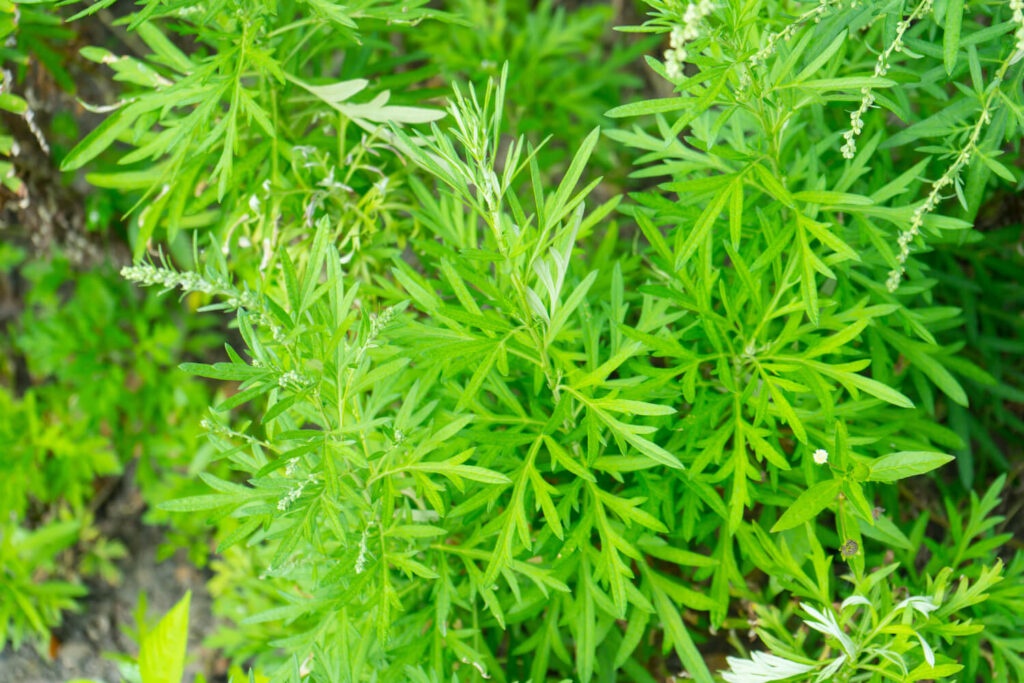
Artemisia annua, a small herbaceous plant belonging to the Asteraceae family, has been used for centuries in traditional medicine. Its properties and cultivation are discussed below.
A Brief History of Artemisia Annua
Originating from the province of Hunan, China, Artemisia annua is a plant whose height can vary from 50 cm to 150 cm. Some American varieties can reach heights of up to 3 meters.
Artemisia annua is present in Italy, although its distribution is discontinuous and it’s considered rare in some regions. It can be found in Campania and northern Italy during the months of August, September, and October. In contrast, it’s less common in Molise, Lazio, and Sicily.
Habitat and Growing Conditions
Artemisia annua thrives in zones with ruderal soil, calcareous or siliceous soils with a neutral reaction, micronutrients, and moderate humidity. It grows well on roadsides, railway tracks, waste grounds, and along footpaths. The plant prefers living near human settlements and can tolerate various environments.
Domestic Cultivation
Growing Artemisia annua is relatively simple indoors. This herbaceous plant needs drainage-rich soil and slightly alkaline conditions to thrive in sunny spots.
Artemisia annua’s Medicinal Properties and Uses
Although it is also used in cooking, its primary uses are in the pharmaceutical industry. For many years, this herb has been used to treat various diseases, including dermatitis. In recent decades, it has been employed against malaria due to its active compound “artemisinin”.
The Mechanism of Action
Research on Artemisia annua’s effects on malaria and other parasitic diseases is well-documented internationally. The mechanism involves inducing oxidative stress in the parasite cell.
For a comprehensive overview of biochemistry, refer to Gary H. Posner and Paul O Neil (2014), “Knowledge of the Proposed Chemical Mechanism of Action and Cytochrome P450 Metabolism of Antimalarial Trioxanes Like Artemisinin Allows Rational Design of New Antimalarial Peroxides”.
Artemisinin is a well-studied compound with potential applications as an antitumor agent.
Traditional Medicine Properties
According to traditional medicine, Artemisia annua has the following properties:
Antibacterial (blocks or slows down bacterial growth)
Antisettic (blocks or slows down microbial development)
Carminative (assists in relieving flatulence)
Digestive (helps with gastric digestion and intestinal absorption)
In China, many herbal preparations containing Artemisia annua are still used today to treat fever.
Tumor Treatment
The study of Artemisia annua’s potential anti-tumor properties is driven by its ability to produce compounds with high antioxidant activity. Analyzing the chemical composition of Artemisia annua has identified 50 different phenolic compounds belonging to four main categories: cumarenes, flavonoids, flavonols, and phenolic acids.
Research has shown that flavonoids and flavonols can inhibit cancer cell growth; specifically, they induce apoptosis (programmed cell death) in tumor cells.
Other Possible Applications
Artemisia annua extracts have been investigated for the treatment of Asthma. Experiments on animals have demonstrated that artesunato, a synthetic derivative of artemisinin, has anti-allergic properties by inducing mastocyte degranulation.
This mechanism makes artesunate an ideal candidate for treating asthma and allergic conditions.
Frequently Asked Questions
- What is Artemisia annua used for?
- How does Artemisia annua work against malaria?
- Is Artemisia annua safe for internal use?
- Can Artemisia annua be grown indoors?
- Are there any potential side effects of using Artemisia annua?
- How can I harvest Artemisia annua leaves safely?
- What are the benefits and risks of using traditional medicine to treat illnesses with Artemisia annua?
- Is Artemisia annua used in any modern medicines or treatments?
Indications for Use
Artemisia annua has been employed in various medical indications, including:
- Malaria
- Dermatitis
- Asthma
- Tumors
- Allergic reactions
Side Effects and Contraindications
While Artemisia annua is generally considered safe for use in traditional medicine, it may cause the following side effects in certain individuals:
- Skin irritation or allergic reactions
- Gastrointestinal issues (nausea, vomiting)
- Headaches
- Dizziness
Contraindications include:
- Pregnancy and breastfeeding
- Allergies to Artemisia annua
- Liver or kidney problems
Modern Medicinal Applications
Artemisinin is a widely used antimalarial drug, effective against Plasmodium falciparum malaria.
In recent years, artemisinin derivatives have been incorporated into various combination therapies for treating malaria, improving efficacy and reducing the risk of resistance development.
Other modern medicinal applications include:
- Antitumor therapy
- Anti-allergic treatments
Potential Research Directions
Further research is needed to fully understand Artemisia annua’s potential health benefits and mechanisms of action.
Potential areas for investigation include:
- Investigating the effects of Artemisia annua on other diseases, such as cancer or HIV.
- Developing new antimalarial drugs using Artemisia annua extracts or derivatives.
- Exploring the use of Artemisia annua in traditional medicine and its potential applications.
Conclusion
Artemisia annua is a small herbaceous plant with significant health benefits. Its properties and cultivation are discussed below.
The study of Artemisia annua has shed light on its medicinal properties, including antimalarial, antibacterial, and anti-allergic effects.
While more research is needed to fully understand Artemisia annua’s potential health benefits, its use in traditional medicine and modern medicines represents a promising area for future investigation.


