
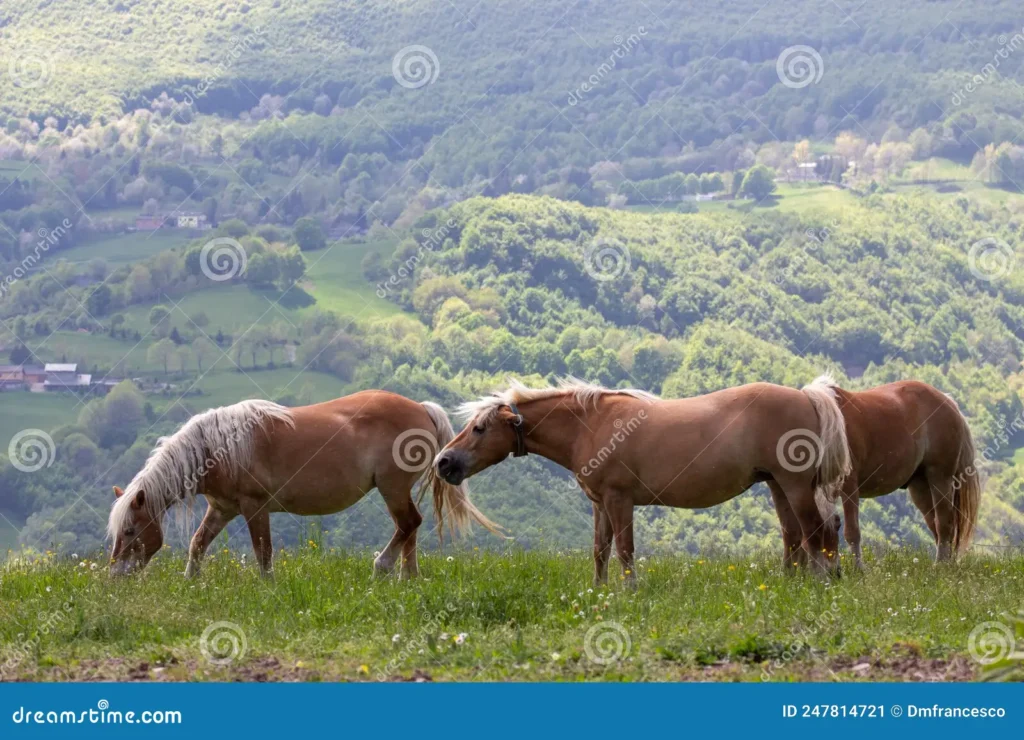
In recent years, the Appennine horse has gained recognition as a distinct breed, earning its place in Italy’s national registry of rare breeds. Despite its official recognition being relatively recent, this majestic creature has been roaming the Italian countryside for decades, thanks to its ancestors who were introduced from Switzerland in the 1960s.
Origins
The Appennine horse’s journey began when Vittorio Ortalli, a Swiss entrepreneur, imported a group of horses from his Freiberg (Franches-Montagnes) farm. These horses were destined for Italy, specifically the region of Reggio Emilia, where they would eventually settle and thrive. The Appennine horse quickly adapted to its new environment, modifying some of its characteristics in the process.
Characteristics
One of the most striking features of the Appennine horse is its unique appearance. It often sports a distinctive “lista e stella” (list and star) marking on its forehead, as well as “balzane” on its legs or a “zaino” coat pattern. However, beyond these distinctive markings, the breed’s standard characteristics include:
- Height: 150-160 cm at the withers for males, slightly lower for females
- Weight: around 600 kg
- Head shape: relatively light and well-proportioned compared to its overall body
- Profile: straight and harmonious
- Coat color: can be bay or sorrel
History of the Breed
The Appennine horse’s history is closely tied to the region of Italy where it was first introduced. The breed has managed to thrive despite limited resources, with many owners considering it an excellent choice for working horses due to its robust build and gentle nature.
In recent years, the Appennine horse has gained recognition as a distinct breed, earning its place in Italy’s national registry of rare breeds. This increased visibility has led to a surge in interest among equine enthusiasts, many of whom are now seeking to learn more about this incredible breed.
Attitudes
Contrary to popular stereotypes about mountain breeds being aggressive or aloof, the Appennine horse is known for its gentle and docile nature. This makes it an excellent choice for working as a pack animal or riding horse. The breed’s friendly demeanor has also led to a growing number of owners seeking the Appennine horse as a companion.
Allevage
The Appennine horse’s economic efficiency has contributed significantly to its widespread popularity among breeders. Compared to other breeds, these horses require minimal resources and can thrive on limited pastures. However, due to the relatively small number of breed-specific farms in Italy, finding an authentic Appennine horse to adopt might be challenging.
Breeding and Raising
Two notable breeding operations are worth mentioning:
- Boschetti Alessia: Based in Comano, Tuscany, this farm raises a large herd of young puledros (unharnessed horses) born on the property. The breeding program prioritizes the horses’ proper development.
- Podere Casa Chierica: Located near Borgonovo Val Tidone, Piacenza, this farm specializes in breeding Appennine horses registered with the national registry.
Challenges and Opportunities
Despite its many advantages, there are several challenges associated with owning an Appennine horse. Limited resources and a relatively small number of breed-specific farms can make it difficult to find an authentic horse for sale or adoption. Additionally, owners must be aware of potential health issues specific to this breed.
However, these challenges also present opportunities for innovation and growth. For example, breeders are working to develop new breeding programs that prioritize the Appennine horse’s unique characteristics while minimizing the risk of genetic disorders.
Conclusion
The Appennine horse is a testament to the adaptability and resilience of mountain breeds. With its unique characteristics, gentle nature, and affordability, it’s an excellent choice for anyone looking to acquire a reliable and hardworking equine companion. For those interested in learning more about this incredible breed, there are numerous resources available.
FAQs
- What makes the Appennine horse so distinct?
The Appennine horse’s unique markings, such as “lista e stella” and “balzane,” set it apart from other breeds. - Is the Appennine horse a good choice for beginners?
Yes, due to its gentle nature and ease of training. - Can I find an authentic Appennine horse in Italy?
Due to limited breed-specific farms, finding a genuine Appennine horse may be challenging. Researching reputable breeding operations or consulting with local experts can help. - What are the most common coat colors for Appennine horses?
Bay and sorrel are the two primary coat colors. - How tall should I expect an Appennine horse to be?
Males typically reach 150-160 cm at the withers, while females may be slightly lower. - Is the Appennine horse well-suited for working as a pack animal?
Yes, due to its robust build and gentle nature. - Can I ride an Appennine horse?
Yes, thanks to its comfortable gait and friendly demeanor. - How can I learn more about the Appennine horse?
Research reputable breeding operations, consult with local experts, or explore online resources dedicated to this breed.
The Future of the Breed
As interest in the Appennine horse continues to grow, there are several initiatives underway aimed at preserving and promoting the breed. These efforts include:
- Conservation programs: Organizations such as the Italian Association for Equine Welfare (AISEW) are working to protect and preserve the Appennine horse’s genetic diversity.
- Breeding programs: Breeders are developing new breeding strategies that prioritize the unique characteristics of this breed while minimizing the risk of genetic disorders.
- Education and outreach: Educational programs are being implemented to raise awareness about the Appennine horse and its many benefits.
By understanding the history, characteristics, and attributes of the Appennine horse, you’ll be well-equipped to decide if this incredible breed is right for you. Whether you’re a seasoned equine enthusiast or just starting out on your journey, the Appennine horse offers a unique combination of beauty, strength, and gentleness that makes it an exceptional companion.
Recommendations for Owners
If you’re considering owning an Appennine horse, here are some recommendations to keep in mind:
- Research reputable breeders: Look for breeders who prioritize the health and well-being of their horses.
- Consider your experience level: The Appennine horse is a gentle and docile breed, but it still requires proper training and care.
- Provide adequate resources: Ensure that you have sufficient space, food, and veterinary care to support the needs of your new equine companion.
By following these recommendations and taking the time to learn more about this incredible breed, you’ll be well on your way to forming a lifelong bond with an Appennine horse.


