
Antinutrients – the name itself implies that they’re something to be avoided. But is that really the case? In reality, it’s more about understanding how and when to consume them. Let’s dive into what antinutrients are, their types, and how we can make them a part of our diet.
What Are Antinutrients?
Antinutrients are substances that inhibit digestion and nutrient absorption. Sounds straightforward, but there’s more to it. We’ll explore the different types of antinutrients found in plant-based foods, as well as some surprising examples of non-plant foods that contain them.
Types of Antinutrients
Let’s start with the most commonly known antinutrients:
- Phytic acid: found in legumes and whole grains
- Saponins: found in beans, lentils, and certain nuts
- Lectins: found in many plant-based foods
These compounds can interfere with nutrient absorption, but it’s not a lost cause. By understanding how to prepare these foods, we can minimize their impact.
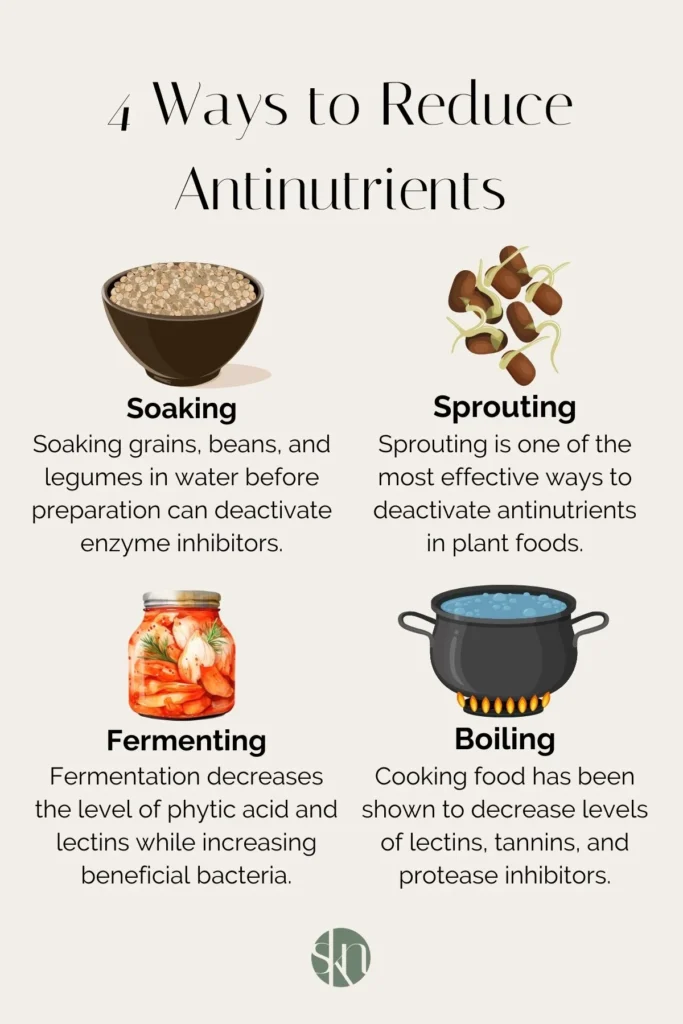
Preparing Antinutrient-Rich Foods
To make the most of our diet, we need to learn how to handle these antinutrients. Here are some tips:
- Legumes: Soak them for 12-24 hours, then rinse and cook thoroughly
- Whole grains: Rinse and soak for at least 7 hours, then cook in fresh water
By taking these steps, we can reduce the negative effects of antinutrients.
The Difference Between Antinutrients and Toxins
It’s essential to distinguish between antinutrients and toxins. While some plant-based compounds may be toxic to pests, they’re not necessarily harmful to humans. In fact, some plants use these compounds as a defense mechanism against predators.
Cereals: A Special Case
When it comes to cereals, there are some unique considerations:
- Grain sorghum: Soak for only 10 minutes
- Seed-based grains: Can be consumed raw and germinated
The process of fermentation can also break down antinutrients, making these foods more digestible.
Legumes: A More Detailed Look
For legumes, the soaking time varies:
- Beans: 12-24 hours
- Lentils: 12-18 hours
Rinsing and cooking in fresh water are crucial steps to ensure nutrient absorption.
Adding Flavor Without Overpowering Antinutrients
To combat antinutrients without sacrificing flavor, try these tips:
- Add alga kombu during cooking to speed up digestion
- Experiment with spices like rosemary, sage, and peppermint to enhance flavor while aiding digestion
- Use fermented seeds or grains for added nutrition
Case Study: The Effects of Phytic Acid on Iron Absorption
Phytic acid, a common antinutrient found in legumes, can inhibit iron absorption. However, research suggests that soaking and rinsing beans before cooking can significantly reduce phytic acid levels, making them more suitable for consumption.
Conclusion
Antinutrients are not inherently bad; they’re just part of the natural world. By understanding how to prepare and consume these foods, we can harness their benefits without compromising our nutrient intake.
Frequently Asked Questions (FAQs)
- What is the primary function of antinutrients in plants?
- To protect against pests and diseases.
- How do I minimize the negative effects of antinutrients on digestion?
- By soaking, rinsing, and cooking foods thoroughly.
- Can fermentation break down antinutrients?
- Yes, it can enhance nutrient absorption.
- Are all plant-based compounds toxic to humans?
- No, they are not necessarily harmful to humans, but some may be irritating or cause allergic reactions.
- How do I prepare legumes for optimal digestion?
- Soak for 12-24 hours, then rinse and cook in fresh water.
- Can spices like rosemary and sage aid digestion when combined with antinutrient-rich foods?
- Yes, they can enhance flavor while supporting digestive health.
- Are there any seed-based grains that are easy to digest due to fermentation?
- Some seeds can be fermented to break down antinutrients and make them more digestible.
- What is the best way to add alga kombu to a dish for enhanced digestion?
- Add it during cooking to speed up digestion.
By embracing antinutrients in moderation, we can unlock their potential benefits while protecting our digestive health.


