
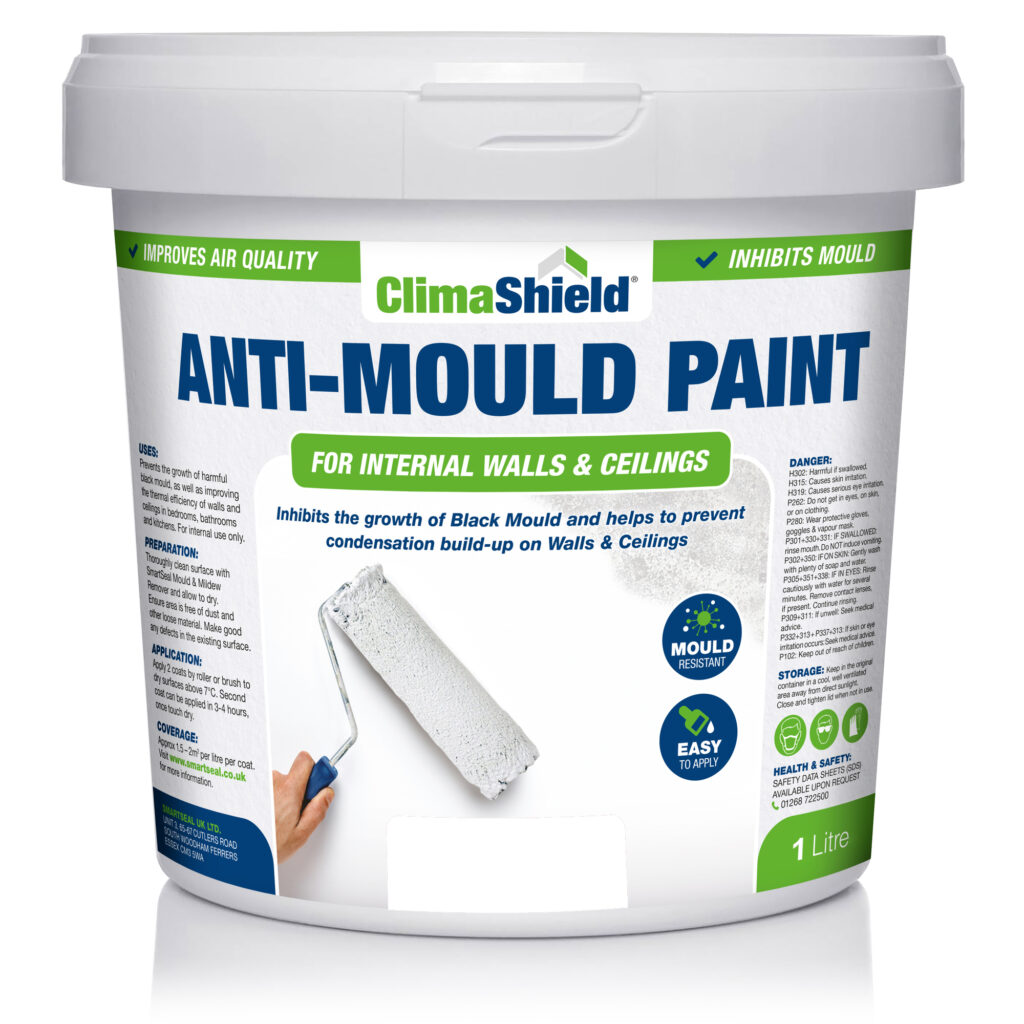
As we tackle the issue of mold on interior walls, we need to find a solution that won’t compromise our health. In critical situations, these paints can be extremely aggressive and covering, sometimes relying on substances that can be hazardous to indoor air quality.
While it’s challenging to find a completely eco-friendly paint that eliminates petroleum-derived products, let’s at least focus on finding one that doesn’t contain solvents or VOCs (Volatile Organic Compounds), which are notorious for being harmful to our health.
To help you recognize these substances in product labels, here are the chemical definitions under which they hide:
• Chlorinated hydrocarbons
• Aromatic hydrocarbons
• Polycyclic aromatic hydrocarbons
• Alkanes and cycloalkanes
• Aldehydes
• Terpenes
These VOCs can be present in many construction products (synthetic fabrics, treated wood panels, etc.), but they’re most prevalent in paints and coatings. Inhaling them intensively can have a disorienting effect, like taking a strong drug. Have you ever heard of the “poor man’s drug”? That’s what these VOCs are.
Now that we’ve covered VOCs, let’s get back to our antimuffa paint. It must certainly have fungicidal and disinfectant properties (mold is made up of fungi) and may not be enough because if we don’t address the root cause of mold growth, it will return.
If mold stains depend on water infiltration or micro-cracks in walls, there’s no paint that can hold. We need to find the underlying issue (maybe with the help of thermal imaging to determine a faulty system or lack of insulation) and perform an intervention.
However, if the problem is minor and caused by condensation within indoor spaces, using a VOC-free antimuffa paint can yield excellent results in improving indoor air quality.
Typically, applying an antimuffa and anti-condensate paint requires a previous cleaning and disinfection process for affected areas. It’s better to use eco-friendly solutions (see our article on Muffa sulle pareti, natural remedies), or follow the instructions on the label of the paint you want to use.
What type of paint should we choose? In my opinion, a valid option is the Pittura termica antimuffa e anti condensa found in this Amazon page.
I used it to treat a wall with mold problems, and while I wasn’t expecting a miracle, the results were satisfactory. A 2.5-liter container is recommended for 3.5 square meters of wall surface, but I managed to cover 4 square meters using an applicator (brush or roller).
Key Takeaways
- VOC-Free Paint: Look for paints that are VOC-free to minimize indoor air pollution.
- Fungicidal and Disinfectant Properties: Antimuffa paint should have fungicidal properties to combat mold growth.
- Underlying Causes: Identify the root cause of mold stains (e.g., water infiltration, micro-cracks) rather than just treating symptoms.
- Pre-Application Cleaning: Clean and disinfect affected areas before applying antimuffa paint for optimal results.
Benefits of Natural Antimuffa Paints
Natural antimuffa paints offer several benefits over traditional paints:
- Reduced VOC Emissions: Natural paints are free from toxic chemicals, reducing indoor air pollution and promoting healthier living spaces.
- Eco-Friendly: Natural paints are biodegradable, non-toxic, and made from environmentally friendly materials.
- Improved Air Quality: By choosing natural antimuffa paints, you can improve indoor air quality and create a healthier environment for yourself and your family.
- Increased Durability: Many natural paints are formulated with plant-based ingredients that offer improved durability and long-lasting performance.
How to Choose the Right Natural Antimuffa Paint
When selecting a natural antimuffa paint, consider the following factors:
- Ingredients: Look for paints made from natural ingredients such as plant oils, waxes, and pigments.
- VOC-Free Certification: Ensure that the paint is VOC-free or has been certified by reputable organizations such as Greenguard Gold or California Air Resources Board (CARB).
- Fungicidal Properties: Choose a paint with fungicidal properties to combat mold growth effectively.
- Color and Finish: Select a paint in a color that complements your space and choose from various finishes, including matte, satin, and glossy.
Natural Antimuffa Paints for Different Surfaces
Natural antimuffa paints can be applied to various surfaces, including:
- Walls: Use natural antimuffa paint on walls to combat mold growth and improve indoor air quality.
- Ceilings: Apply natural antimuffa paint to ceilings to prevent mold growth and promote a healthy environment.
- Floors: Choose natural antimuffa paints specifically designed for floors to protect against moisture-related damage.
Tips for Using Natural Antimuffa Paints
To get the most out of your natural antimuffa paint, follow these tips:
- Prepare the Surface: Clean and disinfect the surface before applying the paint.
- Apply Thin Coats: Apply thin coats of paint to avoid drips and uneven surfaces.
- Allow to Dry: Let the paint dry completely before exposing it to moisture or humidity.
- Regular Maintenance: Regularly inspect and maintain your natural antimuffa paint to ensure its effectiveness.
By understanding the importance of VOC-free paints, fungicidal properties, and addressing underlying causes of mold growth, we can create healthier indoor environments for ourselves and our loved ones.


