
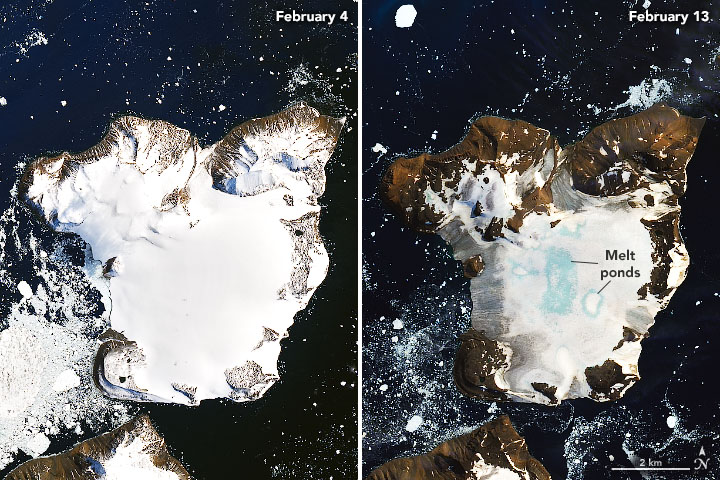
In a shocking turn of events, the Antarctic ice sheet has experienced an unprecedented rate of melting over the past three years. With an area equivalent to that of Mexico lost in this time frame, the consequences of this phenomenon are far-reaching and alarming.
Introduction
The Antarctic ice sheet is the largest single mass of ice on Earth, covering an area of approximately 14 million square kilometers (5.4 million square miles). It contains about 70% of the world’s fresh water and plays a crucial role in regulating global sea levels. The ice sheet is also home to unique ecosystems that support a wide variety of flora and fauna.
The rapid melting of the Antarctic ice sheet has significant implications for the planet, with potential consequences for global sea levels, weather patterns, and ecosystems. This article will explore the science behind the melting, discuss possible causes, and examine the potential impacts on our planet.
The Science Behind the Melting
A study conducted by NASA researcher Claire L. Parkinson using satellite imagery reveals a stark contrast between 2014 and 2020 data. The ice sheet’s growth during the Australian winter months from the late 1970s to five years ago peaked in 2014, but since then, it has experienced a dramatic decline.
The study found that the melting of Antarctic ice is not just a local phenomenon. The data indicates a significant decrease in ice coverage from approximately 12.8 million square kilometers in 2014 to 10.7 million square kilometers in February 2017. This represents a loss of about 1.1 million square kilometers (420,000 square miles) of ice sheet area over just three years.
Satellite Imaging: A Window into the Future
Parkinson’s research using satellite images shows that the melting of Antarctic ice is not just a local phenomenon. The data indicates a significant decrease in ice coverage from approximately 12.8 million square kilometers in 2014 to 10.7 million square kilometers in February 2017.
The study also reveals changes in the shape and size of the ice sheet, with some areas experiencing increased melting while others experience reduced melting. These changes are likely to have significant implications for global sea levels and coastal communities.
The Causes of Melting: A Complex Mystery
While climate change is a possible contributing factor, the exact mechanism behind this sudden and dramatic melting remains unclear. Scientists are hesitant to attribute the changes solely to human activities, citing the potential for natural fluctuations.
Some researchers propose that wind patterns could be influencing the ice sheet’s behavior. Mark Serreze, director of the National Data and Snow Center, suggests that attributing the recent decline to climate change might be premature.
Variable Natural Factors: A Hypothesis
Serreze’s team also proposes that changes in ocean currents and temperature may play a role in the melting of Antarctic ice. The team notes that these factors can have significant impacts on regional weather patterns and global sea levels.
Other Contributing Factors: El Niño and Beyond
El Niño, a periodic climatic event affecting the Pacific Ocean, is also being explored as a possible factor contributing to the melting. Additionally, other environmental factors such as changes in wind patterns and ocean currents may play a role.
A Warmer Planet: Consequences for All
As the climate continues to shift, we are witnessing unprecedented temperatures recorded in various regions around the world. The Arctic, Antarctica, and even parts of Asia are experiencing record-breaking heat waves, with severe consequences for human health and ecosystems.
The rapid melting of Antarctic ice is just one symptom of a larger problem – global warming. The science is clear: human activities such as burning fossil fuels and deforestation are releasing large amounts of greenhouse gases into the atmosphere, leading to an enhancement of natural climate variability.
Conclusion
While scientists continue to unravel the mysteries behind this phenomenon, one thing is clear: the planet is undergoing significant changes. It is crucial that we acknowledge these shifts and work towards understanding their implications.
The rapid melting of Antarctic ice is a pressing issue that requires immediate attention from governments, policymakers, and individuals around the world. By working together, we can reduce our carbon footprint, mitigate climate change, and safeguard a livable future for generations to come.
Frequently Asked Questions
- What is causing the rapid melting of Antarctic ice?
The exact cause remains unclear, with climate change, wind patterns, and other environmental factors being explored as possible contributors. - Is this a natural phenomenon or evidence of human activities?
While natural fluctuations cannot be ruled out entirely, the sheer scale and rapidity of the melting suggest that human-induced climate change may also play a role. - What are the implications for global sea levels?
The loss of Antarctic ice could contribute significantly to rising sea levels, with far-reaching consequences for coastal communities and ecosystems. - Can we reverse this process?
While it is uncertain whether it is possible to completely halt the melting, reducing greenhouse gas emissions and mitigating climate change may help slow down the rate of warming. -
What can be done to address this issue?
International cooperation, reduced carbon emissions, and investments in renewable energy are essential steps towards mitigating the effects of climate change. -
How do these changes compare to previous natural fluctuations?
The scale and speed of current melting patterns are unprecedented, with many scientists warning that we may have reached a tipping point beyond which the planet will not return to its former state. - What is the impact on global weather patterns?
As the climate shifts, altered atmospheric circulation and weather extremes are likely to become more frequent and intense. -
Will this melting continue in the future?
While it is uncertain whether the current trend will persist, continued warming and changing environmental conditions may lead to further ice sheet melting and increased risk of catastrophic consequences. -
What role can individuals play in mitigating climate change?
Reducing energy consumption, increasing use of renewable energy sources, and adopting sustainable lifestyles are all crucial steps towards slowing down global warming. -
How will this affect the planet’s ecosystems and biodiversity?
The melting of ice sheets and altered environmental conditions may have devastating consequences for polar ecosystems, sea life, and other vulnerable species. -
Can we learn from previous natural events to better prepare for future climate changes?
While some lessons can be drawn from past natural fluctuations, it is essential to acknowledge the complexity and speed of current climate change. -
What are the potential economic consequences of this melting?
The economic impacts of sea-level rise, changing weather patterns, and other climate-related effects will likely be substantial, with far-reaching implications for global markets and economies. -
Will international cooperation be crucial in addressing these changes?
Given the global nature of this issue, international agreements, coordination, and cooperation are essential for mitigating the effects of climate change. -
Can we use technology to help mitigate climate change?
Renewable energy sources, carbon capture technologies, and other innovations hold promise for reducing greenhouse gas emissions and slowing down warming. -
What is the prognosis for the planet’s future?
While it is uncertain whether we can completely prevent further melting or mitigate the effects of climate change, continued global cooperation, innovation, and reduced carbon emissions are necessary to reduce our ecological footprint and safeguard a livable future for generations to come.


