
What is an Angry Cat?
An angry cat, also known as a fearful or skittish cat, is a common behavior in domesticated cats. It’s not just about being grumpy; it can be a sign of underlying anxiety, stress, or fear. Understanding the causes behind this behavior will help you address the issue and calm your feline friend.
The Psychology of an Angry Cat
Imagine yourself in your cat’s shoes (or paws). You’re a wild animal, living in the forest, and suddenly, you find yourself in a new environment with unfamiliar sights and sounds. It’s natural to feel scared or threatened. Your body responds by tensing up, arching your back, and puffing out your fur. This is how an angry cat behaves when it feels threatened or anxious.
The Role of Breed
Some breeds, like the Persian, are more prone to anxiety and stress due to their sensitive nature. Other factors, such as genetics, environment, and life experiences, can also contribute to a cat’s angry behavior. For example, a cat that has been handled roughly or exposed to loud noises may become anxious in similar situations.
Medical Causes
If your cat is consistently angry or aggressive, it may be a sign of an underlying medical issue. Consult with a veterinarian to rule out any health problems that could be causing your cat’s irritability. Some potential medical causes include:
- Hyperthyroidism: A common condition in older cats, which can cause irritability and anxiety.
- Chronic pain: Pain from arthritis or other conditions can lead to aggression and frustration.
- Sensory issues: Cats with sensory sensitivities may become overstimulated by certain sights, sounds, or smells.
Anxiety and Stress
Cats are naturally territorial animals, and changes in their environment can cause them stress. If you’ve recently moved, introduced new pets or people, or changed your work schedule, it may have affected your cat’s sense of security. Some common stressors for cats include:
- Changes in routine: Cats thrive on predictability, so sudden changes to their daily routine can be stressful.
- New pets or people: Introducing new animals or people into the home can cause anxiety and stress for cats.
- Noise pollution: Loud noises from traffic, construction, or other sources can be disturbing for cats.
Calming Techniques
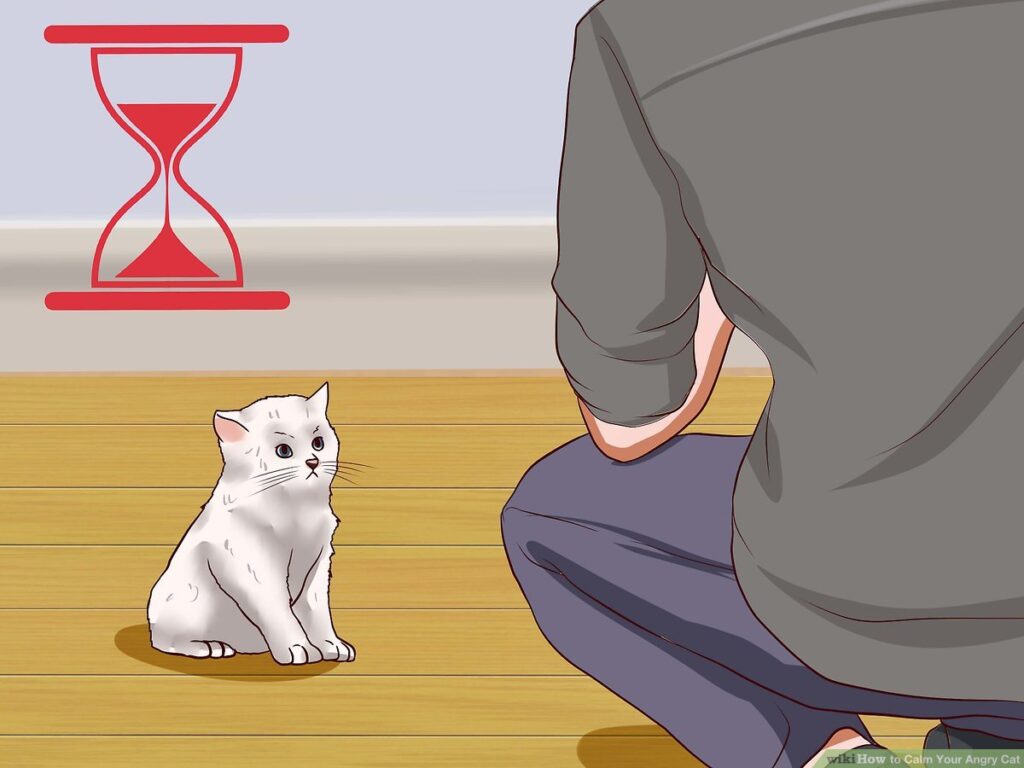
So, how do you calm an angry cat? Start by giving your cat space and time to relax. Allow your cat to retreat to a quiet area where they feel safe. Provide plenty of hiding spots, vertical space, and scratching posts to help them release tension.
Playtime and Stimulation
Engage your cat in play activities that stimulate their natural hunting instincts, such as laser pointers or feather toys. This can help distract them from stressors and anxiety. Some other ways to stimulate your cat include:
- Food puzzles: Challenge your cat’s problem-solving skills with food puzzles.
- Interactive toys: Toys that require interaction, such as pull-toys or treat-dispensing toys, can provide mental stimulation.
Environmental Changes
If you suspect that changes in your environment are contributing to your cat’s irritability, try making some adjustments:
• Block access to areas of the house that may be triggering your cat’s anxiety
• Increase vertical space by adding cat shelves or climbing structures
• Create a cozy hiding spot or two
Tips and Tricks
- Offer treats or toys to distract your cat from stressful situations
- Use calming music or white noise machines to create a soothing atmosphere
- Try pheromone products, such as Feliway, to mimic the calming scents of mother cats
- Consider using a calming aid like L-theanine or melatonin (consult with a veterinarian before administering any supplements)
- Provide plenty of attention and affection, but respect your cat’s boundaries and personal space
Conclusion
Calming an angry cat requires patience, understanding, and a willingness to make changes in their environment. By recognizing the causes behind your cat’s behavior and using the right techniques, you can help reduce their stress and anxiety, creating a more harmonious household for both you and your feline friend.
Frequently Asked Questions
Q: How do I know if my cat is angry or just grumpy?
A: If your cat is consistently aggressive or irritable, it may be a sign of an underlying issue that requires attention from a veterinarian. However, some cats can appear “grumpy” without being truly angry, so try to observe their behavior and look for signs of stress or anxiety.
Q: Can I use medication to calm my cat?
A: While some medications can help alleviate anxiety in cats, they should only be used under the guidance of a veterinarian. Consult with a professional before administering any medication, as it’s essential to rule out underlying medical issues that may be causing your cat’s irritability.
Q: How do I introduce new pets or people to my cat?
A: When introducing new animals or people into the home, start by keeping them separated and allowing your cat to become familiar with their scents and sounds. Gradually increase face-to-face interactions under close supervision, and always prioritize your cat’s safety and well-being.
Q: Can I use playtime as a way to calm my cat?
A: Yes! Engaging your cat in play activities can help distract them from stressors and anxiety. Choose toys or activities that stimulate their natural hunting instincts, and be mindful of your cat’s energy levels and preferences.
Q: How do I know if my cat is stressed or anxious?
A: Signs of stress or anxiety in cats include panting, pacing, hiding, or avoidance behaviors. If you suspect your cat is experiencing stress or anxiety, consult with a veterinarian for advice on how to alleviate the issue.


