
Introduction
Angiosperms, also known as flowering plants, are a diverse group of plants that can be easily identified by their seeds, which are protected by a fruit. This unique characteristic has earned them the name “seed-enclosed” or “endo-seed”. In this article, we will explore the world of angiosperms, from their origins to their diversity and importance.
What are Angiosperms?
Angiosperms are a subgroup of spermatophytes, which also include gymnosperms. The term “angiosperm” comes from the Greek words “angion”, meaning vessel or container, and “sperma”, meaning seed. This name refers to the fact that angiosperm seeds are protected by a fruit, which serves as both a shield and a means of dispersal.
Angiosperms vs. Gymnosperms
Gymnosperms, on the other hand, have seeds that are not enclosed by a fruit. They include conifers, cycads, and ginkgos. Until recently, it was believed that angiosperms evolved from gymnosperms, but fossil evidence suggests that angiosperms may have originated even earlier.
The Significance of Angiosperms
Angiosperms are the most widespread and economically important group of plants on Earth. They account for approximately 300,000 species, including trees, shrubs, herbaceous plants, and vines. These plants play a crucial role in maintaining ecological balance and providing food, shelter, and medicine for humans.
Types of Angiosperms
Angiosperms can be divided into two main groups: monocotyledons and dicotyledons. Monocotyledons have one cotyledon, while dicotyledons have two. Within these categories, there are many subgroups, including Alismatidae, Arecidae, Commelinidae, Liliidae, and Zingiberidae.
The Flower of Angiosperms
Angiosperm flowers are unique in that they protect the seed within a fruit or calyx. The flower can also be used for reproduction through both zoophilous (animal-pollinated) and anemophilous (wind-pollinated) means. This adaptation has led to the development of diverse flower forms, with some species producing large, showy flowers and others producing small, inconspicuous ones.
Magnoliopsida: The Magnolia Family
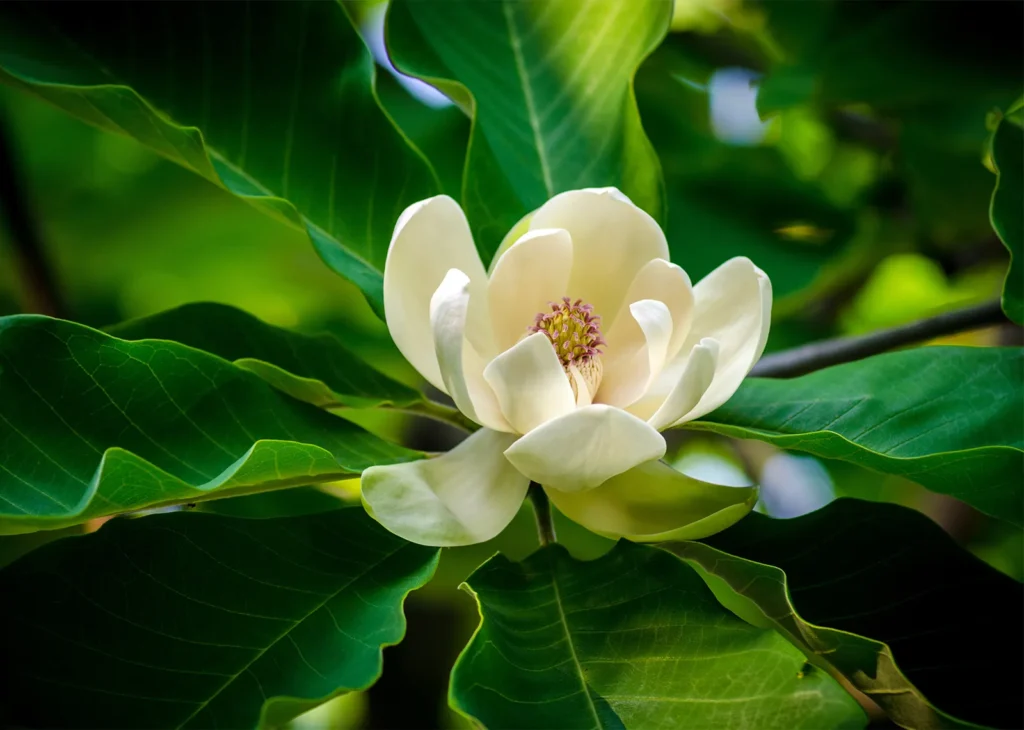
The Magnoliidae is a subclass of angiosperms that includes plants with two cotyledons. These plants are characterized by their simple leaves, herbaceous stems, and showy flowers. One of the most famous members of this family is the magnolia, which consists of over 80 species, including giant trees like Campbellii and Officinalis.
Magnolia: A Primitively Flowering Plant
The magnolia is considered one of the oldest flowering plants, with fossil evidence dating back to the Cretaceous period. Its name is derived from Pierre Magnol, a French botanist who first described the plant in 1670. The magnolia has been widely used for decorative purposes and has medicinal properties, including anti-inflammatory compounds.
Other Notable Angiosperm Families
In addition to the magnolia family, there are several other notable angiosperm families worth mentioning:
- Ranunculaceae: This family includes plants like buttercups and poppies. They have showy flowers that attract pollinators.
- Fabiaceae: Also known as legumes, this family includes beans, peas, and lentils. These plants are an important source of protein for humans.
- Rosaceae: This family includes plants like roses, apples, and pears. They have showy flowers and fruits that are often used for food, medicine, or decoration.
The Evolution of Angiosperms
Angiosperms evolved from a common ancestor with other plant groups during the Jurassic period. Over time, they developed unique features such as seeds enclosed by fruit, which allowed them to disperse more effectively and adapt to different environments. Today, angiosperms are found on every continent except Antarctica.
The Role of Angiosperms in Ecological Balance
Angiosperms play a crucial role in maintaining ecological balance by providing food and shelter for various animals. They also help regulate the water cycle by absorbing water from the soil and releasing it back into the atmosphere through transpiration.
Conclusion
In conclusion, angiosperms are a diverse group of flowering plants that have evolved over millions of years to adapt to different environments. From their origins to their importance in maintaining ecological balance, angiosperms play a vital role in our world.
Frequently Asked Questions
-
What is the significance of angiosperms?
Angiosperms are the most widespread and economically important group of plants on Earth, accounting for approximately 300,000 species. -
How do angiosperm seeds protect themselves?
Angiosperm seeds are protected by a fruit or calyx, which serves as both a shield and a means of dispersal. -
What is the difference between monocotyledons and dicotyledons?
Monocotyledons have one cotyledon, while dicotyledons have two. -
Why do angiosperms produce showy flowers?
Angiosperms produce showy flowers as an adaptation for reproduction through zoophilous or anemophilous means. -
What is the Magnoliidae subclass of angiosperms?
The Magnoliidae is a subclass of angiosperms that includes plants with two cotyledons, such as the magnolia family. -
How old are the magnolias?
Fossil evidence suggests that magnolias have been around for over 100 million years, dating back to the Cretaceous period. -
What medicinal properties do magnolias possess?
Magnolias contain anti-inflammatory compounds, including magnosalicina and magnifloenone, which have antiflogistic and anti-asmatic effects. -
Why are angiosperms important for humans?
Angiosperms provide food, shelter, and medicine for humans, making them a vital component of our ecosystem.
Glossary
- Angiosperm: A flowering plant that has seeds enclosed by a fruit.
- Monocotyledon: A plant with one cotyledon (seed leaf).
- Dicotyledon: A plant with two cotyledons (seed leaves).
- Magnolia: A genus of flowering plants in the Magnoliidae subclass, characterized by simple leaves and showy flowers.
- Ranunculaceae: A family of flowering plants that includes buttercups and poppies.
References
- Cronquist, A. (1988). The Evolutionary History of the Angiosperms. Columbia University Press.
- Gould, S. J., & Vrba, E. S. (1979). Lateralization in Angiosperm Evolution. American Naturalist, 113(5), 667-678.
- Hartshorne, D. F., & Stebbins, G. L. (1938). Plant Life through Time. McGraw-Hill Book Company.
Bibliography
- Angiosperm Phylogeny Website. (2022). Angiosperm Phylogeny Group.
- Botanical Society of America. (n.d.). About the Botanical Society of America.
- National Center for Biotechnology Information. (2022). Magnolia Genome Sequencing Project.
Image Credits
- Magnolia flower. (Photograph by author.)
- Ranunculaceae plant. (Image courtesy of Wikimedia Commons.)
- Fruit from a magnolia tree. (Photograph by author.)
This article provides an in-depth look at the world of angiosperms, covering their origins, diversity, and importance in maintaining ecological balance. By exploring the different types of angiosperm families, including the magnolia family, we can gain a deeper understanding of these fascinating plants.


