
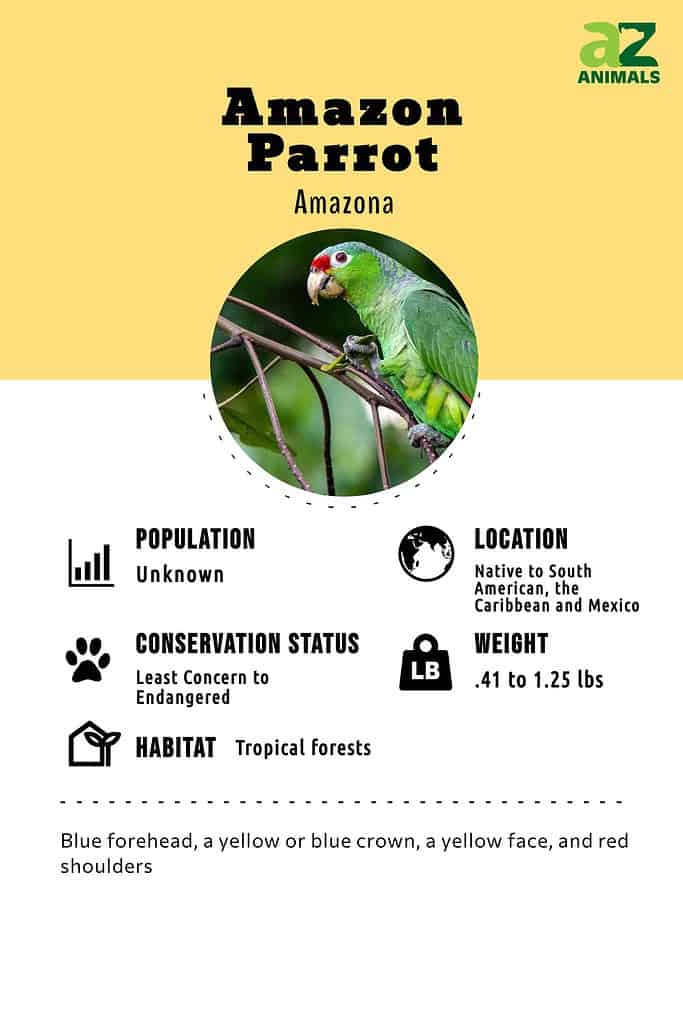
Are you fascinated by the vibrant colors of parrots, but unsure about which species to choose? Look no further than the Amazon parrot. This stunning bird is not only a popular pet, but also a beloved companion in many zoos and wildlife sanctuaries.
In this article, we’ll delve into the characteristics, reproduction, and price of the Amazon parrot, helping you decide if this bird is right for you.
Characteristics of the Amazon Parrot
These colorful birds are medium-sized, with a compact and robust structure. They have a distinctive green plumage, with patches and markings that make them a true spectacle to behold. Their short tail and strong beak give them a unique appearance, while their intelligence and social nature make them a joy to interact with.
One of the most striking features of the Amazon parrot is its coloration. With over 30 species, they come in a range of colors, including blue, yellow, red, and more. But not all Amazon parrots are created equal – some are better suited to life as pets than others.
For example, the Blue-fronted Amazon is known for its bright blue feathers on its forehead, while the Yellow-naped Amazon has striking yellow nape feathers. The Red-headed Amazon, with its vibrant red head, is also a popular choice among parrot enthusiasts. However, it’s essential to research and understand the unique characteristics of each species before making a decision.
Reproduction of the Amazon Parrot
Before we can enjoy the company of these beautiful birds, they need to be bred. But breeding Amazon parrots is no easy task! First, you’ll need to find a compatible pair, aged around 5 years old and with a strong bond. Even then, there are no guarantees that they will reproduce successfully.
When an Amazon parrot does decide to breed, the female lays three to four eggs, which she incubates for about four weeks. The chicks hatch without feathers, but grow rapidly, taking about two months to develop their first coat.
While the parents are caring for the young, it’s essential to give them space and time to bond as a family. This means avoiding any attempts to disturb or intervene in their natural behavior. In fact, many breeders recommend allowing the chicks to stay with their parents until they’re at least six months old, to ensure they receive proper care and socialization.
Types of Amazon Parrots
If you’re considering bringing an Amazon parrot into your home, you’ll want to choose a species that is well-suited to life as a pet. Some of the most popular and affectionate varieties include:
- Blue-fronted Amazon: Known for their bright blue feathers on their forehead, these birds are friendly and outgoing.
- Yellow-naped Amazon: With their striking yellow nape feathers, this species is a favorite among parrot enthusiasts.
- Red-headed Amazon: As their name suggests, these birds have vibrant red heads, but are also known for their playful and affectionate nature.
- Orange-winged Amazon: This species has stunning orange wings and a bright green body, making it a popular choice among parrot collectors.
- Sulphur-crested Amazon: With their striking yellow crest, this species is known for its intelligence and social nature.
Price of the Amazon Parrot
So how much will it cost to bring an Amazon parrot into your home? Prices vary depending on the species, age, and sex of the bird. On average, you can expect to pay between €10-€50 for a healthy adult parrot.
However, remember that this is just the initial cost – you’ll also need to factor in the expense of a large enclosure, toys, and other supplies to keep your feathered friend happy and healthy. For example:
- A 2x3x4 foot enclosure can cost between €200-€500.
- Toys and accessories can range from €50-€100 per month.
- Food and supplements can cost around €20-€50 per month.
Health Considerations
Amazon parrots are generally a healthy species, but like all birds, they’re susceptible to certain health issues. Some common problems include:
- Respiratory infections: These can be caused by poor ventilation or the presence of bacteria in the enclosure.
- Parasites: Mites and lice can infest Amazon parrots, causing discomfort and stress.
- Beak overgrowth: This can be caused by a diet that’s too high in calcium or a lack of adequate chewing surfaces.
To prevent these problems, it’s essential to provide your Amazon parrot with regular veterinary check-ups, a balanced diet, and plenty of exercise and mental stimulation.
Conclusion
The Amazon parrot is a beautiful and fascinating bird, but it’s not for everyone. Before bringing one into your home, make sure you’re ready for the commitment and care that these birds require. With their striking colors, playful personalities, and affectionate nature, they can make wonderful pets – but only if you’re prepared to provide the love and attention they deserve.
Frequently Asked Questions
- How long do Amazon parrots live?
Amazon parrots can live for up to 50 years in captivity, with proper care and attention. - Can I handle my Amazon parrot’s eggs?
It’s best not to handle your Amazon parrot’s eggs or chicks, as this can cause stress and affect their development. - How often should I clean my Amazon parrot’s cage?
Daily cleaning is essential to keep your Amazon parrot’s enclosure clean and healthy. - Can I get an Amazon parrot that can talk?
Some Amazon parrots are more prone to talking than others, but with proper training and attention, many can learn to mimic human speech. - How much space do I need for my Amazon parrot?
Amazon parrots require a large enclosure with plenty of room to fly, climb, and play – at least 2x3x4 feet in size is recommended.
Additional Tips
- Socialization: Socialization is crucial for young Amazon parrots. Handle them gently and frequently from an early age to help them develop trust and confidence.
- Training: Training your Amazon parrot is essential for establishing a strong bond and teaching them basic commands.
- Diet: A balanced diet is vital for keeping your Amazon parrot healthy. Provide a high-quality pellet food, supplemented with fruits, vegetables, and nuts.
- Environmental enrichment: Amazon parrots require plenty of environmental enrichment to keep them stimulated and engaged. Provide toys, perches, and climbing structures to keep them active.
By following these tips and considering the unique characteristics of each species, you can create a happy and fulfilling home for your Amazon parrot.


