
When we talk about genetics, the term “allele” can be a bit tricky to grasp. It’s related to genes and helps explain many phenomena that affect us in everyday life. In this article, we’ll delve into the world of alleles, exploring their definition, types, and significance in understanding genetic inheritance.
What are Alleles?
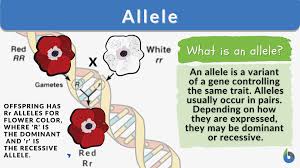
In simple terms, an allele is an alternative form of a gene found on the same position on homologous chromosomes (locus genico). There can be one or more than two forms of these alternative genes. Understanding alleles is crucial because they control the same trait but can result in different quantities or qualities.
For example, let’s consider a simple case where a gene determines eye color. There could be three main alleles: brown, blue, and green. In this scenario, each allele represents a different version of the gene that affects eye color. The presence of any one of these alleles will determine an individual’s eye color.
Alleles and Genes
We find pairs of alleles in all somatic cells, diploid organisms where they are distributed equally on homologous chromosomes. When defining an individual’s genotype relative to a gene, we need to study the collection of alleles that person possesses. It’s essential to recognize that identical phenotypes can lead to different genotypes.
For instance, consider two individuals with the same eye color and skin tone but different hair colors. Their genotypes might be different due to variations in their hair gene. The presence of certain alleles could influence an individual’s traits and determine the final phenotype.
Pairs of Alleles
In all somatic cells, there are pairs of alleles. The relationship between these alleles determines the expression of genes in an individual. When two alleles are present, they can be homozygous (having the same allele) or heterozygous (having different alleles). The presence of a dominant and recessive allele leads to different outcomes.
For example, consider a case where a gene for height is determined by two alleles: tall (T) and short (t). If an individual inherits the T allele from one parent and the t allele from the other parent, their genotype would be “Tt” or “tT”. In this scenario, the dominant allele (T) will always be expressed.
Dominant Allele
A dominant allele will always be expressed if it’s present with a recessive allele or on its own. In this case, the phenotype of the organism will match that of the first filial generation. This concept is crucial for understanding how genetic traits are passed down through generations.
For instance, in a case where a gene determines blood type (A, B, AB, O), the A allele is dominant over the B allele. If an individual inherits the A allele from one parent and the B allele from the other parent, their genotype would be “AB”. The phenotype of this individual would be AB+.
Recessive Allele
When an individual has two copies (alleles) of a recessive allele at a particular locus, it expresses its trait. If there’s only one copy of this allele, the dominant allele will be expressed instead.
For example, consider a case where a gene determines blood type again, but this time the B allele is recessive over the A allele. In an individual with the genotype “bb”, both alleles are recessive and can’t mask each other. The phenotype in this case would be B-.
Alleles and Evolution
Wild-type alleles are considered the original forms found in nature. They are usually dominant and represent the most common form of an organism’s gene. In many cases, there are multiple forms of alleles for specific genes, leading to a variety of traits. These variations occur over time through natural selection and geographic distribution.
For instance, consider birds with different beak shapes. The original wild-type allele may have determined a typical beak shape in nature, but due to natural selection or genetic drift, a new allele emerged that led to thicker beaks. This variation is now seen in some bird species and can lead to changes in their environment.
Understanding Alleles: Key Points
• An allele is one of the two or more forms of a gene that occupy the same position on homologous chromosomes.
• The relationship between these alleles determines how genes are expressed in an individual.
• Dominant alleles will always be expressed if present with recessive alleles or alone.
Frequently Asked Questions
- What is the difference between homozygous and heterozygous?
Homozygous means having two copies of the same allele for a particular gene, while heterozygous indicates the presence of two different alleles. - How does allelic variation contribute to genetic diversity?
Allelic variations increase genetic diversity by allowing individuals to express different traits. This diversity is essential for adapting to changing environments and increasing population fitness. - What is the role of recessive alleles in genetic inheritance?
Recessive alleles are expressed only when there are two copies (alleles) at a specific locus. These alleles play a crucial role in expressing certain traits, such as eye color or blood type.
Importance of Alleles
Understanding alleles and their relationship to genes is essential for understanding genetics and the inheritance of traits. This knowledge has numerous applications in fields like medicine, agriculture, and forensic science.
For instance, genetic testing can identify an individual’s genotypes by analyzing their DNA. By identifying specific alleles associated with a particular trait or disease, medical professionals can diagnose conditions more accurately and develop targeted treatments.
Conclusion
In conclusion, understanding alleles is crucial for grasping the complex relationships between genes, traits, and inheritance patterns in organisms. Recognizing the differences between dominant and recessive alleles helps us comprehend how genetic information is passed down through generations. By studying allelic variations, we can gain insights into genetic diversity, adaptation, and evolution.
Additional Resources
For further learning on this topic, consider checking out:
- The Human Genome Project for a comprehensive overview of human genetics.
- Online resources like GenBank or the National Center for Biotechnology Information (NCBI) to explore genomics and genetics topics.
- Genetics textbooks by experts in the field, such as Alberts et al.


