
The Solar Island: How Alcatraz Went Green
Alcatraz, the small island off the coast of San Francisco, has made a remarkable shift towards renewable energy. Once reliant on fossil fuels, the island has adopted a sustainable solar-based policy to power its tiny grid. Let’s explore how this transformation has taken place and what it means for the future of energy production.
A Brief History of Alcatraz
Alcatraz was once infamous for its maximum-security prison, but today it’s known for its innovative approach to sustainability. The island’s history dates back to 1775 when Spanish colonizers first inhabited it. However, it wasn’t until the mid-20th century that the prison became a symbol of American justice.
The Switch to Solar
In the past, Alcatraz relied on 200,000 liters of diesel fuel per week to generate electricity for its small grid. But in recent years, the island has made a bold move towards renewable energy. A 307 kW solar panel system now powers the entire grid, reducing the island’s carbon footprint.
Solar Panels on Rooftops
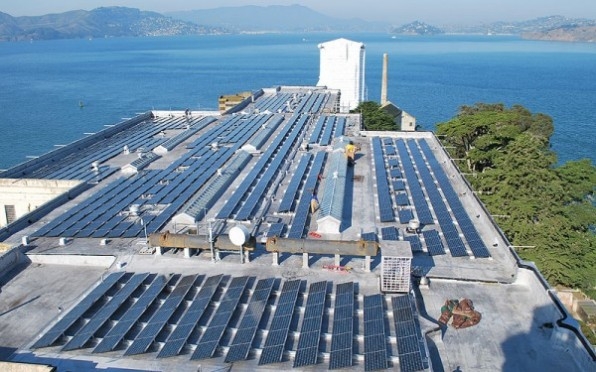
You might be surprised to learn that most of Alcatraz’s solar panels are installed on its rooftops. The island’s main building is home to a significant portion of these panels, which help generate electricity for the island’s residents and facilities.
Energy Storage: The 2 MW Battery
Alcatraz also boasts an impressive 2 megawatt-hour battery storage system. This allows the island to store excess energy generated by its solar panels during the day and use it at night or on cloudy days, reducing its reliance on fossil fuels.
Is Alcatraz’s Solar System Energy-Efficient?
Before completing its solar microgrid, Alcatraz paid an average of 76 cents per kilowatt-hour (kWh) for electricity. With its new solar system in place, the island now pays just 71 cents per kWh – including the cost of constructing the solar panel array.
The Benefits of Solar Energy
So why has Alcatraz made this significant shift towards solar energy? The benefits are numerous:
- Reduced greenhouse gas emissions
- Lower energy costs for residents and facilities
- Enhanced energy independence
Conclusion
Alcatraz’s transition to solar energy is a shining example of innovation and sustainability. By embracing renewable energy sources, the island has reduced its carbon footprint and set an inspiring precedent for other islands and communities around the world.
Frequently Asked Questions (FAQs)
-
What type of fuel did Alcatraz use before switching to solar?
- Diesel fuel was previously used by Alcatraz.
-
How much energy does the island’s solar panel system produce?
-
The 307 kW solar panel system powers the entire grid.
-
Where are most of the solar panels installed on the island?
-
Most of the solar panels are installed on rooftops, particularly on the main building.
-
What type of energy storage system does Alcatraz use?
-
A 2 megawatt-hour battery storage system is used to store excess energy generated by the solar panels.
-
How much do residents pay for electricity after implementing the solar microgrid?
-
Residents now pay an average of 71 cents per kWh, including the cost of constructing the solar panel array.
-
What are some benefits of using solar energy for Alcatraz?
-
Reduced greenhouse gas emissions and lower energy costs for residents and facilities.
-
Is Alcatraz’s transition to solar energy a model for other islands and communities?
-
Yes, Alcatraz’s transition to solar energy is an inspiring precedent for other islands and communities around the world.
-
What role does Alcatraz play in promoting sustainability?
- Alcatraz serves as an example of innovative sustainability practices and promotes environmentally friendly policies.
-
How can individuals contribute to a sustainable future like Alcatraz’s?
-
Individuals can contribute by adopting renewable energy sources, reducing their carbon footprint, and supporting initiatives that promote sustainability.
-
Can the solar panel system on Alcatraz be replicated elsewhere?
- The 307 kW solar panel system can serve as an example for other islands and communities looking to transition to renewable energy sources.
-
What are some challenges faced by Alcatraz in implementing its solar microgrid?
-
Challenges include adapting to changes in energy demand, ensuring grid stability, and managing the battery storage system.
-
How does Alcatraz balance the need for reliability with the benefits of using solar energy?
- The island balances reliability with the benefits of solar energy by maintaining a diesel generator for emergency situations.
-
What are some lessons that can be learned from Alcatraz’s transition to solar energy?
-
Lessons include embracing renewable energy sources, investing in infrastructure, and promoting sustainability initiatives.
-
How does Alcatraz measure the success of its solar microgrid?
-
The island measures success by tracking energy production, reducing greenhouse gas emissions, and improving energy efficiency.
-
What is the potential for other islands or communities to adopt a similar approach like Alcatraz’s?
- Other islands and communities can replicate Alcatraz’s successful transition to solar energy by embracing renewable sources, investing in infrastructure, and promoting sustainable practices.


