
Introduction to the Problem of the Last Mile
The last mile logistics is an inefficient sector. With low truck occupancy rates, empty trips, old vehicles, and significant differences in fleet management among different supply chains, the answer today cannot be other than yes: there are vast opportunities for improvement, but the market has struggled to capitalize on them, and when it does, not always with the best results.
Is the problem of last mile logistics that logisticians don’t know their job? Absolutely not. The complexity lies in the multiple factors affecting this sector. Understanding the intricacies of supply chain management is essential to identifying potential solutions.
Understanding the Complexity of Last Mile Logistics
The recent AILOG conference (Association Italiana di Logistica e Supply Chain Management) shed light on the challenges facing the last mile logistics industry. Held on October 4th, it brought together a number of companies, academics, and government representatives to discuss the organization, management, regulatory issues that involve public entities, tools that improve efficiency, and environmental problems (which we will touch upon briefly).
The complexity of the supply chain does not stop at warehouses; it extends to the road segment (often longer than a kilometer) connecting the goods to the point of distribution. This is where the inefficiencies in last mile logistics become most apparent.
New Challenges: Demand and Supply Side
According to Elena Maggi, an economics professor specializing in transport, both demand and supply side issues pose significant challenges. From the perspective of demand, issues include:
- Just-in-Time (JIT) delivery systems
- The rise of e-commerce with the proliferation of small point-to-point deliveries
- The reduction in storage space
From the perspective of supply, we have issues such as a fragmented market with a large number of operators, private transportation, widespread subcontracting, and dispersed logistics platforms.
These challenges highlight the need for public-private collaboration to address this complex issue. The government cannot replace the private sector but must collaborate in dividing tasks and responsibilities.
The Role of Technology in Solving Last Mile Logistics
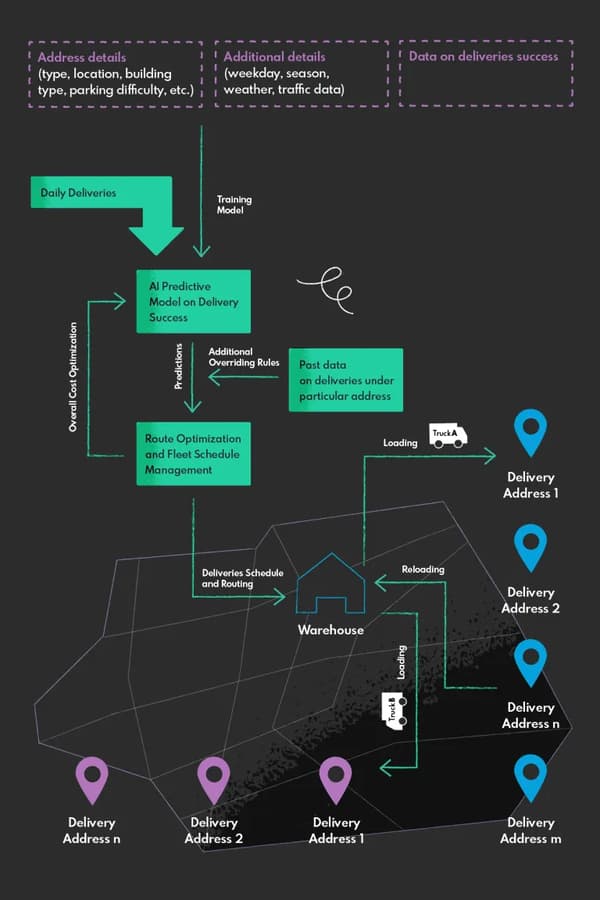
Technology plays a crucial role in improving last mile logistics. It can help optimize routes, reduce emissions, and improve efficiency. Some of the technologies that are being explored include:
- Autonomous vehicles: Self-driving cars and trucks could revolutionize the way goods are transported.
- Route optimization software: This type of software uses algorithms to find the most efficient routes for delivery drivers.
- Electric and hybrid vehicles: These types of vehicles produce significantly less emissions than traditional diesel-powered vehicles.
- Warehouse management systems: These systems can help optimize warehouse operations, reducing waste and improving efficiency.
The Benefits of an Efficient Last Mile Logistics System
An efficient last mile logistics system has numerous benefits. Some of the most significant advantages include:
- Reduced emissions: By using more fuel-efficient vehicles and optimizing routes, emissions can be significantly reduced.
- Improved service efficiency: By streamlining processes and improving communication between parties, delivery times can be reduced.
- Enhanced customer satisfaction: When goods are delivered efficiently and effectively, customers are more likely to be satisfied.
The Impact on the Environment
One of the most significant benefits of an efficient last mile logistics system is its impact on the environment. By reducing emissions and waste, businesses can help mitigate climate change. Additionally, by using more sustainable practices, such as using renewable energy sources, businesses can reduce their environmental footprint.
What Can Be Done to Improve Last Mile Logistics?
There are several steps that can be taken to improve last mile logistics:
- Harmonize regulations: By harmonizing regulations across different municipalities, it is easier for businesses to operate efficiently.
- Improve service efficiency: By using new tools and technologies, such as route optimization software and autonomous vehicles, delivery times can be reduced.
- Promote environmentally friendly solutions: By using more sustainable practices, such as electric and hybrid vehicles, businesses can reduce their environmental footprint.
The Role of Public-Private Collaboration
Public-private collaboration is essential in addressing the complex issue of last mile logistics. By working together, businesses, government agencies, and other stakeholders can identify potential solutions and develop strategies for implementation.
Some ways that public-private collaboration can be effective include:
- Sharing resources: By sharing resources, such as infrastructure and expertise, parties can pool their knowledge and resources to achieve common goals.
- Developing new technologies: Public-private collaboration can help accelerate the development of new technologies, such as autonomous vehicles and route optimization software.
- Promoting sustainable practices: By promoting environmentally friendly solutions, public-private collaboration can help reduce waste and emissions.
Conclusion: A Call to Action
The complexities of last mile logistics are numerous, but so are the opportunities for improvement. It is time for a holistic approach, engaging all stakeholders in public-private collaboration to create more efficient, sustainable, and citizen-friendly solutions.
By working together, businesses, government agencies, and other stakeholders can identify potential solutions and develop strategies for implementation. With the right combination of technologies, policies, and practices, it is possible to create a more efficient, sustainable, and environmentally friendly last mile logistics system.
FAQs
- What can be done to improve last mile logistics?
- Harmonize regulations across different municipalities
- Improve service efficiency by using new tools and technologies
-
Promote environmentally friendly solutions
-
How can the public sector contribute?
- Implement policies that facilitate efficient transportation (e.g., time windows)
-
Collaborate with private companies to create a sustainable logistics system
-
What role does technology play in improving last mile logistics?
- Enhance service efficiency
-
Promote environmentally friendly solutions
-
How can logistics companies improve their services?
- Adopt new technologies and tools
-
Improve organizational structures and fleet management
-
Can the supply chain be sustainable?
- By using hybrid or hydrogen vehicles
-
Implementing software for optimizing transportation
-
Why is it crucial to have public-private collaboration?
- To address complex issues beyond individual company capabilities
-
To ensure a more holistic approach to logistics management
-
What are the benefits of an efficient last mile logistics system?
- Reduced emissions
- Improved service efficiency
-
Enhanced customer satisfaction
-
How can citizens benefit from improved last mile logistics?
- Increased convenience through more organized delivery systems
- Reduced costs for consumers due to more efficient transportation methods


