
Introduction
The Ailanthus tree, also known as the “Tree of Heaven,” is a highly debated species in Italy. Native to China, this plant has been introduced to Europe since 1740 and has gained both appreciation for its medicinal properties and notoriety for its invasive nature.
Characteristics of the Ailanthus Tree
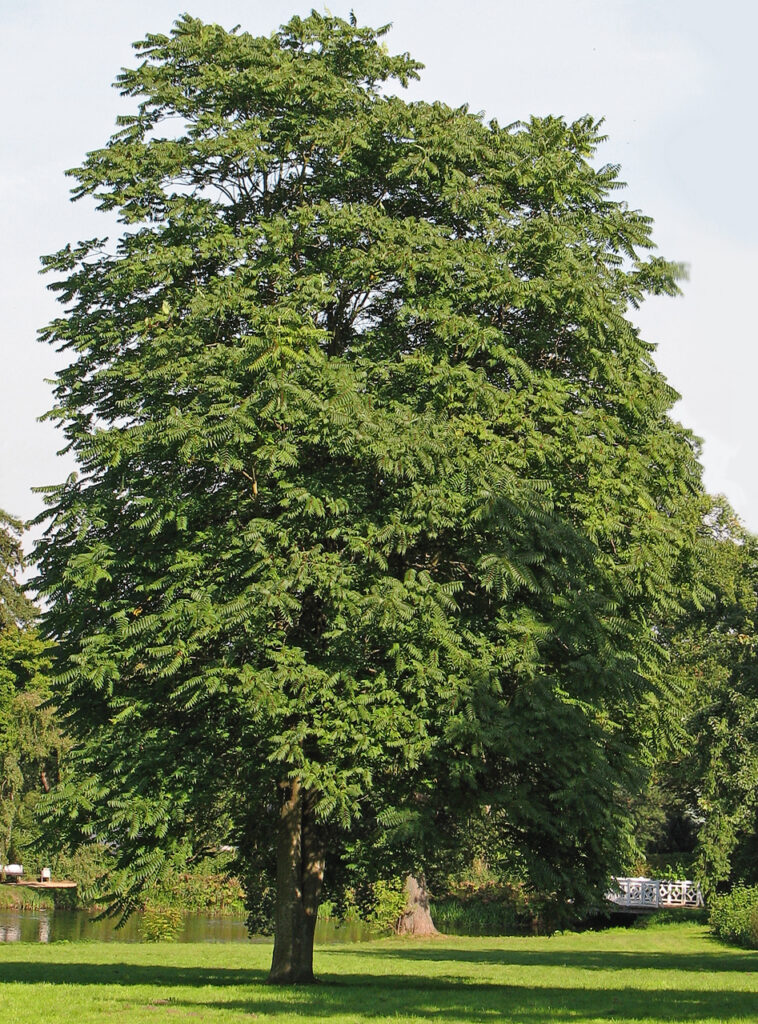
The scientific name of the Ailanthus tree is Ailanthus altissima. It can grow up to 27 meters tall, with a diameter of up to 1 meter, and has smooth gray bark that becomes rougher as it ages. The branches are reddish-brown or brown, pubescent, and robust. When a leaf falls off the tree, it leaves behind a small, heart-shaped mark called a lenticel.
One of the most distinctive features of the Ailanthus tree is its characteristic odor, often described as a pungent smell reminiscent of rotten nuts. This plant thrives in full sun and can tolerate partial shade, making it an ideal candidate for areas with limited sunlight.
The Benefits of the Ailanthus Tree
Despite its reputation as an invasive species, the Ailanthus tree has several beneficial properties that have made it a popular choice for various applications:
- Medicinal Properties: The plant has been used in traditional Chinese medicine for centuries to treat various ailments, including mental health issues and skin conditions.
- Pollinator Friendly: The Ailanthus tree is a favorite of bees and other pollinators, making it a valuable resource for apiaries.
- Timber Production: The tree’s rapid growth rate makes it an ideal candidate for wood production, particularly in the construction industry.
The Dangers of the Ailanthus Tree
While the Ailanthus tree has its benefits, it also poses several risks to human health and the environment:
- Toxicity: The plant contains toxic compounds like saponines, alantones, and quassins, which can cause serious health problems if ingested or inhaled.
- Invasive Species: The Ailanthus tree is known to outcompete native vegetation, leading to a decline in biodiversity and ecosystem disruption.
- Environmental Impact: The plant’s roots can damage buildings and infrastructure, while its spread can lead to soil erosion and water pollution.
Removing the Ailanthus Tree
Due to its invasive nature, removing the Ailanthus tree is often necessary to prevent further harm. Here are some methods for safely removing this plant:
- Cutting Down: Cutting down the tree as close to the ground as possible can help prevent regrowth.
- Chemical Herbicides: Using chemical herbicides specifically designed to target invasive species like the Ailanthus tree can be effective in controlling its spread.
Conclusion
The Ailanthus tree is a complex and multifaceted species that has both benefits and drawbacks. Its unique properties make it an attractive choice for medicinal purposes, pollinator-friendly habitats, and timber production, but its invasive nature poses significant risks to human health and the environment. Understanding the pros and cons of this plant can help individuals and policymakers make informed decisions about its management.
FAQs
- Is the Ailanthus tree edible?
No, it is not recommended to consume any parts of the Ailanthus tree due to its toxicity. - Can the Ailanthus tree be used for food production?
While some parts of the plant have been used in traditional medicine, there are no established uses for the Ailanthus tree as a food source. - Is it possible to control the spread of invasive species like the Ailanthus tree?
Yes, controlling the spread of invasive species requires cooperation among landowners, local authorities, and environmental organizations. -
Can the Ailanthus tree be used for landscaping purposes?
Yes, but its invasive nature means that it can outcompete native vegetation, leading to ecosystem disruption. -
Are there any alternative trees that offer similar benefits without the risks associated with the Ailanthus tree?
Yes, several other tree species offer similar benefits and are considered safer alternatives to the Ailanthus tree. -
What should I do if I have an Ailanthus tree growing on my property?
If you have an Ailanthus tree on your property, it is recommended that you consult with a professional arborist or local authorities for guidance on how to safely remove it. -
How can I prevent the spread of invasive species like the Ailanthus tree in my area?
Preventing the spread of invasive species requires cooperation among landowners, local authorities, and environmental organizations through education and enforcement programs. -
Can the Ailanthus tree be used for medicinal purposes without risking toxicity?
While some parts of the plant have been used in traditional medicine, it is essential to exercise caution when using the Ailanthus tree for medicinal purposes due to its toxicity.
Additional Information
The spread of invasive species like the Ailanthus tree has significant economic and environmental impacts. The International Union for Conservation of Nature (IUCN) estimates that up to 10% of plant species are threatened with extinction, primarily due to human activities such as habitat destruction and overexploitation.
In conclusion, while the Ailanthus tree has some benefits, its invasive nature poses significant risks to human health and the environment. Understanding these pros and cons can help individuals and policymakers make informed decisions about its management.
Prevention Strategies
To prevent the spread of invasive species like the Ailanthus tree, the following strategies can be employed:
- Education: Raise awareness among landowners, local authorities, and environmental organizations about the risks associated with invasive species.
- Enforcement Programs: Implement enforcement programs to monitor and control the spread of invasive species.
- Habitat Restoration: Restore degraded habitats and promote native vegetation to reduce the likelihood of invasive species colonization.
Conclusion
The Ailanthus tree is a complex and multifaceted species that has both benefits and drawbacks. Its unique properties make it an attractive choice for medicinal purposes, pollinator-friendly habitats, and timber production, but its invasive nature poses significant risks to human health and the environment. Understanding these pros and cons can help individuals and policymakers make informed decisions about its management.
Frequently Asked Questions
- Is the Ailanthus tree edible?
No, it is not recommended to consume any parts of the Ailanthus tree due to its toxicity. - Can the Ailanthus tree be used for food production?
While some parts of the plant have been used in traditional medicine, there are no established uses for the Ailanthus tree as a food source. - Is it possible to control the spread of invasive species like the Ailanthus tree?
Yes, controlling the spread of invasive species requires cooperation among landowners, local authorities, and environmental organizations. -
Can the Ailanthus tree be used for landscaping purposes?
Yes, but its invasive nature means that it can outcompete native vegetation, leading to ecosystem disruption. -
Are there any alternative trees that offer similar benefits without the risks associated with the Ailanthus tree?
Yes, several other tree species offer similar benefits and are considered safer alternatives to the Ailanthus tree. -
What should I do if I have an Ailanthus tree growing on my property?
If you have an Ailanthus tree on your property, it is recommended that you consult with a professional arborist or local authorities for guidance on how to safely remove it. -
How can I prevent the spread of invasive species like the Ailanthus tree in my area?
Preventing the spread of invasive species requires cooperation among landowners, local authorities, and environmental organizations through education and enforcement programs. -
Can the Ailanthus tree be used for medicinal purposes without risking toxicity?
While some parts of the plant have been used in traditional medicine, it is essential to exercise caution when using the Ailanthus tree for medicinal purposes due to its toxicity.
References
- “Ailanthus altissima.” IUCN Red List of Threatened Species.
- “Invasive Species and Ecosystem Disruption.” National Park Service.
- “The Ailanthus Tree: A Review of Its Benefits and Drawbacks.” Journal of Environmental Science and Health, Part C.
Glossary
- Ailanthus altissima: The scientific name for the Ailanthus tree.
- Invasive species: Plants that have been introduced to an area where they can cause harm to the environment or native species.
- Toxicity: The ability of a substance to cause harm or death.
By understanding the pros and cons of the Ailanthus tree, individuals and policymakers can make informed decisions about its management. This knowledge can help prevent the spread of invasive species and protect the environment.


