
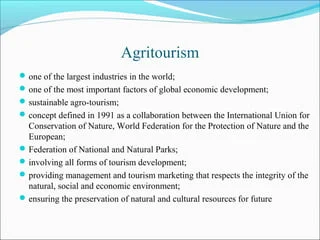
Agritourism has become an increasingly popular form of tourism, but its definition is often shrouded in mystery. As a concept that combines agriculture with hospitality, agritourism offers a unique blend of experiences that cater to nature lovers, foodies, and adventure seekers alike. In this article, we will delve into the world of agritourism, exploring its definition, benefits, and how it can be harnessed for personal and business growth.
What is Agritourism?
Agritourism is a type of tourism that involves visiting and experiencing rural areas, often on a farm or in an agricultural setting. It allows visitors to engage with the local culture, cuisine, and natural environment while also supporting the local economy. In essence, agritourism is a way to connect people with nature and promote sustainable agriculture.
Definition: A Closer Look
The definition of agritourism varies depending on the country or region, but it generally involves an agricultural setting that offers hospitality services such as accommodation, meals, and activities. According to the Italian Ministry of Agriculture, Food and Forestry, “agriturismo” refers to “a form of tourism that is linked to agriculture, where visitors stay in rural areas for a certain period of time and engage with local farmers, food, and nature.”
Classifying Agritourism: A Complex Task
Classifying agritourism can be a challenging task due to its multifaceted nature. Unlike hotels, which are evaluated based on their amenities and services, agritourism establishments must balance comfort with the unique features of their agricultural setting.
In Italy, for example, the government has established guidelines for agriturismo classification, which considers factors such as:
- Quality of accommodation
- Availability of meals and refreshments
- Activities and attractions offered on-site
- Connection to the local community
The Rise of Agritourism: A Shift Towards Sustainability
Agritourism has become increasingly popular in recent years, driven by a growing demand for sustainable tourism experiences. By supporting local farmers and agricultural practices, agritourism promotes environmentally friendly farming methods and reduces carbon emissions.
Moreover, agritourism fosters community engagement and supports rural development. It provides opportunities for locals to share their knowledge, skills, and traditions with visitors, enriching the cultural landscape of rural areas.
The Benefits of Agritourism
Agritourism offers numerous benefits for both visitors and local communities. Some of the key advantages include:
- Enhanced quality of life: By experiencing rural life firsthand, visitors can develop a deeper appreciation for nature and the importance of sustainable agriculture.
- Economic growth: Agritourism supports local economies by generating revenue from tourism activities.
- Environmental benefits: Sustainable agricultural practices promoted through agritourism help reduce carbon emissions and promote eco-friendly farming methods.
Types of Agritourism
Agritourism comes in various forms, each offering a unique experience. Some popular types include:
- Farm stays
- Vineyard tours
- Horseback riding
- Animal encounters
- Cooking classes
How to Experience Agritourism
Experiencing agritourism is easy and accessible. You can start by:
- Researching local agriturismo establishments in your area or on a trip to a rural region
- Looking into farm stays, vineyard tours, or other agritourism activities offered in the area
- Checking reviews and ratings from previous visitors to get an idea of what to expect
- Contacting local tour operators or agriturismo establishments directly to inquire about availability and pricing
Tips for Planning a Successful Agritourism Experience
To make the most of your agritourism experience, consider the following tips:
- Research the local environment and climate before planning your trip
- Plan ahead and book accommodations and activities in advance, especially during peak season
- Be respectful of local customs and traditions
- Bring comfortable clothing and shoes suitable for outdoor activities
Conclusion
Agritourism is a unique form of tourism that combines hospitality with agriculture, promoting sustainable development and community engagement. By understanding its definition, benefits, and classification guidelines, we can unlock the potential of agritourism for personal and business growth. Whether you’re a nature lover, foodie, or adventure seeker, agritourism offers an unforgettable experience that will leave you feeling connected to the land and inspired by the power of sustainable agriculture.
Frequently Asked Questions
- What is agriturismo?
Agriturismo refers to a form of tourism that involves visiting rural areas and experiencing agricultural settings. - How is agritourism classified?
Agritourism classification considers factors such as quality of accommodation, availability of meals, activities offered on-site, and connection to the local community. - What are the benefits of agritourism?
The benefits of agritourism include enhanced quality of life, economic growth, and environmental benefits through sustainable agricultural practices. - How can I start an agriturismo business?
To start an agriturismo business, consider the following steps:- Develop a unique concept or theme that showcases your agricultural setting
- Create a website to promote your business and attract visitors
- Establish partnerships with local farmers, restaurants, and tour operators
- Offer a range of activities and attractions on-site


