
Introduction
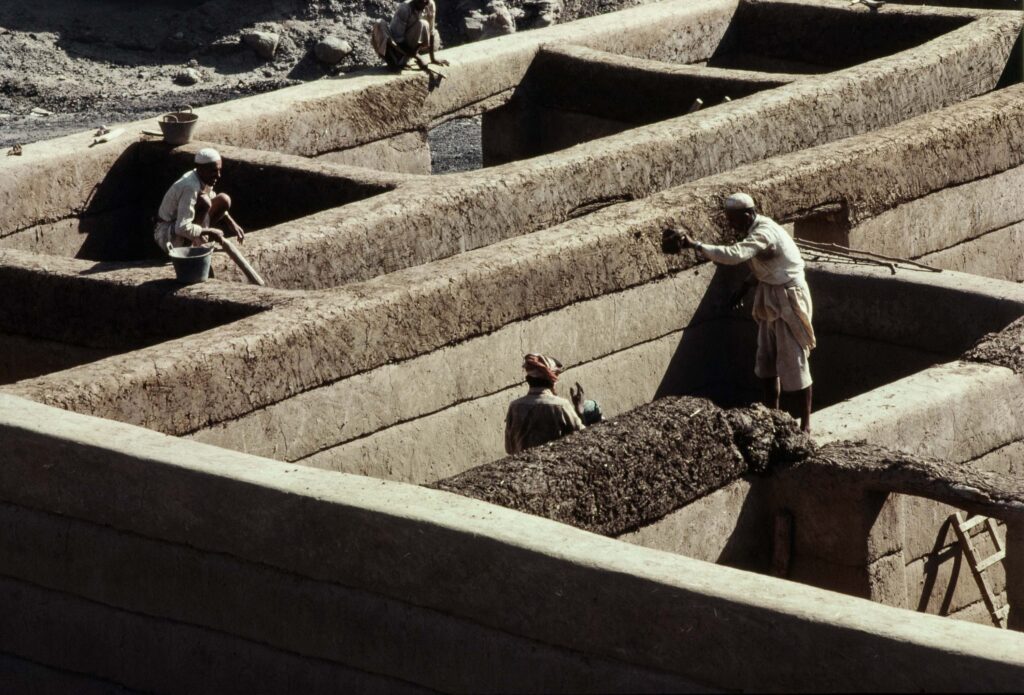
When we think of building materials, we often default to concrete, steel, or wood. However, there’s a technique that has been used for centuries in various parts of the world, particularly in rural areas, where buildings are constructed using raw earth as the primary material. This ancient method is known as adobe, pisé, bauge, and façonnage, which we’ll explore in this article.
What is Adobe?
Adobe is a technique of building with blocks or bricks made from raw earth, often mixed with straw, water, and other natural materials. The earth is compacted directly into forms, similar to how cement paste is poured into a mold for concrete construction. This process allows for the creation of strong, durable structures that can withstand harsh weather conditions.
History and Global Significance
Adobe buildings can be found in many parts of the world, with an estimated one-third of the global population living in earth-sheltered homes or buildings made from raw earth. In Europe and North America, these structures are often associated with the “Third World” or rural areas, but they’re also present in urban centers. In Italy, for example, adobe is still practiced, particularly in regions like Sardinia, Abruzzo, Marche, and Piedmont.
Organizations Promoting Adobe Construction
There are several organizations dedicated to promoting and preserving the art of building with raw earth. The Association Nacional Città della Terra Cruda (National City of Raw Earth) has 28 member municipalities in Italy, while the Center for Documentation on Earth-Sheltered Homes in Casalincontrada, Chieti, provides valuable information on this subject.
Why Use Adobe?
So, why choose raw earth over traditional building materials? The answer lies in its unique properties. Adobe is:
- Bio-ecologically friendly: Raw earth is a sustainable resource that requires minimal processing and transportation.
- Structurally sound: Blocks and bricks can be produced artisinally or industrially, providing excellent structural integrity.
- Thermal mass: Adobe buildings are natural thermal mass, absorbing and releasing heat efficiently.
- Low maintenance: Earth-sheltered structures require less upkeep than traditional buildings.
The Making of Adobe
Adobe blocks are created by compressing and molding raw earth into specific shapes. This process can be done manually or industrially using machines. The resulting blocks are:
- Breathable: Permeable to air, water, and light, reducing the risk of moisture accumulation.
- Thermal insulation: Providing excellent thermal mass, regulating interior temperatures.
Limitations and Considerations
While adobe has many benefits, there are some limitations to consider:
- Water sensitivity: Adobe buildings require protection from excessive rain or groundwater, as they can be susceptible to erosion.
- Material quality: The quality of the raw earth and processing methods can impact the final product.
Case Studies: Building with Raw Earth
Despite these challenges, adobe construction has stood the test of time. Buildings constructed using this method have been found in various parts of the world, including:
- Samassi, Italy, where the Association Nacional Città della Terra Cruda promotes sustainable building practices.
- Casalincontrada, Chieti, Italy, home to a Center for Documentation on Earth-Sheltered Homes.
Conclusion
Building with raw earth is an ancient technique that offers numerous benefits for our planet. By understanding its history, properties, and limitations, we can appreciate the value of this sustainable approach to construction. Whether you’re looking to build a new home or restore an existing one, consider incorporating adobe into your project – a timeless solution for a more eco-friendly future.
FAQs
- What is the primary difference between pisé, bauge, and façonnage?
- Pisé involves compacting raw earth directly into forms.
- Can adobe buildings be used for load-bearing structures?
- Adobe blocks can be used for tamponement purposes only; not suitable for load-bearing structures.
- How do I protect an adobe building from excessive rain or groundwater?
- Use proper waterproofing techniques, such as applying a layer of bitumen or using natural materials like plant fibers.
- Can I use industrial methods to produce adobe blocks?
- Yes; machines can be used to compress and mold raw earth into specific shapes.
- What is the best way to maintain an adobe building?
- Regularly inspect for signs of moisture accumulation or erosion, address any issues promptly, and apply a coat of natural sealant as needed.
- Can I use adobe blocks in combination with other materials?
- Yes; combining adobe with other sustainable materials like straw bales or recycled glass can create an even more durable structure.
- How long do adobe buildings typically last?
- With proper maintenance, adobe structures can last for hundreds of years.
- Can I use adobe in areas with high winds or seismic activity?
- Adobe blocks are not suitable for load-bearing structures; however, they can be used as part of a larger structure with other materials to provide additional support.
Additional Considerations
When building with raw earth, there are several additional considerations to keep in mind:
- Local regulations: Check with local authorities to ensure that adobe construction is allowed in your area.
- Climate and weather: Adobe buildings can be susceptible to extreme temperatures and weather conditions; consider using additional insulation or protective measures.
- Materials sourcing: Ensure that the raw earth used for adobe blocks is sourced locally and sustainably.
Conclusion
Building with raw earth is a sustainable, timeless approach to construction. By understanding its history, properties, and limitations, we can create structures that not only minimize our environmental footprint but also provide excellent thermal mass and structural integrity. Whether you’re building a new home or restoring an existing one, consider incorporating adobe into your project – a solution for a more eco-friendly future.
References
- Association Nacional Città della Terra Cruda: www.associazionenicitta.org
- Center for Documentation on Earth-Sheltered Homes: www.centrodocumentazione.com
- Samassi, Italy: www.samassi.it
Final Thoughts
Building with raw earth is an ancient technique that offers numerous benefits for our planet. By embracing this sustainable approach to construction, we can create structures that not only minimize our environmental footprint but also provide excellent thermal mass and structural integrity. Whether you’re building a new home or restoring an existing one, consider incorporating adobe into your project – a timeless solution for a more eco-friendly future.
Future Directions
As concern for the environment continues to grow, we can expect to see more emphasis on sustainable building practices like adobe construction. By continuing to promote and develop this technique, we can create structures that not only minimize our environmental footprint but also provide excellent thermal mass and structural integrity.


