
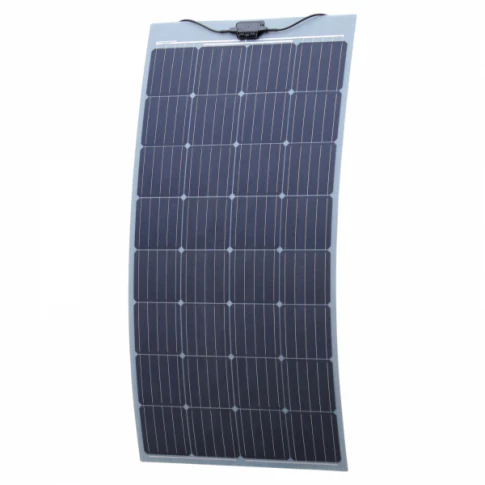
Introduction to Flexible Photovoltaics
Imagine a world where solar cells can be applied anywhere, without the need for a smooth surface. This is now a reality thanks to innovative technology developed by Stanford University. The introduction of adhesive solar cells has opened up new possibilities for renewable energy production and utilization.
The concept of flexible photovoltaics has been around for several decades, but recent advancements in materials science and engineering have made it possible to create solar cells that are not only flexible but also adhesive. This technology has the potential to revolutionize the way we harness solar energy and integrate it into our daily lives.
The Evolution of Solar Cells
We’ve come a long way since traditional rigid solar cells. Today, we have film-thin solar cells that can be applied anywhere, without the need for a flat surface. This is made possible by advancements in technology that have enabled the development of adhesive solar cells.
One of the main challenges faced by conventional flexible solar cells was the lack of suitable substrates. Traditional substrates such as silicon wafers and glass were difficult to utilize due to their irregular surfaces, which didn’t match with necessary chemical and thermal processes for production.
Breaking Free from Traditional Substrates
Stanford University has overcome this limitation with a groundbreaking process. The team, led by Dr. Chi Hwan Lee, developed a thin layer of nickel that can be applied to various substrates, including silicon wafers and silicon dioxide. This innovation allows for the creation of flexible solar cells that can be attached anywhere without the need for a smooth surface.
The Stanford University breakthrough involves applying a thin layer of nickel to a substrate, covering it with a polymer protection layer, and finally attaching thermal transfer tape to create a decal-like unit. This process is similar to decalcomania – a type of image transfer that allows for easy removal and reapplication.
The Innovative Process
To remove the unit from the wafer, simply submerge it in water at room temperature. The water penetrates into the interface between nickel and silicon dioxide, separating the unit from the substrate. The resulting cell can be applied to any surface but requires heating to 90°C for a few seconds before use.
This innovative process has significant implications for renewable energy production. Traditional solar cells require complex manufacturing processes and expensive materials. In contrast, adhesive solar cells are simpler, cheaper, and more versatile, making them an attractive option for various applications.
Implications and Potential Applications
The result is the same high-performance solar cell as the original, but with an enormous difference: it can be attached anywhere – on helmets, smartphones, windows turned into screens, portable devices or even clothing! The potential applications are vast and exciting. With this technology, we can harness solar energy from unconventional sources, opening up new avenues for innovation.
Some of the potential applications of adhesive solar cells include:
- Energy harvesting from wearable devices
- Building-integrated photovoltaics (BIPV)
- Window screens turned into solar panels
- Solar-powered clothing and accessories
- Portable power banks and chargers
Conclusion
The development of adhesive solar cells marks a significant turning point in the history of renewable energy production. This innovative technology has opened doors to new possibilities, enabling us to harness solar energy in creative ways. As researchers and innovators continue to explore this frontier, we can expect even more groundbreaking discoveries and applications.
As we move forward into an increasingly sustainable future, it’s essential to consider the potential impact of adhesive solar cells on various industries and aspects of our lives. While there are challenges to be addressed, the benefits of this technology are undeniable, and its development is a testament to human ingenuity and creativity.
Frequently Asked Questions
Q: What are adhesive solar cells?
A: Adhesive solar cells are flexible photovoltaic units that can be applied anywhere without the need for a smooth surface.
Q: How do they work?
A: The process involves applying a thin layer of nickel to a substrate, covering it with a polymer protection layer, and finally attaching thermal transfer tape to create a decal-like unit that can be easily detached from its substrate.
Q: Can they be used in any environment?
A: While the technology allows for flexible application, some surface preparation may still be required before use. Additionally, exposure to extreme temperatures can impact performance.
Q: How do I remove and reapply them?
A: The units can be removed by submerging them in water at room temperature and then reattached after heating to 90°C for a few seconds.
Q: What are the potential applications of adhesive solar cells?
A: These flexible photovoltaic units have far-reaching implications, enabling energy harvesting from unconventional sources such as clothing, windows turned into screens, or portable devices.
Q: How will this technology impact our daily lives?
A: By opening up new possibilities for renewable energy production and utilization, we can expect to see a significant shift towards more sustainable practices and innovative applications of solar power.
Q: What is the next step in developing adhesive solar cells?
A: Researchers are continuing to explore ways to improve efficiency, scalability, and practicality while pushing the boundaries of this technology.
Q: Can I build my own adhesive solar cell at home?
A: While some basic components may be available for purchase, the process requires specialized equipment and expertise. It’s recommended to seek professional assistance or guidance from experts in the field.
Q: How will this impact industries such as manufacturing and construction?
A: The development of adhesive solar cells has significant implications for various sectors, enabling more efficient production processes, reducing material waste, and creating new opportunities for sustainable design and architecture.
The future of renewable energy is bright, and the introduction of adhesive solar cells is a crucial step towards achieving a more sustainable and environmentally friendly world. As we continue to explore the possibilities of this technology, we can expect significant advancements in various industries and aspects of our lives.


