
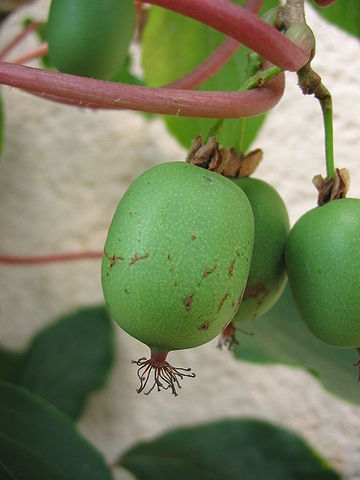
As a gardener or a food enthusiast, you might have heard of Actinidia arguta, also known as mini kiwi. This small but mighty fruit has been gaining popularity worldwide for its unique characteristics and nutritional benefits. In this article, we will delve into the world of mini kiwi, exploring its cultivation, properties, and uses.
What is Mini Kiwi?
Mini kiwi is a variety of Actinidia arguta, a type of kiwi fruit that originated in China. Unlike its larger cousin, the classic kiwi, mini kiwi is smaller in size, with fruits ranging from 5-20 grams in weight. Its skin is smooth and glossy, making it a delight to eat.
Cultivation: Bringing Mini Kiwi into Your Garden
Mini kiwi is a vigorous plant that can thrive in cooler climates. It requires well-draining soil and full sun to partial shade. In regions with cold winters, such as the North Italy, mini kiwi can be grown indoors or outdoors using protection measures like mulching or covering.
History of Mini Kiwi: From Humble Beginnings
The history of mini kiwi dates back to the 1990s when it was first introduced in Europe. It has since gained popularity among gardeners and fruit enthusiasts due to its compact size, ease of cultivation, and nutritional benefits.
How to Care for Mini Kiwi Plants
When cultivating mini kiwi plants, it’s essential to note that they produce both male and female flowers. Male flowers are responsible for producing pollen, while female flowers contain the fruit. To ensure proper pollination, you can use a combination of male and female plants or cross-pollinate them.
Pest Control: Protecting Your Mini Kiwi Crop
One common pest affecting mini kiwi plants is the Japanese beetle. These insects can cause significant damage to the plant’s leaves and fruit. To prevent infestation, it’s recommended to use organic pest control methods like neem oil or insecticidal soap.
Propagation of Mini Kiwi: Tips and Tricks
Propagating mini kiwi plants involves planting seeds or layering stems from mother plants. Seeds can be sown in a nursery or directly into the ground, while layered stems should be buried and covered with soil.
Fertilization: Feeding Your Mini Kiwi Plant
Mini kiwi plants require regular fertilization to promote healthy growth and fruit production. Use a balanced fertilizer that contains nitrogen, phosphorus, and potassium, and follow the recommended application rates.
Pruning: Maintaining Your Mini Kiwi Plant
Regular pruning is essential for maintaining the health and productivity of your mini kiwi plant. Remove any dead or damaged leaves, and cut back long stems to encourage bushy growth.
Propagation Methods: Seeds vs. Stems
Seeds are a common method of propagating mini kiwi plants, but they can be slow to germinate and may not produce plants with the same characteristics as the parent plant. Layering stems is a more reliable method, but it requires some skill and patience.
Diseases: Common Issues Affecting Mini Kiwi Plants
Mini kiwi plants are susceptible to diseases such as fungal infections and root rot. Regular monitoring and prompt action can help prevent or treat these issues before they cause significant damage.
Common Diseases in Mini Kiwi Plants
- Powdery mildew: A fungal disease that causes white, powdery patches on the leaves.
- Root rot: A fungal disease that causes roots to become soft and mushy.
- Botrytis: A fungal disease that causes gray or black lesions on the fruit.
Pest Control Methods
- Neem oil: A natural insecticide that can be used to control pests such as aphids, whiteflies, and spider mites.
- Insecticidal soap: A mild pesticide that can be used to control soft-bodied insects like aphids and mealybugs.
Common Pests in Mini Kiwi Plants
- Aphids: Small, soft-bodied insects that feed on plant sap.
- Whiteflies: Tiny, winged insects that feed on plant sap.
- Spider mites: Tiny, spider-like insects that feed on plant sap.
Pollination: The Secret to Successful Fruiting
Mini kiwi plants require cross-pollination to produce fruit. To achieve this, you can use a combination of male and female plants or manually pollinate the flowers using a small brush.
How to Pollinate Mini Kiwi Plants
- Use a small brush to gently transfer pollen from the male flowers to the female flowers.
- Cross-pollinate multiple male and female plants to ensure proper pollination.
- Hand-pollination can be time-consuming, but it’s an effective method for achieving cross-pollination.
Fruit Production: Maximizing Yield
Mini kiwi plants produce fruit in the summer months, typically between June and September. To maximize yield, ensure that your plant is receiving adequate sunlight, water, and nutrients.
Common Fruit Problems
- Over-ripening: Mini kiwi fruits can become over-ripe if left on the plant for too long.
- Under-ripening: Mini kiwi fruits may not ripen properly if they are harvested before maturity.
- Rotting: Mini kiwi fruits can rot if they are exposed to excess moisture or high temperatures.
Preserving Mini Kiwi Fruit
Mini kiwi fruit is best consumed fresh, but it can also be preserved using various methods such as freezing, dehydrating, or jam-making.
Freezing Mini Kiwi Fruit
To freeze mini kiwi fruit, simply wash the fruits thoroughly and place them in a single layer on a baking sheet. Freeze the fruits until solid, then transfer them to an airtight container or freezer bag for storage.
Dehydrating Mini Kiwi Fruit
To dehydrate mini kiwi fruit, slice the fruits thinly and place them on a baking sheet lined with parchment paper. Dehydrate the fruits in a low-temperature oven (150°F – 200°F) until dry and chewy.
Making Mini Kiwi Jam
To make mini kiwi jam, simply combine fresh or frozen mini kiwi fruit with sugar and pectin in a saucepan. Bring the mixture to a boil, then reduce heat and simmer for 10-15 minutes.
Nutritional Comparison: Mini Kiwi vs. Classic Kiwi
| Nutrient | Mini Kiwi (100g) | Classic Kiwi (100g) |
|---|---|---|
| Protein | 1.2g | 1.2g |
| Lipids | 0.56g | 0.6g |
| Carbohydrates | 17.6g | 9g |
| Sugar | 7.6g | 9g |
| Calories | 77 | 44 |
Health Benefits of Mini Kiwi
Mini kiwi is an excellent source of vitamins C and PP, as well as dietary fiber. It also contains a higher concentration of potassium than the classic kiwi.
Vitamin Comparison: Mini Kiwi vs. Classic Kiwi
| Vitamin | Mini Kiwi (100g) | Classic Kiwi (100g) |
|---|---|---|
| Vitamin C | 23mg | 34mg |
| Vitamin PP | 0.4mg | 0.2mg |
Potential Health Risks of Consuming Mini Kiwi
While mini kiwi is generally considered safe to eat, there are some potential health risks associated with consuming it.
Allergic Reactions: Rare but Possible
Some people may be allergic to the proteins in mini kiwi fruit, which can cause symptoms such as hives, itching, and difficulty breathing.
Digestive Issues: Possible Side Effect
Mini kiwi contains a high concentration of dietary fiber, which can cause digestive issues in some individuals.
Common Uses for Mini Kiwi Fruit
- Eating fresh
- Adding to salads
- Using in baked goods
- Making jams and preserves
How to Choose the Best Mini Kiwi Fruits
When selecting mini kiwi fruits, look for those that are firm, smooth, and have a sweet aroma.
What to Do with Overripe Mini Kiwi Fruit
Overripe mini kiwi fruit can still be used in various ways, such as making jam or preserving it for future use.


