
Introduction
Acid rain has been a topic of discussion for decades, but its explanation remains vague. In this article, we will delve into the world of acid rain, exploring what it is, how it forms, and most importantly, how to stop it.
What are Acid Rain?
To begin with, let’s break down the concept of acid rain into smaller components. As we can imagine, acid rain is not just a liquid acid falling from the sky and wetting our skin. Instead, it is a complex phenomenon that combines molecules, gases, and precipitations to form acids.
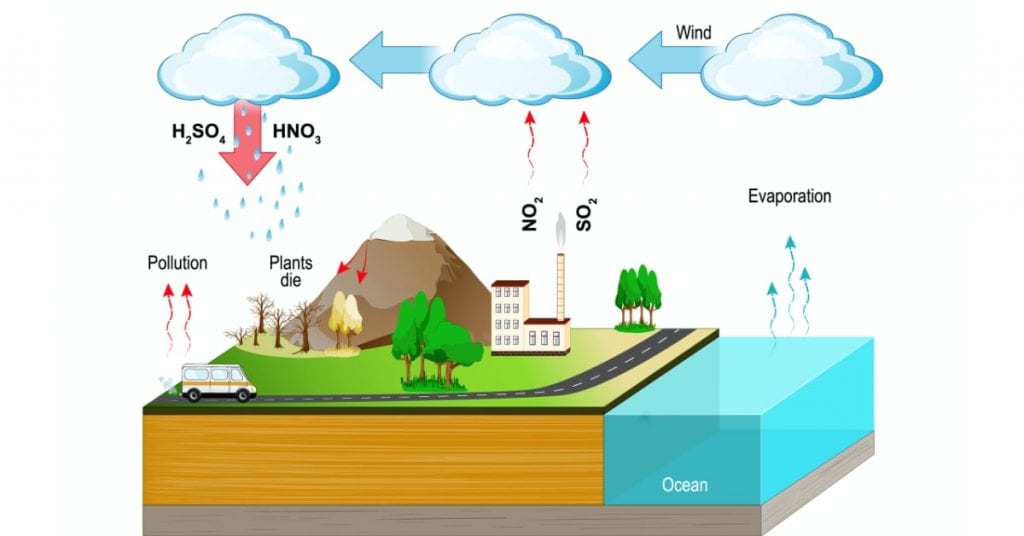
When acid rain occurs, it typically presents itself in a hybrid form: a mix of rain, snow, and fog. The origin of this type of precipitation lies in the presence of sulfur oxides and nitrogen oxides in the atmosphere. Some are natural, while many are due to human activities and pollution.
These compounds combine with water and steam present in the atmosphere and then fall to the ground as true precipitations.
What Causes Acid Rain?
We’ve discussed how acid rain is formed, but now it’s time to identify its causes, which we know are largely “our fault”.
One of the main factors is our consumption of fossil fuels, a habit we’re still struggling with. Industrial plants around the world also contribute by releasing harmful particles into the atmosphere.
Additionally, there are other natural and anthropogenic phenomena like fires that can harm ecosystems. Central power plants and vehicles also play a role in contributing to acid rain.
All these causes lead to an increase in sulfur dioxide (SOx) and nitrogen oxides (NOx) in the air, which then combine with water or steam to produce acids, specifically hydrochloric acid (HCl) from SOx and nitric acid (HNO3) from NOx. Both of these can be considered acidic.
These acids can cause irritations or burns if they come into contact with human skin, especially in delicate areas. There are many levels of severity caused by acid rain, and there are numerous factors that contribute to understanding its real consequences.
For example, we need to consider the strength of the acid itself, how it comes into contact with the rainwater, and even its toxicity level.
What is pH?
To say that a liquid is acidic, we need proof. And one way to get this proof is through the measurement of pH levels. It’s a scientific approach, and therefore valid, for measuring the acidity of acid rain.
When pH levels are much lower than normal, between 2 and 5, we can speak about acid rain.
To better understand the extent of the phenomenon and its consequences, it’s useful to have a term of comparison. Let’s look at some substances that are often used as references, which all have a neutral pH level around 7.
We have coffee (pH 5), milk (pH 6.5), saliva (which is naturally quite acidic but has a pH close to 7), seawater (with a pH of 8), and soap (which has a pH of 9).
What are the Dangers of Acid Rain?
Even if you don’t imagine yourself with acid rain falling on your head, which might happen in extreme cases, we can consider acid rain as a threat to humanity.
The true danger is more insidious and less immediate. It’s time to address it.
When acid rain falls on soil, it alters the crops that are grown, leading to poor-quality food production.
If we consume acid rain, it can cause long-term damage to our bodies.
Additionally, acid rain affects buildings like monuments and houses, causing erosion of materials like steel, limestone, marble, which have a low pH level tolerance.
We need to consider these factors when assessing the consequences of acid rain.
How to Stop Acid Rain?
There’s not much room for creativity here. The only way to reduce acid rain is by drastically reducing emissions of sulfur dioxide and nitrogen oxides.
This can be achieved by decreasing our consumption of fossil fuels in transportation and energy production.
That’s all there is to it.
Consequences of Inaction
If we fail to address the issue of acid rain, the consequences will be severe. The environment will suffer, ecosystems will collapse, and human health will be compromised.
Acid rain can also have a significant impact on the economy, as industries that rely on acidic conditions will struggle to operate effectively.
Conclusion
In conclusion, acid rain is a complex phenomenon that requires immediate attention. We must take action to reduce emissions of sulfur dioxide and nitrogen oxides by decreasing our consumption of fossil fuels in transportation and energy production.
It’s time to take responsibility for our actions and work towards creating a cleaner, healthier environment for ourselves and future generations.
The Role of Individual Action
While individual actions may seem insignificant when compared to the scale of industrial emissions, they can still have an impact. Here are some ways you can contribute to reducing acid rain:
- Use public transportation or walk/bike whenever possible
- Use energy-efficient appliances and turn off lights when not in use
- Support renewable energy sources like solar and wind power
- Reduce meat consumption and choose plant-based options
- Plant trees and support reforestation efforts
Every small action counts, and collective efforts can lead to significant positive change.
The Role of Government and Industry
Governments and industries also play a crucial role in addressing the issue of acid rain. Here are some ways they can contribute:
- Implement policies and regulations that reduce emissions of sulfur dioxide and nitrogen oxides
- Invest in renewable energy sources like solar and wind power
- Develop and implement cleaner technologies to reduce industrial emissions
- Educate citizens about the importance of reducing acid rain and provide incentives for sustainable practices
By working together, we can create a cleaner, healthier environment for ourselves and future generations.
The Future of Acid Rain
As we continue to explore ways to address the issue of acid rain, it’s essential to consider the future. Here are some potential solutions that could help mitigate its effects:
- Carbon capture and storage technologies
- Advanced renewable energy sources like hydrogen fuel cells
- Electric vehicles and sustainable transportation systems
- Sustainable agriculture practices that reduce synthetic fertilizers and pesticides
By investing in these solutions, we can create a cleaner, healthier environment for ourselves and future generations.
Conclusion
In conclusion, acid rain is a complex phenomenon that requires immediate attention. By taking action to reduce emissions of sulfur dioxide and nitrogen oxides, we can mitigate its effects on the environment, human health, and the economy.
It’s time to take responsibility for our actions and work towards creating a cleaner, healthier environment for ourselves and future generations.


