
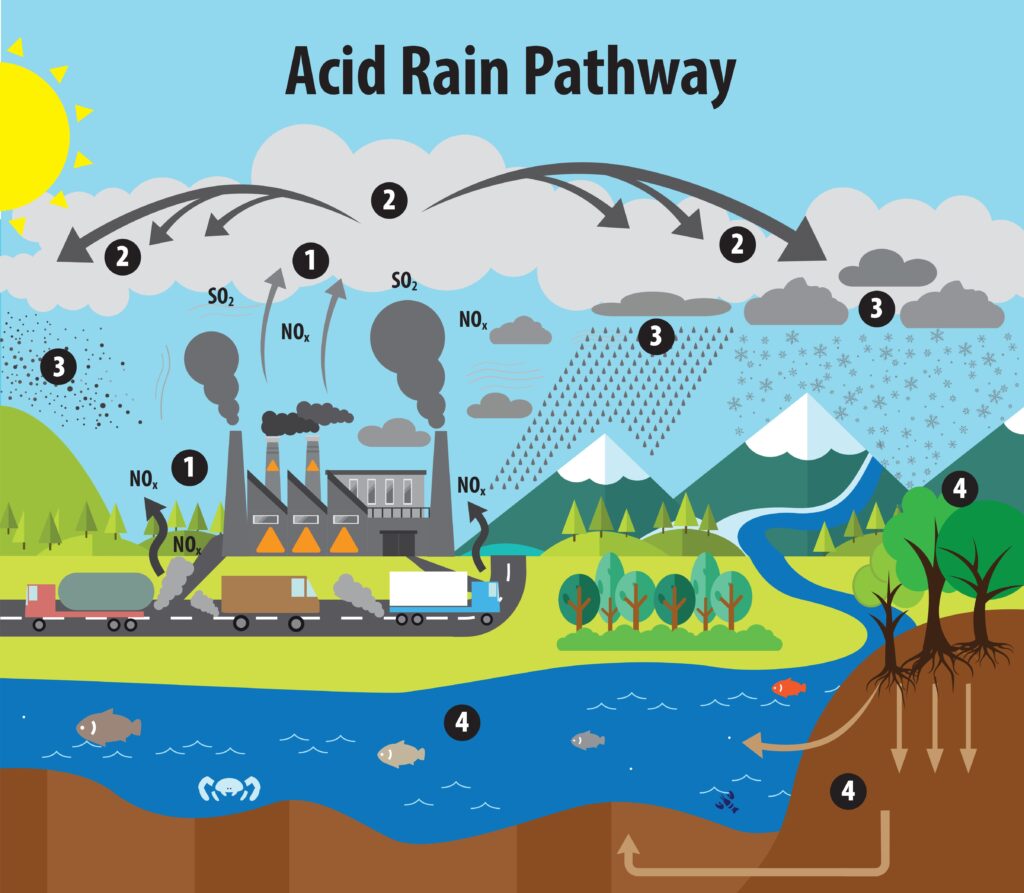
Acid rain is a direct result of severe air pollution. When the natural oxygen and water vapor in the atmosphere mix with industrial pollutants and car exhaust fumes, you get acid rain.
Water from an acidic rain has a pH level lower than 5, often significantly so. In many cases, the pH levels of rainwater hitting our heads today are between 2.5 and 4.5 at best – that’s far below the normal pH range of rain, which varies between 5 and 6.5 depending on environmental conditions.
What is Acid Rain?
You’d think that rainwater, even from our great-grandparents’ days, was clean and pure, but the truth is quite different. The pH level of rainwater back then was around 6.5 – not ideal for drinking or cleaning clothes!
So, how can acidic rain be considered the same as regular rain? It’s like comparing apples and oranges. Acidic rain is not just a matter of pH levels; it’s a sign of severe environmental degradation.
The Consequences of Acid Rain
Let’s look at what acid rain does to our natural surroundings:
- Trees are the first warning sign: Acid rain damages leaves, causing them to dry out and eventually leading to diseases in tree roots. Plants lose their ability to absorb nutrients from the soil.
- Forests suffer: As trees die off, forests change composition, affecting soil chemistry. Soils rich in limestone and sandstone can resist acidic deposition somewhat, but granitic soils are more susceptible to damage.
Acid Rain: A Grim Indicator of Environmental Deterioration
Acid rain is not just a nuisance; it’s an indicator of severe environmental degradation. The only solution lies in reducing air pollution levels.
Here are some options for measuring pH levels in your garden:
- Invest in a digital pH meter
- Use old-school pH paper test strips (less precise, but cheaper)
Frequently Asked Questions
Q: Can acid rain be neutralized?
A: Unfortunately, no. Acidic deposition has severe long-term effects on the environment.
Q: How can we reduce air pollution to combat acid rain?
A: By addressing sources of pollutants such as sulfur dioxide, nitrogen oxides, chlorides, carbon monoxide, and other minor inorganic pollutants.
Q: What’s the most effective way to protect my garden from acid rain?
A: Invest in a pH meter or use pH paper test strips to monitor your soil’s acidity levels.
Q: Can acid rain be reversed after it has occurred?
A: Not easily. Acid rain’s effects can take years to show up, but its long-term consequences are undeniable.
Q: How can we balance our daily lives with environmental protection?
A: By making conscious choices about energy consumption, waste management, and reducing pollution from cars and industrial activities.
Q: Can individual actions make a difference in combating acid rain?
A: Absolutely. Every small step counts, whether it’s using public transportation or choosing eco-friendly products.
Q: What can governments do to address the issue of acid rain?
A: Implement policies to reduce pollution emissions, invest in green technologies, and promote sustainable practices.
Q: Can we expect significant improvements in air quality without collective action?
A: No. Collective responsibility is necessary to mitigate environmental degradation.
By understanding the causes and effects of acid rain, we can take steps toward a more environmentally conscious future.
Why Acid Rain Matters
Acid rain might not seem like an immediate threat, but it has far-reaching consequences for our environment, health, and economy.
Here are some reasons why acid rain matters:
- Soil Damage: Acidic deposition can lead to soil degradation, reducing its fertility and affecting plant growth.
- Water Pollution: Acid rainwater seeps into rivers and lakes, contaminating water sources and harming aquatic life.
- Human Health: Exposure to acidic rainwater can cause respiratory problems, skin irritation, and other health issues.
- Economic Impact: Acid rain can damage infrastructure, crops, and forests, resulting in significant economic losses.
The Role of Technology
Technology plays a crucial role in addressing acid rain. Here are some innovative solutions:
- Air Purifiers: Devices that remove pollutants from the air can help reduce acid rain formation.
- Carbon Capture Systems: Technologies that capture carbon dioxide emissions can minimize sulfur dioxide and nitrogen oxide production.
- Green Buildings: Designing buildings with sustainable materials and energy-efficient systems can reduce pollution.
Reducing Acid Rain: A Collective Effort
Combating acid rain requires a collective effort from individuals, communities, governments, and industries. Here are some ways to make a difference:
- Reduce Emissions: Use public transportation, carpool, or drive electric vehicles to minimize air pollution.
- Use Eco-Friendly Products: Choose products with minimal packaging, made from sustainable materials, and designed for recyclability.
- Support Renewable Energy: Invest in solar panels, wind turbines, or other renewable energy sources to reduce dependence on fossil fuels.
- Plant Trees and Vegetation: Greenery helps absorb pollutants, reducing acid rain formation.
Conclusion
Acid rain is a pressing environmental issue that requires immediate attention. By understanding its causes and effects, we can take steps toward a more environmentally conscious future.
Individual actions, collective responsibility, and innovative technologies can help reduce air pollution and mitigate the impact of acid rain. Together, we can create a healthier environment for ourselves, our children, and future generations.


