
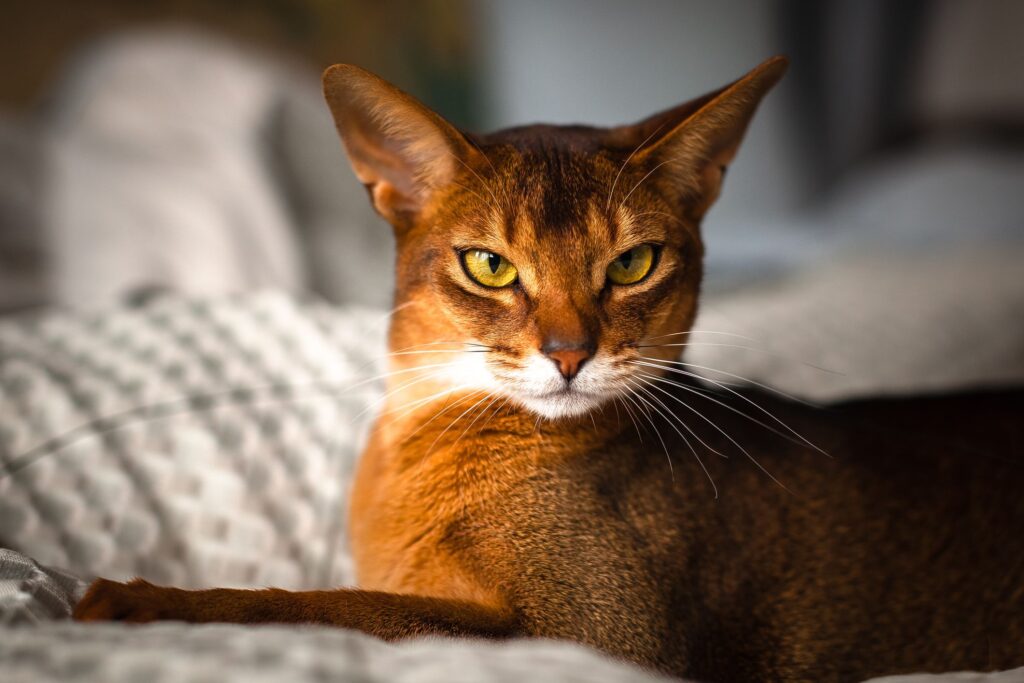
If you’re considering bringing a new furry friend into your family, the Abyssinian cat is definitely worth looking into. With its striking appearance, playful personality, and adaptability to various living situations, this breed has captured the hearts of many cat enthusiasts.
Origins and History
The Abyssinian cat originated from Ethiopia (formerly known as Abissinia), where it was considered a sacred animal by the ancient Egyptians. The breed’s distinctive ticked coat, which features bands of color that give it a unique appearance, is believed to have evolved over thousands of years in this region.
In the late 19th century, British colonists brought Abyssinian cats back from their expeditions to Ethiopia, where they were bred with other cat breeds to create a new, distinct strain. The breed gained popularity in England and eventually spread to other parts of Europe and North America.
Characteristics
Abyssinian cats are known for their slender, athletic build and short, fine coat. They have large, expressive eyes that range in color from yellow to green to copper, and a distinctive ticked pattern on their fur that gives them a unique appearance. Adult Abyssinians typically weigh between 8-12 pounds (3.5-5.5 kg) and are recognized for their intelligence, energy, and playful personalities.
One of the most distinctive features of the Abyssinian breed is its ability to mimic human speech and make other sounds that are not typical of domestic cats. This has led some owners to refer to them as “dog-like” in terms of their behavior and vocalizations.
Temperament
Abyssinians are known for their affectionate and playful personalities, making them an excellent choice for families with children or for individuals who enjoy interacting with their pets. They are highly intelligent and curious, requiring plenty of stimulation and exercise to keep them happy and engaged.
Despite their energetic nature, Abyssinians are generally quiet and not prone to meowing or other loud vocalizations. They are also relatively low-maintenance in terms of grooming, as their short coat requires only occasional brushing to remove loose hair.
Health and Nutrition
Abyssinians are generally a healthy breed, with an average lifespan of 15-20 years. However, like all breeds, they can be prone to certain health issues, such as hypertrophic cardiomyopathy (a heart condition) and patellar luxation (kneecap dislocation).
In terms of nutrition, Abyssinians are well-suited to a balanced diet that includes plenty of protein, moderate fat content, and limited carbohydrates. They also benefit from regular exercise and playtime to keep them physically and mentally stimulated.
Cost and Availability
Abyssinian cats can be relatively expensive, with prices ranging from $600 to $1,200 or more depending on factors such as pedigree, color, and bloodlines. However, many breeders and rescue organizations offer lower-cost options for those looking to bring an Abyssinian into their family.
Tips for Prospective Owners
If you’re considering bringing an Abyssinian cat into your family, here are some tips to keep in mind:
- Research reputable breeders: Look for breeders who prioritize the health and well-being of their cats, and who provide proper care and attention.
- Understand the needs of Abyssinians: While they are generally low-maintenance, Abyssinians require plenty of stimulation and exercise to keep them happy and engaged.
- Be prepared for the unique sounds: Abyssinians are known for their ability to mimic human speech and make other sounds that are not typical of domestic cats.
- Provide a stimulating environment: Abyssinians need plenty of toys, scratching posts, and climbing structures to keep them physically and mentally stimulated.
- Consider adopting an adult cat: Adult Abyssinian cats may be available for adoption through rescue organizations or breeders.
Grooming Tips
Abyssinians have a short, fine coat that requires only occasional brushing to remove loose hair. Here are some tips for grooming your Abyssinian:
- Brush regularly: Brush your Abyssinian’s coat at least once a week to remove loose hair and distribute skin oils.
- Use the right brush: Use a soft-bristled brush or a rubber grooming glove to gently remove loose hair and provide gentle scratches.
- Avoid over-brushing: While brushing is essential, be careful not to over-brush your Abyssinian’s coat, as this can lead to irritation and discomfort.
Common Health Issues
Abyssinians are generally a healthy breed, but like all breeds, they can be prone to certain health issues. Here are some common health issues that may affect Abyssinians:
- Hypertrophic cardiomyopathy: This is a heart condition that affects many breeds of cat, including Abyssinians.
- Patellar luxation: This is a kneecap dislocation that can be painful and require surgical intervention.
- Upper respiratory infections: Abyssinians are prone to upper respiratory infections, which can cause symptoms such as sneezing, runny eyes, and nasal discharge.
Conclusion
If you’re considering bringing a new furry friend into your life, the Abyssinian cat is definitely worth exploring further. With its striking appearance, playful personality, and adaptability to various living situations, this breed has captured the hearts of many cat enthusiasts around the world.
By understanding the characteristics, temperament, health, and grooming needs of the Abyssinian breed, you can find the perfect furry companion to join your family. Whether you’re a seasoned cat owner or a first-time pet parent, an Abyssinian cat is sure to bring joy and companionship into your life.


