
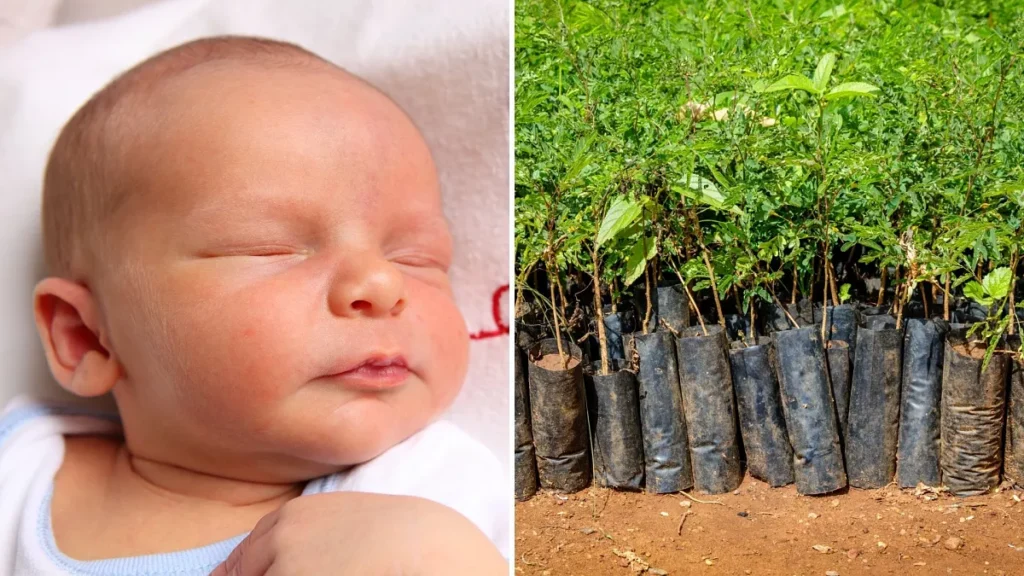
As of February 16, 2023, a new law has come into effect in Italy, requiring municipalities to plant one tree for every newborn registered within six months of birth. This legislation aims to alleviate the dire environmental situation by introducing a measure that was first proposed over two decades ago with Law Cossiga-Andreotti n.113 of January 29, 1992.
A New Era in Tree Planting: Key Differences from Previous Laws
Unlike previous laws, this new law (Law n.10 of January 14, 2013) will only apply to municipalities with a population exceeding 15,000 inhabitants and will also cover adopted children. Furthermore, the planting must occur within six months, rather than twelve, from birth or adoption.
The Rise of Urban Deforestation: A Concern for Italy’s Environment
Despite recent declines in births, this initiative aims to combat the loss of green spaces in Italy, which according to the Italian Institute for Environmental Protection and Research (Ispra), stands at eight square meters per second. What benefits can this law bring if implemented?
The Benefits of Trees: Why They’re a Game-Changer
Trees undoubtedly offer numerous benefits: they provide oxygen for ten people, absorb emissions of CO2 ranging from 7 to 12 kilograms annually depending on their size, and reduce noise pollution as well.
To monitor the implementation of this law, the Ministry of Environment has established the Committee for Green Development. Each municipality will be required to conduct an annual census of all tree plantings, allowing them to choose the most suitable tree species based on local climate, soil conditions, and landscape. Parents will also receive information about the assigned tree, including its location.
This initiative not only beautifies cities but also fosters a strong emotional bond between trees and children as they grow together.
A Closer Look at the Committee for Green Development
The Ministry of Environment has set up this committee to oversee the law’s implementation. This ensures that all municipalities adhere to the regulations, which is crucial given the lack of oversight in previous laws.
Key Takeaways: What You Need to Know
- The new law requires planting one tree per every newborn within six months.
- Only municipalities with a population over 15,000 inhabitants and adopted children are covered.
- Planting must occur within six months from birth or adoption.
- Each municipality will conduct an annual census of all plantings.
- Parents receive information about the assigned tree.
Frequently Asked Questions (FAQs)
- What is the purpose of this new law?
- To combat environmental issues by introducing a measure that was first proposed decades ago.
- Which municipalities are affected by this law?
- Only those with over 15,000 inhabitants and covering adopted children will be required to plant trees.
- How often must the municipality conduct an annual census of tree plantings?
- Every year.
- What benefits do trees provide for human health?
- Oxygen, CO2 absorption, and reduced noise pollution.
- Can parents choose their own tree species or is there a standard assignment?
- Each municipality will be allowed to select the most suitable tree species based on local conditions.
- What role does the Ministry of Environment play in enforcing this law?
- The Committee for Green Development was established to monitor compliance and ensure that municipalities adhere to regulations.
- Is there any financial support provided for planting trees under this law?
- No specific mention of financial aid is made in the text, but it’s worth noting that local governments might have different approaches to funding such initiatives.
Conclusion
The implementation of this new law marks an important step towards a greener future. By working together, we can create a more sustainable environment for all.
Additional Tips for Effective Tree Planting:
- Choose the right tree species: Research local climate and soil conditions before selecting a tree species.
- Provide proper care and maintenance: Ensure trees receive adequate water, sunlight, and nutrients to thrive.
- Monitor progress regularly: Regularly inspect tree health and address any issues promptly.
- Educate the community: Raise awareness about the importance of trees in maintaining environmental balance.
- Encourage long-term commitment: Engage with local communities to foster a shared responsibility for tree planting.
Creating Sustainable Urban Environments
Cities face unique challenges when it comes to environmental sustainability, including urban deforestation and air pollution. By planting trees, municipalities can:
- Improve air quality
- Reduce urban heat islands
- Enhance biodiversity
This initiative demonstrates the power of collective action towards creating a more environmentally conscious society.
Conclusion: A Brighter Future for Italy
The implementation of this law marks a new chapter in Italy’s journey towards environmental sustainability. By working together, we can create a brighter future for generations to come and ensure that our cities remain thriving, green spaces.
While challenges still lie ahead, the commitment shown by Italy demonstrates that meaningful change is possible with unity and determination.


