
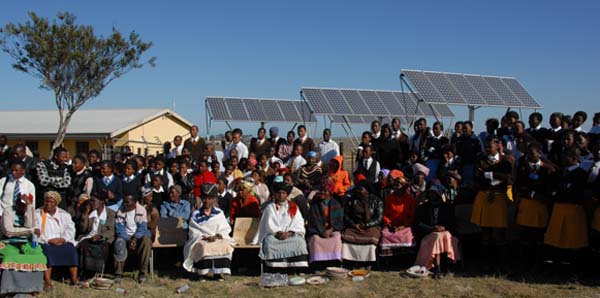
The photo shows a standard shipping container, but for the people of South Africa, it’s a school all its own. Samsung has set up solar-powered schools that can meet the educational needs of South African students. The schools are made from modified containers, which feature desks, chairs, computers, tablets, and internet connections – a luxury in many remote areas where electricity is scarce!
But how do these solar-powered schools stay powered? It’s all thanks to Samsung’s innovative use of photovoltaic panels. The panels have been designed with security features such as anti-theft systems, making them the perfect solution for powering educational institutions.
The Benefits of Solar-Powered Schools
Solar-powered schools are not only environmentally friendly but also offer a range of benefits for students and communities. Here are just a few:
- Increased accessibility: In areas where electricity is scarce or unreliable, solar-powered schools provide access to education for children who would otherwise be excluded.
- Cost savings: By generating their own electricity, schools can save money on energy bills and reduce their reliance on the grid.
- Reduced carbon footprint: Solar-powered schools are a cleaner alternative to traditional fossil fuel-based power plants.
- Improved learning outcomes: With access to reliable electricity, students can complete homework and participate in online learning resources, leading to improved academic performance.
- Increased community engagement: Solar-powered schools often serve as community hubs, providing a space for local residents to gather and socialize.
How it Works
The Samsung container school is equipped with a range of features that make it an ideal learning environment. The container measures 12 meters in length and has 21 seats. But what’s truly remarkable is the way it stays powered. In areas where electricity is available, the solar panels connect to the grid, while in times of low light or no electricity, the panels charge batteries made from lead-acid.
The battery system allows for a stable power supply during periods of low sunlight or at night, ensuring that students can continue learning without interruption. Additionally, the solar panels are designed to be flexible and adaptable, making them suitable for a range of environments and climates.
Solar-Powered Schools in South Africa
The Samsung container school was set up in a rural area near Johannesburg, South Africa. This location highlights one of the key benefits of solar-powered schools: their ability to reach remote communities where electricity is scarce or non-existent.
In areas like this, traditional schools often struggle to provide education due to lack of access to electricity. But with a solar-powered school, students can now learn without relying on external power sources. It’s a game-changer for rural communities and sets them up for long-term success.
The Samsung container school serves as a model for sustainable education in South Africa. By providing access to reliable electricity, the school helps bridge the gap between developed and developing countries, promoting economic growth and social development.
The Future of Education
As the world moves towards a more sustainable future, innovative solutions like solar-powered schools are becoming increasingly important. By providing access to education in areas where electricity is scarce, these schools help bridge the gap between developed and developing countries.
For students in rural South Africa, a solar-powered school is more than just a classroom – it’s a gateway to a brighter future. It provides them with the skills and knowledge they need to succeed in a rapidly changing world.
Key Statistics
- 40% of South African households lack access to electricity (Source: National Department of Public Works)
- 30% of schools in rural areas have no electricity (Source: UNESCO)
- Solar-powered schools can save up to 70% on energy costs (Source: International Renewable Energy Agency)
Conclusion
Solar-powered schools are a shining example of innovation and sustainability in education. By providing access to electricity in areas where it’s scarce, these schools help level the playing field for students from all backgrounds.
As we move forward into an increasingly complex world, it’s more important than ever that we prioritize education and provide access to resources like electricity. Solar-powered schools are a beacon of hope for communities around the globe, and their impact will be felt for generations to come.
Frequently Asked Questions
Q: How do solar-powered schools stay powered?
A: Solar panels charge batteries made from lead-acid, which power the school during times of low light or no electricity.
Q: What are the benefits of solar-powered schools?
A: Increased accessibility, cost savings, and a reduced carbon footprint.
Q: Are solar-powered schools expensive to set up?
A: No, they can save up to 70% on energy costs in the long run.
Q: How do solar-powered schools benefit rural communities?
A: They provide access to education and skills training, bridging the gap between developed and developing countries.
Q: What is the future of solar-powered schools?
A: As technology continues to improve, we can expect to see more widespread adoption of solar-powered schools around the world.
Q: Can solar-powered schools be replicated in other parts of the world?
A: Absolutely. Solar-powered schools are a model for sustainable education and can be adapted to suit local needs.
Q: How do solar-powered schools impact education outcomes?
A: They provide students with access to resources and skills training, leading to improved educational outcomes.
Q: Can solar-powered schools be used in urban areas as well?
A: Yes. While they are most suitable for rural areas, solar-powered schools can also be used in urban areas where electricity is scarce or unreliable.
Q: What is the role of government in supporting solar-powered schools?
A: Governments should provide incentives and support for the development and implementation of solar-powered schools.
Q: Can private companies play a role in developing solar-powered schools?
A: Absolutely. Private companies can partner with governments and NGOs to develop and implement solar-powered schools.


