
The increasing levels of carbon dioxide in the atmosphere have become a pressing concern, with far-reaching implications for our planet. As we strive to reduce greenhouse gas emissions and mitigate climate change, it’s essential to explore innovative solutions that can effectively capture and store CO2.
One such solution is the process of mineralization, where CO2 reacts with minerals in rocks to form stable compounds. This natural phenomenon has been observed in nature, where rocks absorb excess CO2 and store it for millions of years. But what if we could harness this power on a larger scale?
Understanding the Challenge of CO2 Emissions
The increasing levels of carbon dioxide in the atmosphere have become a pressing concern, with far-reaching implications for our planet. As we strive to reduce greenhouse gas emissions and mitigate climate change, it’s essential to explore innovative solutions that can effectively capture and store CO2.
One such solution is the process of mineralization, where CO2 reacts with minerals in rocks to form stable compounds. This natural phenomenon has been observed in nature, where rocks absorb excess CO2 and store it in stable compounds, playing a crucial role in shaping our planet’s geology. But what if we could harness this power on a larger scale?
The Mineralization Process
Mineralization occurs when CO2 comes into contact with certain minerals in rocks, such as those rich in magnesium. The reaction is catalyzed by the presence of a simple substance like ammonium chloride (NH4Cl), which accelerates the process. As a result, the CO2 reacts with the minerals to form a stable compound that can be stored for millions of years.
The mineralization process involves several key steps:
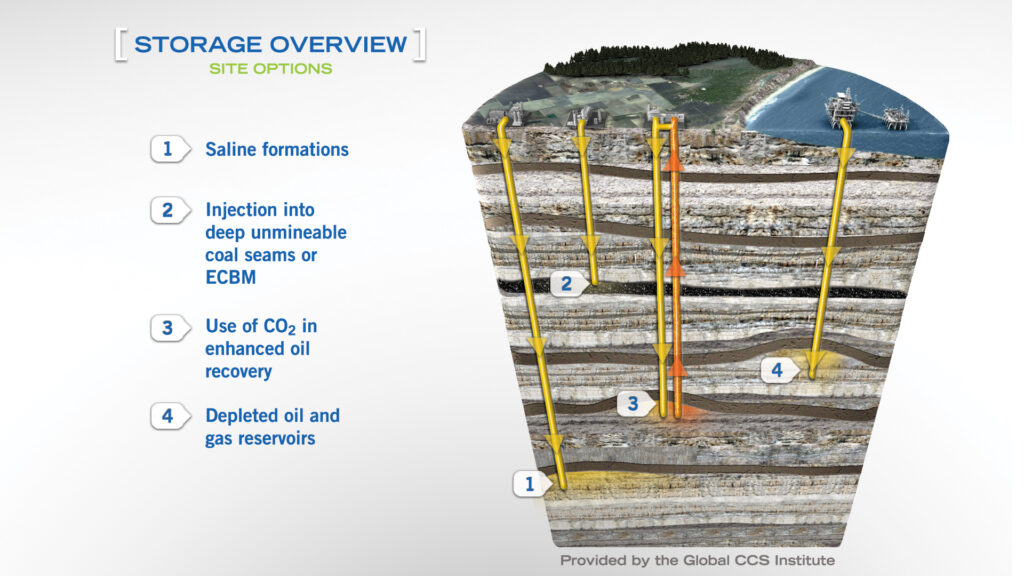
- CO2 injection: CO2 is injected into a rock formation, where it comes into contact with minerals rich in magnesium.
- Reaction catalyst: A simple substance like ammonium chloride (NH4Cl) is added to the mixture, accelerating the reaction.
- Mineralization: The CO2 reacts with the minerals to form a stable compound that can be stored for millions of years.
The Benefits of Mineralization
Compared to traditional methods of CO2 storage, mineralization offers several advantages:
- Faster deployment: By using rocks rich in magnesium and a simple catalyst like ammonium chloride, we can accelerate the mineralization process, reducing the time required for CO2 storage.
- Increased efficiency: This method allows for more efficient storage of CO2, as it enables the use of existing rock formations that would otherwise be wasted or underutilized.
- Scalability: Mineralization has the potential to be scaled up significantly, making it an attractive solution for large-scale carbon capture and storage.
Historical Context: A Look at Geologic Processes
Mineralization is not a new phenomenon – it’s been occurring naturally for millions of years. Rocks have long absorbed excess CO2 and stored it in stable compounds, playing a crucial role in shaping our planet’s geology. This natural process has been observed in various parts of the world, from volcanic regions to sedimentary basins.
Real-World Applications: A Future for Mineralization
As we continue to grapple with the challenges of climate change, mineralization offers a promising solution for CO2 storage and sequestration. By leveraging this natural process, we can create more efficient, scalable, and sustainable methods for capturing and storing CO2.
Some potential real-world applications of mineralization include:
- Accelerating CO2 storage: Mineralization can accelerate the storage of CO2 by up to 10 times faster than traditional methods.
- Increasing efficiency: This method enables the use of existing rock formations that would otherwise be wasted or underutilized, increasing efficiency and reducing costs.
- Scalability: Mineralization has the potential to be scaled up significantly, making it an attractive solution for large-scale carbon capture and storage.
Conclusion: Unlocking the Potential of Mineralization
Mineralization is a game-changer in the quest to mitigate climate change. By harnessing the power of this natural process, we can accelerate CO2 storage, increase efficiency, and scale up deployment. As we move forward, it’s essential to explore innovative solutions like mineralization, working towards a future where our planet thrives.
Frequently Asked Questions
- What are the key benefits of mineralization for CO2 storage?
- Faster deployment
- Increased efficiency
- Scalability
- How does mineralization work?
- CO2 reacts with minerals in rocks, forming stable compounds
- A simple catalyst like ammonium chloride (NH4Cl) accelerates the process
- What is the historical context of mineralization?
- Occurs naturally for millions of years
- Rocks absorb excess CO2 and store it in stable compounds
- Can mineralization be scaled up?
- Yes, with the right materials and catalysts
- Offers a promising solution for large-scale carbon capture and storage
- What are some potential real-world applications of mineralization?
- Accelerating CO2 storage and sequestration
- Increasing efficiency and scalability in carbon capture technologies


