
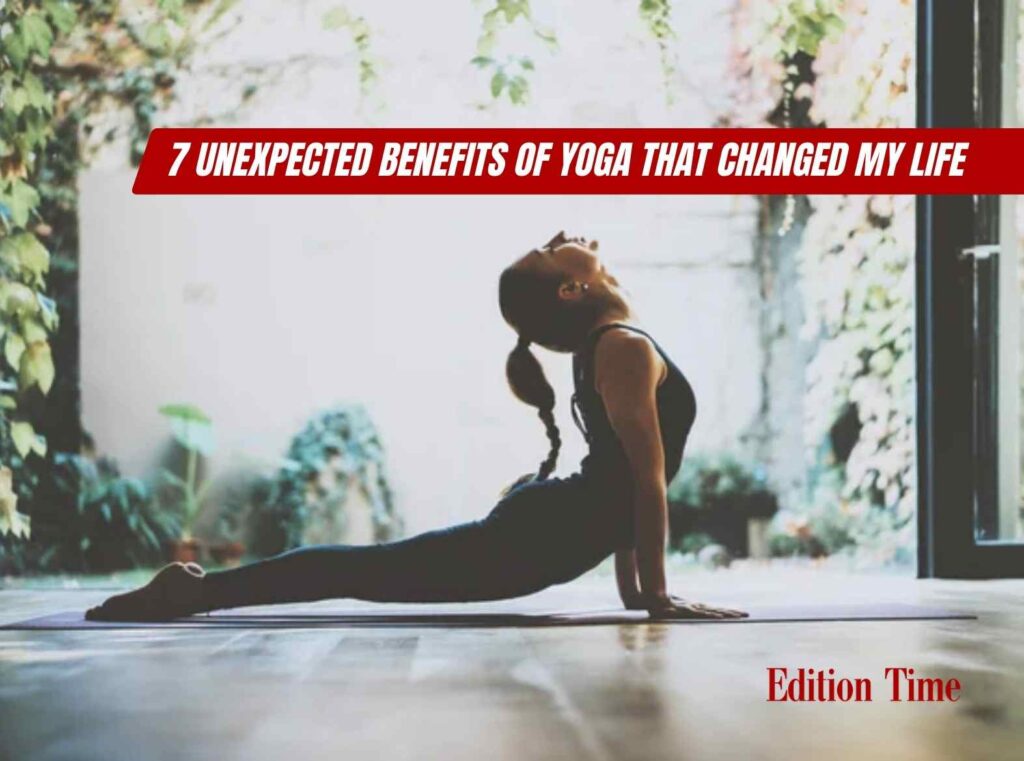
Think yoga is just stretching? Think again. These unexpected benefits go far beyond flexibility—and might just transform your mind and body.
I used to think yoga was only for bendy people in expensive leggings. Now? It’s become one of the most quietly powerful practices in my life.
Like many, I started yoga to “stretch more” and balance out the damage from too many hours at my laptop. But after months of regular practice, I discovered that the real magic of yoga isn’t physical—it’s mental, emotional, even spiritual.
This article isn’t about doing a perfect crow pose. It’s about what happens when you pause, breathe, and commit to being present—even for just 10 minutes a day. Some of these benefits genuinely surprised me. Others transformed how I show up in my body, my work, and my relationships.
Why Yoga Is More Than Just Movement
Most people associate yoga with flexibility, and sure—it helps with that. But beneath the physical practice (asana) is a mind-body system with ancient roots and modern relevance. Yoga influences breathing, nervous system regulation, digestion, sleep, and even how we relate to stress.
“Yoga isn’t about touching your toes, it’s about what you learn on the way down,” says Dr. Leila Ramos, a wellness psychologist and certified yoga therapist.
The more I practiced, the more I realised that the benefits extended far beyond my mat. Here’s what I experienced—and what the science supports.
1. It Helped Me Sleep Like a Baby (Finally)
After years of scrolling TikTok in bed and struggling to fall asleep, yoga gave me something melatonin couldn’t: deep, natural rest. Certain poses like legs-up-the-wall or child’s pose before bed calm the nervous system and encourage melatonin production naturally.
How it works:
Yoga lowers cortisol levels and activates the parasympathetic nervous system (the “rest and digest” mode), helping your body shift out of stress response and into repair mode.
2. It Strengthened My Core—Without Crunches
No planks. No sit-ups. Just slow, controlled movement. Holding poses like boat or flowing through sun salutationstaught me to engage my core in ways I’d never understood at the gym.
Why it matters:
A strong core doesn’t just look good—it supports posture, reduces back pain, and improves balance. And yes, your abs will thank you.
3. I Stopped Reaching for Coffee in the Afternoon
This was unexpected: after just a few weeks of consistent practice, I realised I wasn’t crashing at 3PM. I felt more energised but grounded, not jittery.
Science behind it:
Yogic breathing (pranayama) oxygenates the blood, improves circulation, and enhances mental clarity. It’s like a natural espresso shot—minus the crash.
4. My Gut Became Way Happier
I didn’t expect yoga to affect digestion, but after regular practice (especially twists and forward folds), I noticed less bloating, fewer stomach aches, and an overall sense of ease after meals.
“Yoga stimulates the vagus nerve, which plays a central role in regulating digestion,” notes nutritionist and yoga instructor Carla Jin.
Simple poses like supine twist or seated forward fold can aid elimination and reduce digestive sluggishness—especially when paired with deep breathing.
5. I Got Better at Saying “No”
This one surprised me most. Yoga taught me to listen—to my breath, to my body, and eventually, to my boundaries. I became more attuned to my needs and less apologetic about protecting my energy.
Real-life result:
I started turning down draining commitments. And guess what? The world didn’t end. I had more energy for what truly mattered.
6. My Anxiety Became Quieter (and Less Bossy)
I’ve had anxiety on-and-off for years. Meditation helped, but yoga made it embodied. Moving through discomfort on the mat translated into resilience off it. Now, when I feel overwhelmed, I know how to breathe through it—literally.
Proven effects:
Multiple studies show yoga reduces symptoms of anxiety by lowering stress hormones and activating calming neurotransmitters like GABA.
7. I Felt More at Home in My Body
This one’s hard to explain, but I’ll try: yoga made me feel less at war with my body. I stopped obsessing over numbers, “progress,” and flaws. I just showed up—breathed, moved, and honoured what my body could do that day.
“Yoga fosters body neutrality, which often leads to a more positive and sustainable relationship with self-image,” says Dr. Ramos.
Common Myths About Yoga (I Believed Them Too)
Let me save you from the same mental blocks I had:
- “I’m not flexible enough to do yoga.”
You do yoga to become more flexible. No one starts able to touch their toes. - “It’s too slow to be a workout.”
Try holding chair pose for 60 seconds and get back to me. - “I need a fancy studio or gear.”
Nope. I started with a bath towel and a YouTube video in my living room. - “I’m not the ‘type’ of person who does yoga.”
There is no “type.” If you can breathe, you can practice.
Yoga Trends to Watch in 2025
Micro-Sessions
Short, five-minute flows are becoming more popular for busy schedules and screen breaks.
Face Yoga & Breathwork
These practices are moving into the mainstream as tools for tension release and emotional balance.
Trauma-Informed Yoga
More classes are now designed to be inclusive, safe, and sensitive to emotional triggers—especially important post-pandemic.
Tech-Free Yoga Spaces
Studios are banning phones to reclaim the sanctuary element. And honestly? I’m here for it.
The Bottom Line: Try It, Even Imperfectly
If you’re curious, start small. A few stretches in the morning. A five-minute breathing session before bed. One sun salutation between emails. It doesn’t have to be perfect—it just has to be yours.
Yoga, at its core, is a practice of presence. And in a culture obsessed with speed, perfection, and performance, that might be the most radical thing you can do.


