
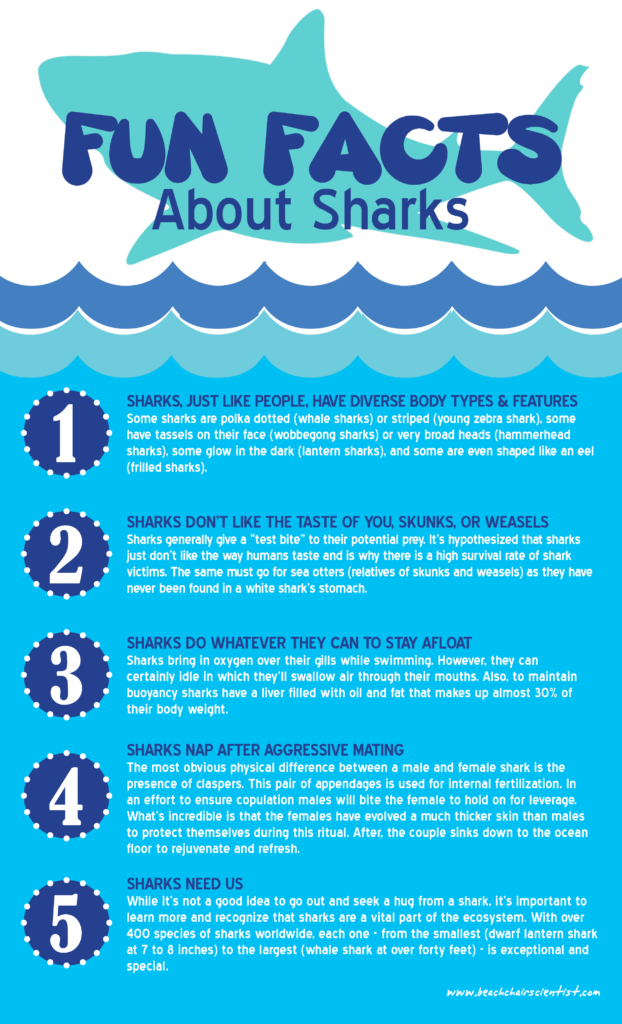
Sharks have been swimming in the world’s oceans for over 400 million years, long before dinosaurs roamed the earth. Despite their fearsome reputation, these majestic creatures are full of surprises. In this article, we’ll delve into some fascinating facts about sharks that will leave you amazed.
Characteristics of Sharks
Sharks are fish with a cartilaginous skeleton, which is why they’re also known as cartilaginous fishes. Belonging to the group of elasmobranchs, these predators are distinguished by their pointed heads, slender bodies, and large mandibles. Many species of sharks have five branchial slits on either side of their head, but some have up to six.
Sharks inhabit every type of marine environment, from tropical waters to temperate seas. However, they prefer areas with cold water, with temperatures ranging from 11-12°C (52-54°F).
Bizarre Shark Facts
- Sharks don’t sleep: Unlike other animals, sharks never enter a deep sleep phase. Instead, they remain awake and continue to swim slowly while maintaining some level of consciousness.
Sharks have been observed sleeping with only half their brain at a time, allowing them to remain alert for predators or prey while still resting. This unique adaptation is known as unihemispheric slow-wave sleep (USWS).
- Even sharks have predators: Despite their dominance in the food chain, sharks are preyed upon by other marine animals. Some species of sharks, like the catshark, can be as short as 10 cm (4 inches) and are vulnerable to larger predators.
The great white shark, for example, is often considered a top predator, but it has been known to be attacked by orcas (killer whales).
- Sharks change thousands of teeth: Sharks shed and replace their teeth continuously throughout their lives. In some species, this process occurs up to 30,000 times! This rapid dental turnover allows sharks to maintain sharp, functional teeth at all times.
The reason for this constant replacement is due to the wear and tear caused by feeding on prey. Sharks need to constantly sharpen their teeth to maintain an effective killing mechanism.
-
Sharks can detect electrical signals: Some shark species have electroreceptors called ampullae of Lorenzini, which allow them to detect the electrical fields generated by other animals. This helps them locate prey and navigate through the water.
-
Sharks can swim long distances: Despite their reputation for being slow-moving predators, some sharks are capable of swimming remarkable distances in search of food or mates. The whale shark, for example, is known to migrate up to 12,000 km (7,500 miles) per year.
Carnivorous vs. Omnivorous Sharks
Not all shark species are meat-eaters. Some feed on plankton, making them harmless to other marine life and humans alike. These filter-feeding sharks are an interesting exception to the rule.
The basking shark, for instance, is a large filter feeder that feeds on plankton and small fish. Despite its size (up to 12 meters/40 feet), it plays a crucial role in maintaining the balance of the marine ecosystem.
The Soft-Bodied Nature of Sharks
Sharks have a unique skin that is soft and leathery. This skin is covered with tiny dermal denticles, which provide excellent hydrodynamics and allow sharks to swim efficiently through the water.
The denticles are also responsible for reducing drag on the shark’s body, making it even more efficient in its movements. This adaptation has led scientists to develop new designs for ships and aircraft inspired by the shark’s skin.
Why Are Sharks in Danger?
Despite their incredible adaptations, sharks are facing numerous threats, including:
- Climate change: Changes in ocean temperature and chemistry can affect shark populations’ ability to survive and reproduce.
- Pollution (including acoustic pollution): Noise pollution from human activities like shipping and construction can disrupt shark communication and behavior.
- Overfishing for fins, meat, and liver oil: The demand for shark products is driving overfishing, leading to significant declines in shark populations.
The International Union for Conservation of Nature (IUCN) estimates that shark populations have declined by over 70% globally. This alarming trend puts many shark species at risk of extinction.
Conservation Efforts: Apps to Protect Sharks
In response to the growing concern about shark conservation, several apps have been developed to help protect these magnificent creatures:
- Sharkulator: Launched by the World Wildlife Fund (WWF) on Shark Day 2020, this app aims to discourage people from consuming shark fin soup and other products that harm sharks.
- SharkApp: A citizen science project led by researchers at the Naples Zoological Station, this app encourages users to report shark sightings and photos. The data collected helps conservation efforts target specific shark populations.
These apps are just a few examples of the many initiatives underway to protect sharks. Other conservation efforts include:
- Marine protected areas: Establishing designated areas where sharks can thrive without human disturbance.
- Shark fin trade regulations: Implementing laws and regulations to reduce demand for shark fins and other products.
- Research and monitoring: Studying shark behavior, ecology, and population dynamics to better understand their needs and develop effective conservation strategies.
In conclusion, sharks are fascinating creatures with many hidden facts waiting to be uncovered. By understanding their characteristics, behavior, and threats, we can work together to protect these incredible animals and preserve the health of our oceans.
Frequently Asked Questions (FAQs)
- Q: How long have sharks been swimming in the ocean?
A: Sharks have been in the ocean for over 400 million years. - Q: What is unique about shark teeth?
A: Shark teeth are constantly being replaced throughout their lives, with some species shedding and replacing thousands of teeth. - Q: Can sharks be predators of other sharks?
A: Yes, even large sharks can be preyed upon by larger or more aggressive predators. - Q: How do sharks sleep?
A: Sharks don’t enter a deep sleep phase like humans do; instead, they remain awake and continue to swim slowly while maintaining some level of consciousness. - Q: Why are sharks in danger?
A: Sharks face numerous threats, including climate change, pollution, overfishing for fins, meat, and liver oil, which have led to significant population declines. - Q: What can be done to protect sharks?
A: Conservation efforts, such as reducing shark finning and promoting sustainable fishing practices, are essential to protecting these incredible animals. - Q: Can I help sharks through an app?
A: Yes, apps like Sharkulator and SharkApp allow users to report shark sightings and photos, helping conservation efforts target specific shark populations. - Q: What is the current status of shark conservation globally?
A: Shark populations have declined by over 70% worldwide due to various threats, emphasizing the need for continued conservation efforts.
Glossary
- Cartilaginous skeleton: A lightweight skeleton made of cartilage, found in sharks and rays.
- Dermal denticles: Tiny teeth-like structures on a shark’s skin that provide hydrodynamics and reduce drag.
- Electroreceptors: Specialized sensors that detect electrical fields generated by other animals, used by some shark species for navigation and prey detection.
- Overfishing: Excessive fishing of sharks for food, fins, meat, or liver oil, leading to significant declines in shark populations.
Recommended Reading
- “The Shark” by Seymour Simon
- “Sharks” by Gail Gibbons
- “Shark Facts” by National Geographic Kids
Additional Resources
- International Union for Conservation of Nature (IUCN) – Shark Conservation
- World Wildlife Fund (WWF) – Shark Conservation
- Shark Research Institute – Shark Biology and Conservation


