
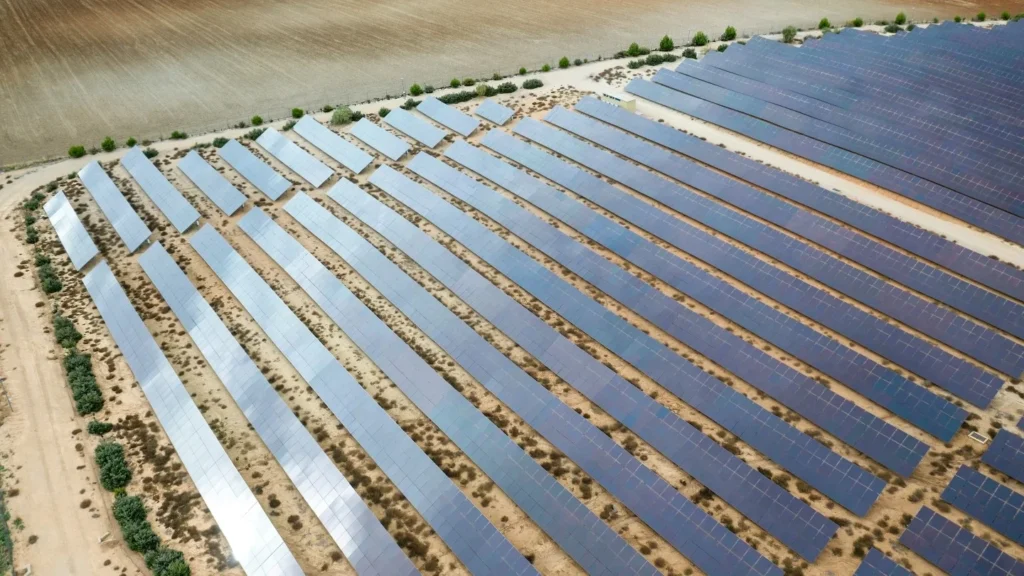
The Japanese government has set its sights on transitioning away from nuclear energy, a move that is both environmentally conscious and economically savvy. As the world’s third-largest economy, Japan is determined to reduce its dependence on fossil fuels and become a leader in the global renewable energy market. In recent years, the country has been investing heavily in solar power, with plans to generate 22% of its electricity from renewable sources by 2030.
One of the most significant developments in this field is the partnership between Spanish renewable energy company Gestamp Solar and Japanese company Kankyo Keiei Senryaku. The agreement, which is worth approximately $1 billion, aims to build and manage 30 MW of solar power plants over the next three years. These plants will generate enough electricity to power an area equivalent to 300,000 homes.
But here’s the thing: most of this capacity will be installed on existing infrastructure, such as rooftops of buildings. In fact, about 70% of the total solar power will be distributed across rooftops. Gestamp Solar has extensive experience in designing and installing solar panels on rooftops, with notable examples like the 55 MW rooftop solar installation at the Renault factory in 2012.
The partnership between Gestamp Solar and Kankyo Keiei Senryaku won’t be Japan’s only international collaboration. The Spanish company plans to sign more agreements for installing rooftop solar panels on structures such as shopping centers, parking garages, and industrial facilities. Gestamp Solar has a history of partnering with foreign companies, having installed over 450 MW of renewable energy in 13 countries worldwide, including the United States, India, Chile, Thailand, and South Africa.
In light of the Fukushima nuclear disaster, Japanese companies are eager to invest in renewable energy sources. According to government estimates, by 2030, Japan will have invested a staggering $637.4 billion in renewable energy projects alone. This massive investment is aimed at completely severing the country’s dependence on fossil fuels and replacing it with clean, sustainable energy.
The Future of Renewable Energy in Japan
So what does this mean for the future of renewable energy in Japan? In short, it means a bright and exciting era for solar power in the country. With international collaborations like Gestamp Solar and Kankyo Keiei Senryaku, Japan is poised to become a leader in the global renewable energy market.
But here are some key questions to consider:
- What role will solar energy play in Japan’s transition away from nuclear power?
- How much of Japan’s renewable energy goals can be achieved through international collaborations like this one?
- Will Japan’s investments in solar energy pay off in terms of economic benefits and environmental sustainability?
Solar Power: A Path Forward for Japan
The partnership between Gestamp Solar and Kankyo Keiei Senryaku marks a significant step forward for Japan’s renewable energy sector. By harnessing the power of solar energy, the country can reduce its dependence on fossil fuels, improve air quality, and create new economic opportunities.
But there’s still much work to be done. To fully realize the potential of solar power in Japan, policymakers must continue to support innovative projects like this one. Private companies like Gestamp Solar also need to invest in research and development to improve the efficiency and affordability of solar energy.
As we look to the future, it’s clear that solar power will play a vital role in Japan’s transition towards a more sustainable energy future. By working together with international partners, Japanese companies can achieve remarkable breakthroughs in renewable energy – and create a brighter, more prosperous future for generations to come.
Challenges Ahead
While the partnership between Gestamp Solar and Kankyo Keiei Senryaku is a significant step forward for Japan’s renewable energy sector, there are still several challenges that need to be addressed. One of the biggest challenges is the cost of solar panels. While the cost of solar panels has decreased significantly over the years, they can still be expensive in some parts of the country.
Another challenge is the availability of land for large-scale solar power plants. In Japan, much of the land is urbanized, making it difficult to find suitable locations for large-scale solar power plants. This could limit the potential for solar energy generation and make it more expensive to build and maintain these plants.
International Cooperation
The partnership between Gestamp Solar and Kankyo Keiei Senryaku is just one example of international cooperation in Japan’s renewable energy sector. Other countries, such as China, India, and Brazil, are also investing heavily in solar power and other forms of renewable energy.
In fact, the International Renewable Energy Agency (IRENA) estimates that global investment in renewable energy could reach $1 trillion by 2030. This significant influx of funding will be critical in driving the growth of the renewable energy sector around the world.
Rooftop Solar: A Key Component of Japan’s Renewable Energy Strategy
Rooftop solar is a key component of Japan’s renewable energy strategy. The country aims to generate 22% of its electricity from rooftop solar by 2030, with a focus on small-scale and community-based projects.
In fact, the Japanese government has set targets for rooftop solar installations in various sectors, including residential, commercial, and industrial buildings. These targets are aimed at increasing the adoption of rooftop solar among these sectors and reducing greenhouse gas emissions.
Economic Benefits
The partnership between Gestamp Solar and Kankyo Keiei Senryaku is expected to bring several economic benefits to Japan. One of the biggest benefits will be job creation in the renewable energy sector, with many new positions being created as a result of this project.
Another benefit will be reduced costs for households and businesses that adopt rooftop solar. By generating their own electricity from solar panels, individuals and companies can save money on their energy bills and reduce their reliance on fossil fuels.
Environmental Benefits
The partnership between Gestamp Solar and Kankyo Keiei Senryaku is also expected to bring several environmental benefits to Japan. One of the biggest benefits will be reduced greenhouse gas emissions, as a significant amount of electricity will be generated from renewable sources.
Another benefit will be improved air quality, as fewer fossil fuels will be burned in power plants. This will lead to cleaner air and a healthier environment for residents in urban areas.
Conclusion
In conclusion, the partnership between Gestamp Solar and Kankyo Keiei Senryaku is a significant step forward for Japan’s renewable energy sector. By harnessing the power of solar energy, the country can reduce its dependence on fossil fuels, improve air quality, and create new economic opportunities.
While there are still several challenges that need to be addressed, such as the cost of solar panels and the availability of land for large-scale solar power plants, international cooperation will play a critical role in driving the growth of the renewable energy sector around the world.
As we look to the future, it’s clear that solar power will play a vital role in Japan’s transition towards a more sustainable energy future. By working together with international partners, Japanese companies can achieve remarkable breakthroughs in renewable energy – and create a brighter, more prosperous future for generations to come.


