
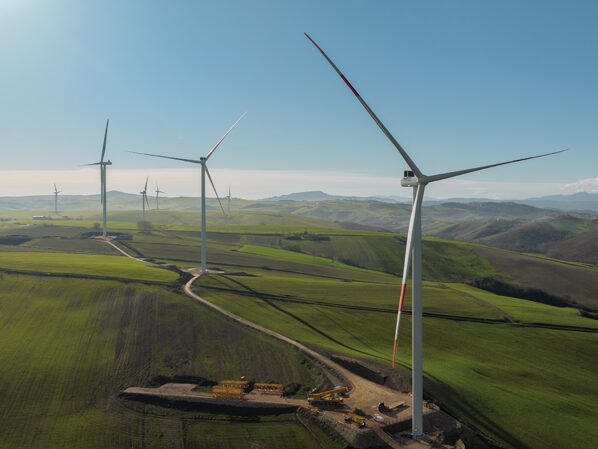
As the sun rises over the Italian peninsula, a new chapter unfolds for the Campania region. With its favorable climate and abundant wind resources, Campania is poised to become a leading player in Italy’s renewable energy landscape. And today, we mark another significant milestone with the inauguration of Ariano Irpino’s brand-new wind farm.
A New Era for Renewable Energy in Campania
Located in the heart of the region, this 10 MW wind farm is a testament to Italy’s commitment to harnessing the power of wind energy. With an investment of over €18 million, this project has brought together some of the country’s most innovative players in the renewable energy sector. Sorgent.E, a leading operator from Padova, has spearheaded this ambitious initiative, showcasing its expertise and dedication to sustainable development.
The Wind Farm: A Beacon of Sustainability
Ariano Irpino’s wind farm is situated at an impressive 700 meters above sea level, where the gentle breeze whispers secrets to the turbines. Five powerful turbines, each generating 2 MW of electricity, work in harmony to produce a staggering 20 million kilowatt-hours annually. This clean energy will power the needs of approximately 8,500 families, making a significant dent in Italy’s carbon footprint.
A Significant Contribution to Climate Change Mitigation
The Ariano Irpino wind farm is more than just a renewable energy project; it’s a crucial step towards mitigating climate change. By avoiding the emission of 24,000 tons of CO2 into the atmosphere each year, this initiative contributes significantly to Italy’s efforts to reduce greenhouse gas emissions.
Sorgent.E: A Leader in Renewable Energy
As we celebrate this groundbreaking achievement, Sorgent.E takes pride in its remarkable track record in the renewable energy sector. With a total installed capacity of over 150 MW across Italy, this innovative operator has demonstrated its commitment to sustainability and growth.
A Visionary Approach to Renewable Energy
When asked about the Ariano Irpino wind farm, Daniele Boscolo Meneguolo, SEO at Sorgent.E, highlights the company’s dedication to innovation and adaptability. “The realization of this project marks a specific investment and attention to the possibilities offered by our country,” he says. “At the same time, it represents the continuation of our diversification strategy, allowing us to stay agile and responsive to market demands while expanding our expertise.”
Unveiling the Future of Renewable Energy
As we embark on this exciting journey with Ariano Irpino’s wind farm, we are reminded that the future of renewable energy is bright. With Italy at the forefront of this revolution, we can expect more groundbreaking initiatives like these in the years to come.
Frequently Asked Questions (FAQs)
Q: What is the capacity of the Ariano Irpino wind farm?
A: The wind farm has a total installed capacity of 10 MW, generating approximately 20 million kilowatt-hours annually.
Q: How much did the investment for the project cost?
A: The investment for the project was over €18 million, made possible through an operation of Project Finance involving Banca Popolare dell’Emilia Romagna S.C., Cassa di Risparmio di Bolzano, and Gongolo.
Q: What is the location of the wind farm in relation to the substation?
A: The wind farm is located 6 km away from the high-voltage substation, which was constructed by Terna for the purpose of transmitting the generated electricity into the grid.
Q: How does the wind farm contribute to climate change mitigation?
A: By avoiding the emission of 24,000 tons of CO2 into the atmosphere each year, the Ariano Irpino wind farm makes a significant contribution to reducing greenhouse gas emissions and mitigating climate change.
Q: Who is the operator behind the project?
A: Sorgent.E, an Italian renewable energy company based in Padova, is the lead operator behind the Ariano Irpino wind farm project.
Q: What is Sorgent.E’s track record in the renewable energy sector?
A: With a total installed capacity of over 150 MW across Italy, Sorgent.E has demonstrated its commitment to sustainability and growth within the renewable energy sector.
The Benefits of Wind Energy
Wind energy has become an increasingly popular choice for generating electricity due to its numerous benefits. Some of the most significant advantages of wind energy include:
- Renewable and Sustainable: Wind energy is a renewable source of energy, meaning it’s sustainable and doesn’t contribute to climate change.
- Zero Emissions: Wind turbines produce no emissions or pollution, making them an attractive option for reducing greenhouse gas emissions.
- Low Operating Costs: Once installed, wind turbines have relatively low operating costs, as there are no fuel costs and minimal maintenance requirements.
- Diversified Energy Mix: Incorporating wind energy into a country’s energy mix can help reduce dependence on fossil fuels and promote energy diversification.
The Future of Wind Energy
As the world continues to transition towards a low-carbon economy, wind energy is likely to play an increasingly important role. Governments around the world are implementing policies and incentives to encourage the development and deployment of wind energy projects. Some of the most promising trends in the wind energy sector include:
- Advancements in Technology: Continued innovation and investment in wind turbine design and manufacturing are driving down costs and improving efficiency.
- Increased Global Penetration: As wind energy becomes more widespread, it’s likely to drive down costs and increase its competitiveness with fossil fuels.
- Emerging Markets: Countries like China, India, and Brazil are rapidly expanding their wind energy capacity, driven by government policies and growing demand for renewable energy.
Conclusion
The inauguration of Ariano Irpino’s new wind farm marks an exciting milestone in Italy’s renewable energy journey. With its commitment to sustainability and growth, Sorgent.E has demonstrated its leadership in the renewable energy sector. As we look to the future, it’s clear that wind energy will play a critical role in shaping our global energy landscape.


