
Introduction
As we step into the world of gardening, we often come across various plants with unique characteristics. One such plant that has gained popularity in recent years is the Bignonia. This evergreen climber has successfully adapted to Italy’s climate, particularly in the South, and produces stunning flowers. But what makes it special? In this article, we will delve into the world of Bignonia, exploring its characteristics, varieties, and growth habits.
What is Bignonia?
Bignonia is a genus of plants that has been merged with Campsis, resulting in many species found in public and private gardens. This plant is known for its vibrant flowers, green leaves, and ability to grow vigorously. Bignonia is an excellent choice for gardeners who want to add a pop of color to their outdoor spaces.
Evergreen Plant Characteristics
Bignonia’s evergreen nature makes it an attractive option for gardeners in colder climates. Its leaves are lanceolate, greenish in color, and have a toothed profile. In winter, the leaves fall off, only to return in spring when colorful flowers emerge. Some varieties of Bignonia, such as Campsis grandiflora, have been bred for their large, bright flowers.
Bignonia Capreolata: The Climber
The Capreolata is a popular variety of Bignonia that grows rapidly, reaching heights of up to 10 meters in no time. It’s a favorite among bees and produces yellow-orange flowers in clusters. The leaves are oval-shaped and toothed, with a shiny green color during spring and summer, turning red in autumn.
Bignonia Rampicante: The Climber
Most varieties of Bignonia are climbers, with Campsis radicans being one of the most common. This plant is known for its persistent attachment to any surface, making it easy to train on trellises or supports. It produces vibrant flowers in shades of orange, yellow, and red.
Bignonia Capsis Grandiflora: The Non-Climber
Campsis grandiflora is a popular variety of Bignonia that originates from Japan and Asia. Unlike other varieties, it doesn’t climb but instead prefers to be supported with trellises or pots. It produces magnificent flowers in shades of orange, yellow, and red.
Bignonia in Pots
Some varieties of Bignonia prefer to stay compact in pots rather than climbing. They thrive in well-draining soil and lightweight garden soil. You can buy Bignonia plants in pots online for around 50 euros each.
The Beauty of Bignonia Flowers
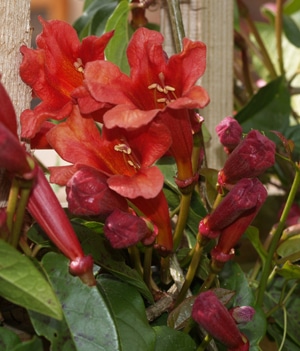
Bignonia flowers appear in early summer and remain until autumn. These large, trumpet-shaped flowers come in a range of colors, from pale orange to bright red. The corolla is made up of five petals that form a thin cone shape, expanding towards the ends to create a trumpet-like appearance.
Starting Bignonia from Seeds
If you want to grow Bignonia from seeds, you can purchase a packet for 3.50 euros. With proper care and attention, these seeds can bloom into stunning flowers with orange trumpet-shaped blooms.
Propagation of Bignonia
Bignonia can be propagated through stem cuttings, leaf cuttings, or division. Take 10-15 cm stem cuttings from the mother plant and remove lower leaves before planting them in well-draining soil. Keep the soil moist and provide enough sunlight for optimal growth. Leaf cuttings can also be used to propagate Bignonia. Choose healthy leaves with no signs of disease or pests, and then plant them in a pot filled with well-draining soil.
Growing Conditions
Bignonia thrives in full sun to partial shade conditions, making it an excellent choice for gardeners who want to add color to their outdoor spaces. It prefers well-draining soil that is rich in organic matter, which can be achieved by mixing compost into the soil before planting.
Watering Bignonia
Bignonia requires regular watering, especially during its first year of growth. Water your Bignonia plant when the top inch of soil feels dry to the touch. Avoid overwatering, as this can lead to root rot and other problems.
Pruning Bignonia
Regular pruning is essential for maintaining the shape and promoting healthy growth of your Bignonia plant. Prune your Bignonia plant in late winter or early spring when it’s dormant, removing any dead or damaged leaves or branches.
Pest and Disease Management
Bignonia plants are susceptible to pests like aphids, whiteflies, and spider mites. Regularly inspect your plants for signs of infestation and treat promptly if necessary. Fungal diseases can also affect Bignonia plants, such as powdery mildew and leaf spot.
Conclusion
Bignonia is a versatile plant that has captured the hearts of many gardeners. Its unique characteristics, vibrant flowers, and ability to grow vigorously make it an excellent addition to any outdoor space. Whether you’re looking for a climber or a non-climber, Bignonia has something to offer. With its ease of growth and stunning appearance, it’s no wonder why this plant has become so popular.
Frequently Asked Questions
- Q: Is Bignonia suitable for cold climates?
A: While Bignonia is generally hardy, some varieties may require protection from extreme temperatures. - Q: How do I care for Bignonia in pots?
A: Make sure the soil is well-draining and lightweight, and provide enough sunlight and water for optimal growth. - Q: Can I grow Bignonia indoors?
A: Yes, Bignonia can be grown indoors with proper lighting and temperature conditions. - Q: How often should I prune my Bignonia plant?
A: Prune your Bignonia plant regularly to maintain its shape and promote healthy growth. - Q: Can I grow Bignonia from seeds?
A: Yes, you can grow Bignonia from seeds, but make sure to provide proper care and attention for optimal results. - Q: Is Bignonia a low-maintenance plant?
A: While Bignonia is relatively easy to grow, it does require regular watering and pruning to maintain its shape and promote healthy growth. - Q: Can I use Bignonia as a ground cover?
A: Yes, Bignonia can be used as a ground cover due to its spreading habit and ability to form dense mats. - Q: How long does it take for Bignonia to grow?
A: The growth rate of Bignonia depends on factors such as climate, soil quality, and care.
Additional Tips
- To attract bees and other pollinators, plant multiple Bignonia plants in the same garden.
- Use a trellis or support system to train your climbing Bignonia plants.
- Keep your Bignonia plants away from strong winds and frosty temperatures to prevent damage.
- Mulch around the base of your Bignonia plants to retain moisture and suppress weeds.
Conclusion
Bignonia is a versatile plant that offers many benefits for gardeners. Its unique characteristics, vibrant flowers, and ability to grow vigorously make it an excellent addition to any outdoor space. By following these guidelines and tips, you can successfully grow Bignonia in your own garden. Whether you’re looking for a climber or a non-climber, Bignonia has something to offer. So go ahead and give this beautiful plant a try – we think you’ll love it!


