
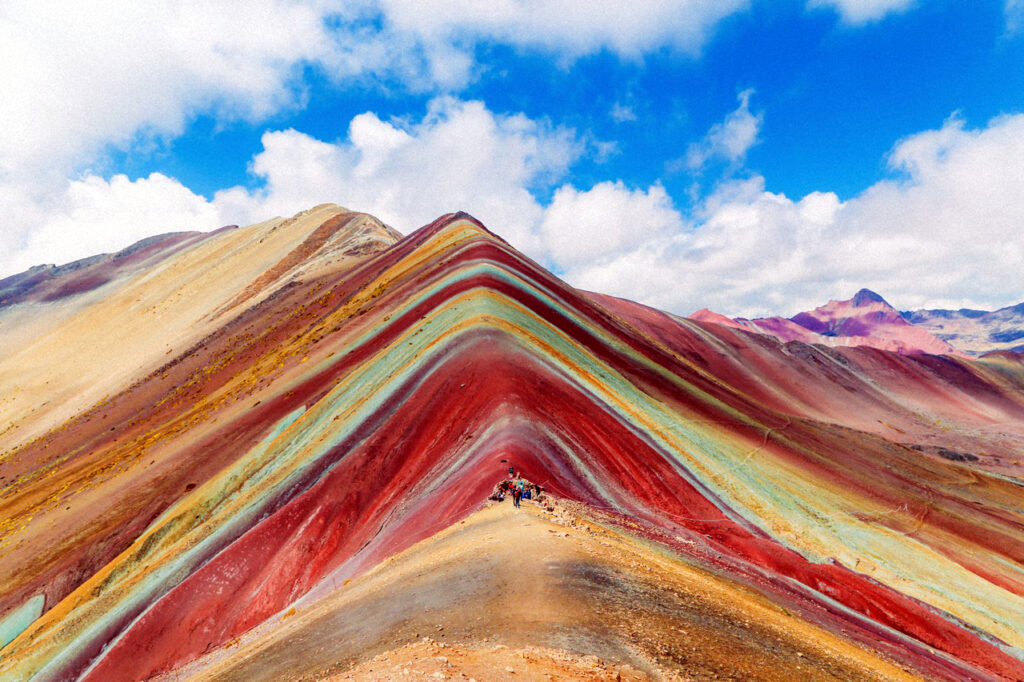
Located in the heart of Peru, the Rainbow Mountain, also known as Montaña Arcobaleno, is a natural wonder that will leave you awestruck. This phenomenon is not just a phrase or a name created to attract tourists; it’s a real-life marvel of nature that National Geographic has deemed one of the 100 must-visit places in the world.
Where to Find the Rainbow Mountain
Located just a few kilometers from Cusco, Peru, the Rainbow Mountain can be accessed by taking an organized trekking tour or hiring a local guide. The mountain is situated on the Ausangate massif, 100 km southeast of Cusco, and is part of the Cordillera de los Andes range. This region is rich in other fascinating sites, making it an excellent excuse to plan a trip to Peru.
Peru’s diverse geography offers numerous opportunities for exploration, from the lush Amazon rainforest to the arid coastal deserts. The country’s unique blend of cultures and landscapes makes it an exciting destination for travelers.
Getting to the Rainbow Mountain
Reaching the Rainbow Mountain requires a challenging trekking adventure that demands physical fitness and mental toughness. The hike can take around 8 hours, including time for photo stops and admiring the stunning rock formations. Due to its high altitude (around 5,200 meters), it’s not recommended for those who are not physically fit or have health issues.
Travelers should prepare themselves for the challenge by training beforehand and acclimatizing to higher elevations before embarking on their journey. The scenic views of the Andean landscape make the effort worthwhile, as visitors can enjoy breathtaking vistas of snow-capped mountains, glaciers, and lush valleys.
Precautions and Contradictions
The Rainbow Mountain is not a leisurely stroll; it’s an arduous hike that demands physical fitness and mental preparation. Those with mobility issues, severe health conditions, or concerns about altitude sickness should avoid this adventure altogether.
Peru’s rugged terrain and unpredictable weather patterns require careful planning and preparation. Travelers should research the best time to visit, plan their itinerary accordingly, and consider hiring a local guide for added safety and expertise.
Similarities with the Danxia National Park in China
While the Rainbow Mountain holds its own unique charm, a similar phenomenon can be found in the Danxia National Park in China’s northwest region, specifically in the Qilian Shan mountain range. This park features an extensive area of colorful rock formations, including coves, pillars, towers, and valleys, all created through millions of years of geological processes.
Both natural wonders are formed from a combination of geological processes, including erosion, weathering, and tectonic activity. The distinct colors and patterns seen in both formations result from the interaction between red sandstone, limestone, and volcanic rock.
A Brief History
The formation of these natural wonders dates back to at least 24 million years ago, during the Cenozoic Era, when deposits of red sandstone were formed. Over time, wind, water, and tectonic movements shaped the landscape into the unique rock formations we see today.
Peru’s rich geological history has created a diverse range of landscapes, from volcanic deserts to tropical rainforests. The Rainbow Mountain is just one of many natural wonders that have captivated visitors for centuries.
Cultural Significance
The Rainbow Mountain holds significant cultural and spiritual value for the local communities. The mountain is considered sacred by the indigenous people of Peru, who believe it was created by the gods.
Visitors should respect the cultural significance of the Rainbow Mountain and take steps to minimize their impact on the environment and local communities. This includes adhering to guidelines set by local authorities, supporting eco-tourism initiatives, and engaging with local guides and experts.
Conclusion: Don’t Miss This Natural Marvel
The Rainbow Mountain is an extraordinary natural wonder that requires effort and dedication to reach. With its breathtaking scenery and fascinating history, it’s an adventure you won’t want to miss.
Whether you’re a seasoned traveler or embarking on your first adventure, the Rainbow Mountain offers an unforgettable experience. Be sure to plan carefully, prepare yourself physically and mentally, and respect the local culture and environment.
Frequently Asked Questions
- What is the best time to visit the Rainbow Mountain?
- The best time to visit depends on weather conditions; generally, the dry season (June to September) is recommended.
- How long does the hike to the Rainbow Mountain take?
- Approximately 8 hours round trip, including photo stops and admiring the scenery.
- Is it safe for tourists with health issues or mobility problems?
- No; due to high altitude and challenging terrain, this adventure is not recommended for those with severe health conditions or mobility issues.
- Can I visit the Rainbow Mountain without a guide?
- No; local guides are highly recommended due to the remote location and potential risks associated with hiking alone.
- What should I pack for my trek to the Rainbow Mountain?
- Bring layers of clothing, sturdy hiking boots, water, snacks, sunscreen, and any necessary medication.
- Is the Rainbow Mountain accessible by public transportation?
- No; it’s best to arrange a private transfer or join an organized tour group.
- Can I take pictures with my drone at the Rainbow Mountain?
- Yes, but be sure to follow local regulations and respect other visitors’ space.
- Are there any specific rules or guidelines for visiting the Rainbow Mountain?
- Yes; please respect the environment, wildlife, and local communities, and refrain from littering or damaging natural formations.
Visit the Rainbow Mountain today and experience the breathtaking beauty of Peru’s natural wonders!


