
The concept of hydrogen-powered cars has been around for quite some time, but it’s only in recent years that advancements have made significant strides. Despite this, there are still many who lack a clear understanding of this technology and its benefits. In an effort to address these concerns, we’ll delve into the most commonly asked questions surrounding hydrogen-powered vehicles.
Understanding Hydrogen Fuel Cell Technology
The hydrogen fuel cell (HFC) is a type of technology that offers a viable alternative to traditional diesel engines. This method not only reduces emissions but also has the potential to provide energy independence by utilizing locally produced hydrogen. As we explore the various aspects of HFCs, it’s essential to recognize that they are not competitors to battery-electric vehicles (BEVs) but rather serve different segments of the market.
Key Differences Between Hydrogen Fuel Cells and Battery-Electric Vehicles
Hydrogen fuel cells and BEVs share some similarities, such as being environmentally friendly and reducing reliance on fossil fuels. However, there are key differences between these two technologies:
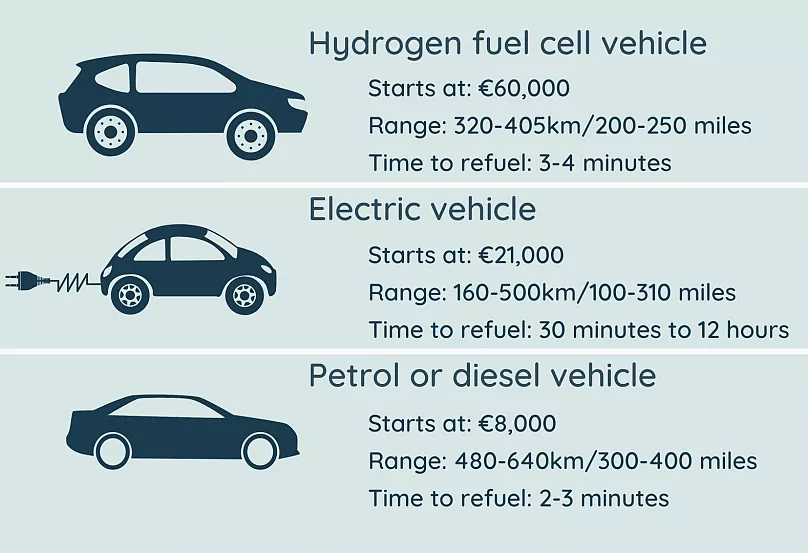
- Autonomy: Hydrogen fuel cell vehicles (FCEVs) offer an average range of 400-500 kilometers, which is comparable to traditional diesel engines. On the other hand, BEVs have a limited range of around 200-300 kilometers.
- Refueling Time: FCEVs can be refueled in just three minutes, whereas charging times for BEVs can take several hours.
- Operational Costs: While both types of vehicles require electricity or fuel to operate, the cost difference is relatively minor.
Hydrogen Production and Infrastructure
The production of hydrogen gas via electrolysis utilizes renewable energy sources and can be stored in various forms. The IIT (Institute for Innovation Technology) in Bolzano, Italy, has successfully implemented a local hydrogen production system. This process involves eletrolisis utilising energy from renewable sources and storing the hydrogen as gas.
The Cost of Hydrogen Fuel
The cost of producing, distributing, and consuming hydrogen is similar to that of traditional diesel fuel. For instance, the retail price of hydrogen in Bolzano ranges between €11-13 per kilogram, which is comparable to the cost of diesel fuel for vehicles of the same category.
Efficiency Comparison: Hydrogen vs. Diesel
A comparative analysis of the well-to-wheel efficiency (from source to wheel) of locally produced hydrogen and traditional diesel reveals a significant difference in favor of HFCs. While diesel engines have an efficiency rate of around 14%, HFCs boast an impressive efficiency rating of approximately 30%.
Market Availability: Hydrogen Fuel Cell Vehicles
Major automakers, such as Toyota, Hyundai, Honda, Daimler, and BMW, have announced plans to launch hydrogen fuel cell vehicles in the coming years. Some examples include:
- Toyota Mirai: Expected to be released in Japan at a price of around 50 million yen (approximately $450,000 USD).
- Hyundai ix35 Fuel Cell: Already available in Germany for purchase at approximately 65 million euros (around $73,500 USD).
These vehicles are expected to hit the market within the next few years, with BMW working on various models and Hyundai already offering its ix35 Fuel Cell variant.
Conclusion
As we explore the world of hydrogen fuel cell technology, it’s clear that these vehicles offer a unique set of benefits and drawbacks. While they may not be as efficient as traditional diesel engines, HFCs provide an environmentally friendly alternative for long-distance travel. With the development of local hydrogen production systems and expanding infrastructure, these vehicles are poised to become increasingly viable options for consumers.
Frequently Asked Questions
Q1: Are Hydrogen Fuel Cell Vehicles Suitable for All Types of Driving?
A1: Yes, hydrogen fuel cell vehicles (HFCVs) can handle a variety of driving conditions, including long-distance travel and mountainous terrain. However, their high operating costs may be a concern for some users.
Q2: How Long Does it Take to Refuel a Hydrogen Fuel Cell Vehicle?
A2: Refueling a hydrogen fuel cell vehicle (HFCV) takes approximately three minutes, making it comparable to traditional diesel engines.
Q3: What is the Estimated Cost of a Hydrogen Fuel Cell Vehicle?
A3: The cost of a hydrogen fuel cell vehicle (HFCV) varies depending on the manufacturer and model. However, prices range from around $73,500 USD for the Hyundai ix35 Fuel Cell to approximately $450,000 USD for the Toyota Mirai.
Q4: Can Hydrogen Fuel Cells Be Used in conjunction with Battery-Electric Vehicles?
A4: Yes, many car manufacturers are exploring the integration of hydrogen fuel cells and battery-electric vehicles. This technology is known as a range extender, which allows BEVs to utilize HFCs for longer trips.
Q5: How Do Hydrogen Fuel Cells Compare to Traditional Diesel Engines in Terms of Efficiency?
A5: While traditional diesel engines have an efficiency rate of around 14%, hydrogen fuel cell vehicles (HFCVs) boast an impressive efficiency rating of approximately 30%.
Q6: What is the Estimated Range of a Hydrogen Fuel Cell Vehicle?
A6: The estimated range of a hydrogen fuel cell vehicle can vary from manufacturer to manufacturer. However, on average, FCEVs offer a range of around 400-500 kilometers.
Q7: Can Hydrogen Fuel Cells Be Used for Long-Distance Travel?
A7: Yes, hydrogen fuel cell vehicles (HFCVs) are suitable for long-distance travel due to their ability to handle high operating costs and provide a reliable source of energy.
Q8: What is the Role of Government Incentives in Promoting Hydrogen Fuel Cell Vehicles?
A8: Many governments around the world have introduced incentives to encourage the adoption of hydrogen fuel cell vehicles. These incentives include tax credits, subsidies, and rebates for purchasing HFCVs.
Q9: How Do Hydrogen Fuel Cells Compare to Battery-Electric Vehicles in Terms of Environmental Impact?
A9: While both types of vehicles offer environmental benefits, hydrogen fuel cell vehicles (HFCVs) have a slightly lower carbon footprint due to the production process. However, the overall emissions generated by HFCVs can be comparable to those of traditional diesel engines.
Q10: What is the Future Outlook for Hydrogen Fuel Cell Vehicles?
A10: As technology continues to advance and costs decrease, hydrogen fuel cell vehicles are poised to become increasingly viable options for consumers. With the development of local hydrogen production systems and expanding infrastructure, HFCVs are expected to play a significant role in reducing emissions and promoting energy independence.
In conclusion, the world of hydrogen-powered cars is complex and multifaceted. By addressing common questions and misconceptions, we can better understand the benefits and drawbacks of this technology and its potential to shape the future of transportation.


