
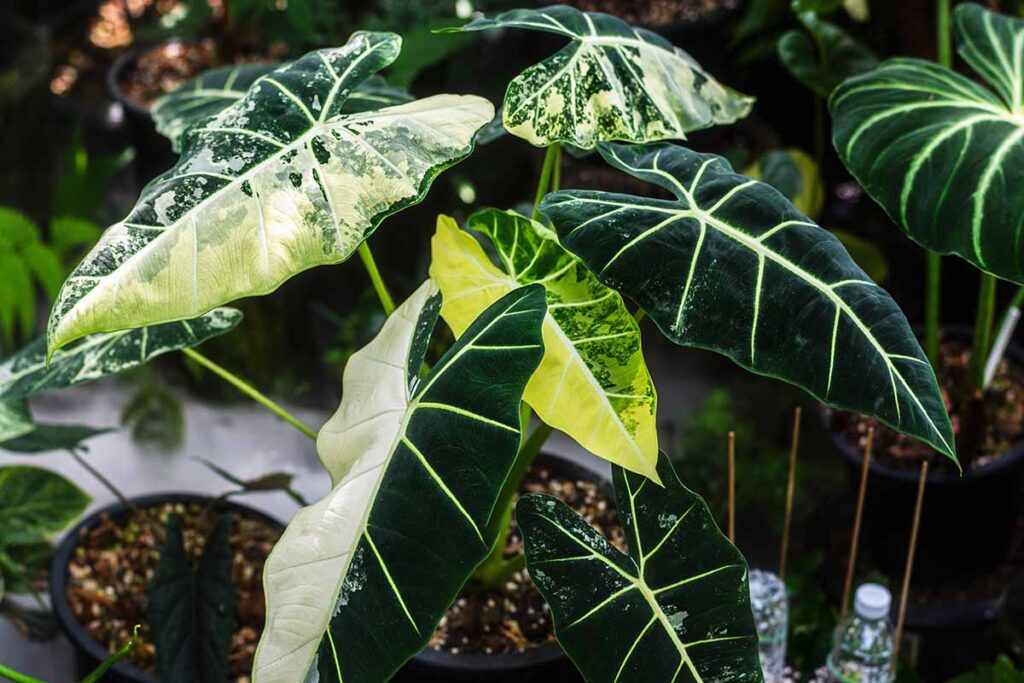
As you step into the world of tropical plants, one species that stands out is the Alocasia. Commonly known as “elephant ears” due to their unique leaf shape and movement, these stunning plants have captured the hearts of many plant enthusiasts. In this article, we will delve into the fascinating world of Alocasia, exploring its characteristics, cultivation, species, and common issues.
Alocasia: Origins and Characteristics
Originating from the tropical regions of Southeast Asia, the Alocasia genus comprises over 70 species, each with unique features. The plants have subterranean rhizomes and underground stems that serve as an energy reserve. Their large leaves can reach up to 1.5 meters in length, shaped like a spear, and are supported by sturdy, prominent veins. Some species display vibrant colors, such as purple or bronze, while others maintain their characteristic green hue.
The Alocasia’s unique leaf structure is made possible by its specialized cells, which contain large amounts of starch and cellulose. This allows the leaves to store energy and stay rigid even in low humidity environments. The plant’s rhizome system plays a crucial role in supporting the leaves and distributing water and nutrients throughout the plant.
Alocasia: Cultivation
Growing Alocasia is relatively easy, even for inexperienced plant enthusiasts. These plants thrive in warm temperatures (around 20°C) and humidity levels, but they are sensitive to extreme temperatures below 15°C. Providing bright, indirect light is essential, as direct sunlight can scorch the leaves.
To encourage growth, rotate your Alocasia regularly, ensuring its leaves don’t face a single direction. This will mimic natural wind movement and prevent leaf orientation, which could lead to uneven growth patterns. Regularly clean and dust the leaves using a soft cloth or under running water to maintain their health.
Watering and Humidity
Alocasia requires regular watering, especially during the spring and summer seasons when it’s actively growing. Aim for consistent moisture levels throughout the year, making sure not to overwater or underwater your plant. Nebulization can help create a humid environment around the leaves, particularly in dry climates.
It is also important to monitor the plant’s water needs, as overwatering can lead to root rot and other issues. Check the soil moisture by sticking your finger into the soil up to the first knuckle, and only water when it feels dry.
Soil and Repotting
Using a well-draining potting mix containing decomposed leaves, peat moss, and perlite will provide your Alocasia with optimal growth conditions. Every two to three years, repot your plant using a slightly larger container, taking care not to disturb the rhizome during the process.
Choose a pot that is only slightly larger than the current one, as this will help prevent the soil from becoming too wet and increase the risk of root rot.
Fertilization
During the blooming season, feed your Alocasia with an equally balanced fertilizer containing nitrogen (N), phosphorus (P), and potassium (K). Dilute this solution in water before application to prevent burning the roots.
Feeding during the active growing period will promote healthy growth and encourage flowering.
Common Issues and Solutions
Alocasia is susceptible to several issues:
- Coccinidia: A brown, powdery fungus that appears on the underside of leaves, particularly during hot weather.
- Overwatering or underwatering: Leaves may turn yellowish or develop brown edges if not watered adequately.
- Insufficient humidity: Leaves can become brittle and prone to damage when exposed to dry air.
Species Highlight
Some notable species within the Alocasia genus include:
- A. Sanderiana: Native to the Philippines, features large, dark green leaves with metallic sheen and prominent veins.
- A. Cuprea: Originating from Malaysia and Borneo, boasts vibrant purple-colored foliage up to 70 cm in length.
- A. Macrorrhiza: Can grow up to 5 meters tall, characterized by bright green oval-shaped leaves.
Propagation
One of the most interesting aspects of Alocasia is its ability to propagate itself through underground rhizomes. This process is called “division.” To do this, carefully remove the plant from its pot and gently separate the individual plants, taking care not to damage their roots or disturb the rhizome.
Replant each division in a new container filled with moistened soil, and keep them in a bright but indirect light location until they are fully established.
Pest Control
Alocasia is susceptible to pests like spider mites, mealybugs, and scale. To control these pests, use neem oil or insecticidal soap according to the product’s instructions. Avoid using harsh chemicals that could damage your plant’s delicate leaves.
Conclusion
The Alocasia is a captivating plant species that can thrive under the right conditions. By understanding its unique characteristics, cultivation needs, and potential issues, you’ll be well-equipped to provide your Alocasia with optimal care and attention. Whether you’re an experienced horticulturist or just starting your plant journey, this fascinating world awaits exploration.
Frequently Asked Questions
- How often should I water my Alocasia?
- Watering frequency will vary depending on climate conditions and humidity levels.
- Why do the leaves of my Alocasia seem to be drooping?
- This might be due to insufficient light or too high temperatures, which can cause leaf stress.
- What is the best way to fertilize my Alocasia during the blooming season?
- Dilute an equally balanced fertilizer in water before application and avoid overfertilizing.
Stay curious about the fascinating world of plants!


