
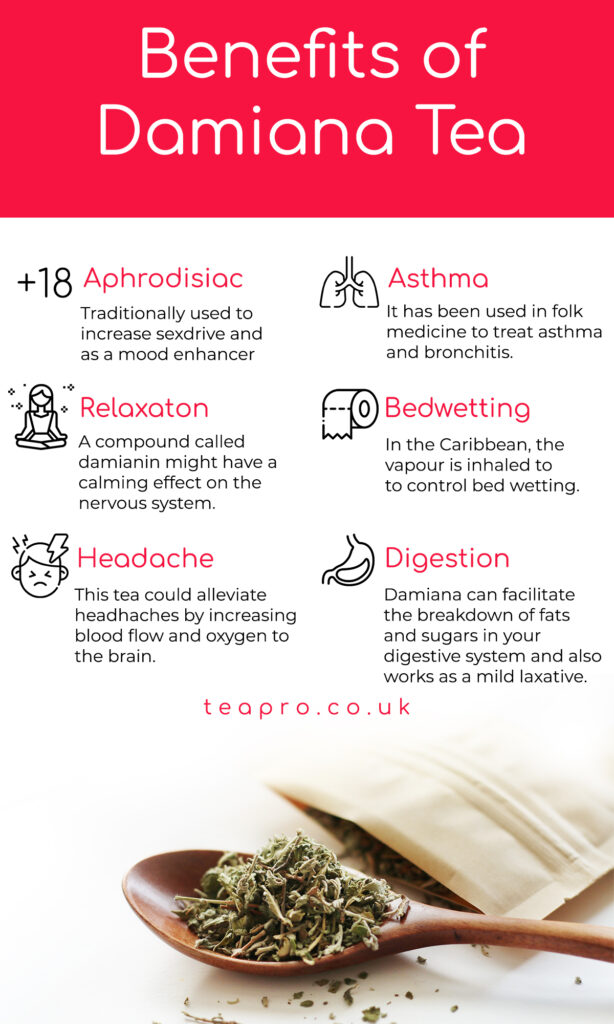
Damiana, a plant belonging to the Turneraceae family, has been used for centuries as a tonic, diuretic, and laxative. Its effects on human health are multifaceted, with both positive and negative consequences.
Historical Use and Folk Medicine
Damiana was first mentioned in Mayan times as a remedy for various ailments, including insomnia, stress, and anxiety. It has been used in traditional medicine to treat a range of conditions, including asthma, bronchitis, diabetes, dysentery, digestive issues, migraines, paralysis, and even impotence.
Damiana: Properties and Effects
Damiana’s properties are most commonly associated with its antidepressant and stimulating effects, making it a popular treatment for insomnia, stress, anxiety, fatigue, and depression. Its oil extract has also been shown to be effective in treating coughs and bronchitis.
In addition to these well-known effects, damiana has been found to have diuretic and anti-inflammatory properties, making it a potential natural remedy for conditions such as cystitis, urinary tract infections, and prostate issues.
Damiana: Dosage and Administration
Damiana can be consumed in various forms, including infusions, capsules, gummies, or vaporized oil. Vaporization is the most recommended method of consumption, as it allows for the extraction of all its chemical compounds while maintaining their effectiveness when inhaled.
Capsules and oral supplements are also available, often containing a combination of damiana’s active compounds. These can be taken to boost libido, enhance fertility, or improve overall well-being.
Damiana: Contraindications
While damiana is generally considered safe, there are potential risks associated with its use. Prolonged consumption may lead to insomnia, headaches, and liver or prostate problems. It is essential to consult a doctor before taking damiana, especially if you have pre-existing medical conditions, such as diabetes, and to monitor for any adverse reactions.
Damiana in Herbal Medicine
Damiana’s reputation as an aphrodisiac has overshadowed its other properties, which are not always scientifically proven. The plant is often associated with traditional remedies and esoteric practices, rather than modern medicine.
Despite this, damiana is sometimes used to treat depression, fatigue, addiction, nervous disorders, and constipation. However, the effectiveness of these treatments is often disputed, and more research is needed to confirm its therapeutic value.
Research and Future Directions
Recent studies are exploring damiana’s potential in cancer treatment, with promising results but also requiring further investigation to confirm its efficacy.
Throughout history, damiana has been used as a “panacea” for various health issues, particularly those related to the reproductive system. In traditional medicine, it is also used to treat inflammation of the bladder, kidney disease, diabetes, and nerve exhaustion.
In homeopathy, damiana is available in various forms, including granules, gummies, and tinctures, which can be taken with varying dosages depending on individual needs. It’s recommended to consult a doctor before starting treatment.
Conclusion
Damiana is a complex plant with multifaceted effects on human health, both positive and negative. While it has been used for centuries in traditional medicine, its efficacy and safety are still topics of debate among healthcare professionals.
As research continues to uncover damiana’s therapeutic potential, it’s essential to approach its use with caution and consult a doctor before adding it to your treatment plan.
Frequently Asked Questions
- Is damiana safe to consume?
Damiana is generally considered safe when consumed in moderation. However, prolonged consumption may lead to insomnia, headaches, and liver or prostate problems. - What are the potential interactions with other medications?
Damiana may interact with certain medications, particularly those related to blood sugar levels, such as diabetes medication. It’s essential to consult a doctor before taking damiana if you have pre-existing medical conditions. - Can damiana treat cancer?
Recent studies suggest that damiana may have anti-tumor properties, but more research is needed to confirm its efficacy in cancer treatment. - What are the most effective forms of damiana consumption?
Vaporization and oral supplements are considered the most effective methods of consuming damiana, as they allow for the extraction of all its chemical compounds while maintaining their effectiveness when inhaled or taken orally. - Can damiana improve fertility?
Yes, damiana has been found to have aphrodisiac properties, which may enhance fertility and libido. However, its efficacy is still a topic of debate among healthcare professionals. - Is damiana effective for treating depression?
Damiana’s antidepressant effects are well-documented, but its effectiveness in treating depression is still disputed. More research is needed to confirm its therapeutic value. - Can I use damiana as a natural remedy for anxiety?
Yes, damiana has been found to have anxiolytic properties, which may help alleviate anxiety symptoms. However, it’s essential to consult a doctor before using damiana as a treatment for anxiety.
Damiana is a plant that has been used for centuries in traditional medicine, and its effects on human health are multifaceted. While it has been found to have various therapeutic properties, its efficacy and safety are still topics of debate among healthcare professionals. As research continues to uncover damiana’s potential, it’s essential to approach its use with caution and consult a doctor before adding it to your treatment plan.
Damiana: Chemical Composition
Damiana’s chemical composition is not fully understood, but it contains various compounds that contribute to its therapeutic effects. Some of the main components include:
- Flavonoids: These compounds have been found to have antioxidant properties and may help alleviate symptoms of depression and anxiety.
- Terpenes: Damiana contains terpenes, which are known for their anti-inflammatory and antiviral properties.
- Alkaloids: Alkaloids in damiana may contribute to its aphrodisiac effects and help improve fertility.
Damiana: Modern Research
Recent studies have explored the therapeutic potential of damiana, with promising results. Some of these studies include:
- Anti-inflammatory effects: A study published in the Journal of Ethnopharmacology found that damiana extract had anti-inflammatory properties, which may contribute to its use as a natural remedy for inflammatory conditions.
- Antioxidant effects: Another study published in the Journal of Pharmacy and Pharmacology found that damiana extract had antioxidant properties, which may help alleviate symptoms of oxidative stress.
- Anti-tumor effects: A recent study published in the Journal of Ethnopharmacology suggests that damiana may have anti-tumor properties, which could contribute to its potential use as a cancer treatment.
While these studies are promising, more research is needed to confirm damiana’s therapeutic potential and ensure its safety for human consumption.


